The great migration in the Serengeti, nine days on the trail of the herds

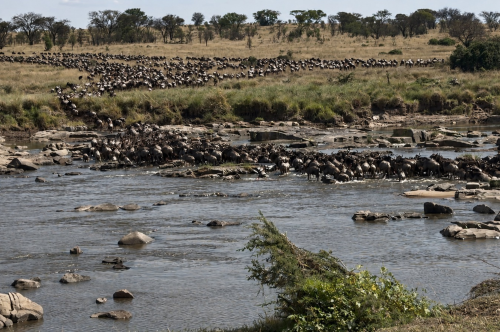
More than a million wildebeest and zebra moving through the Serengeti all year, always on the move, always looking for fresh grass.

Download the itinerary

1,000,000+

Wildebeest and zebra on the move

12

Months a year in motion

1,000+

Kilometres the herds cover

Highlights of this migration safari

  • The great migration, moving all year. More than a million wildebeest and zebra move through the Serengeti with the seasons. We know where the herds are on your dates, and we take you there.
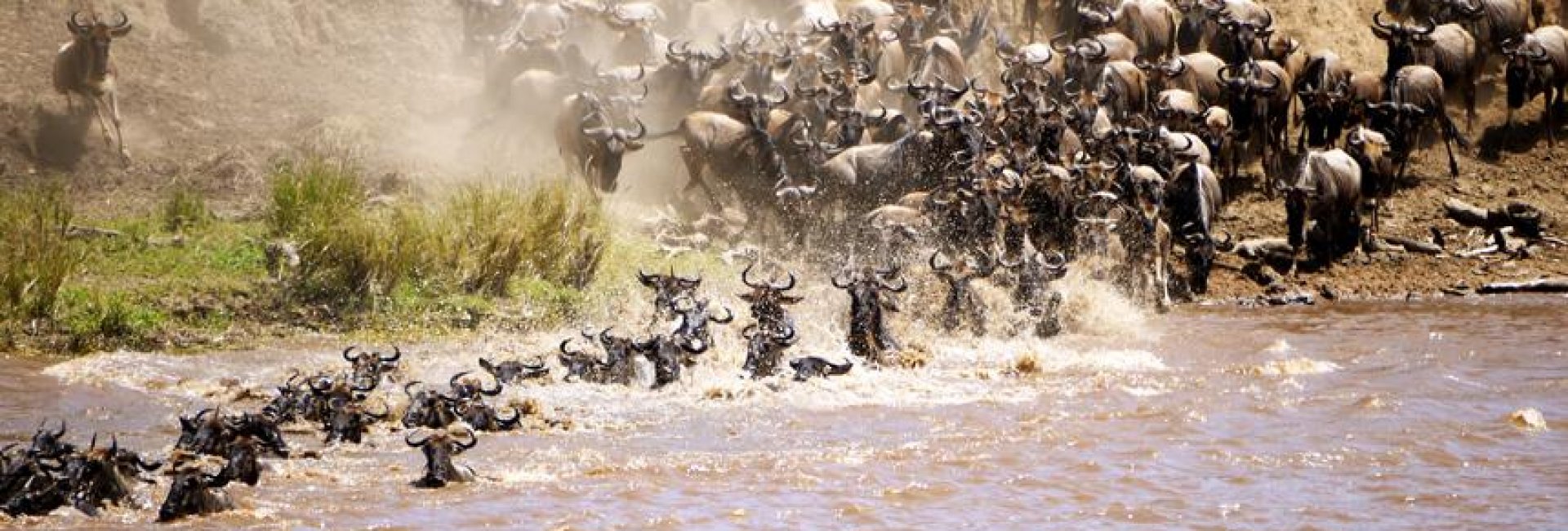
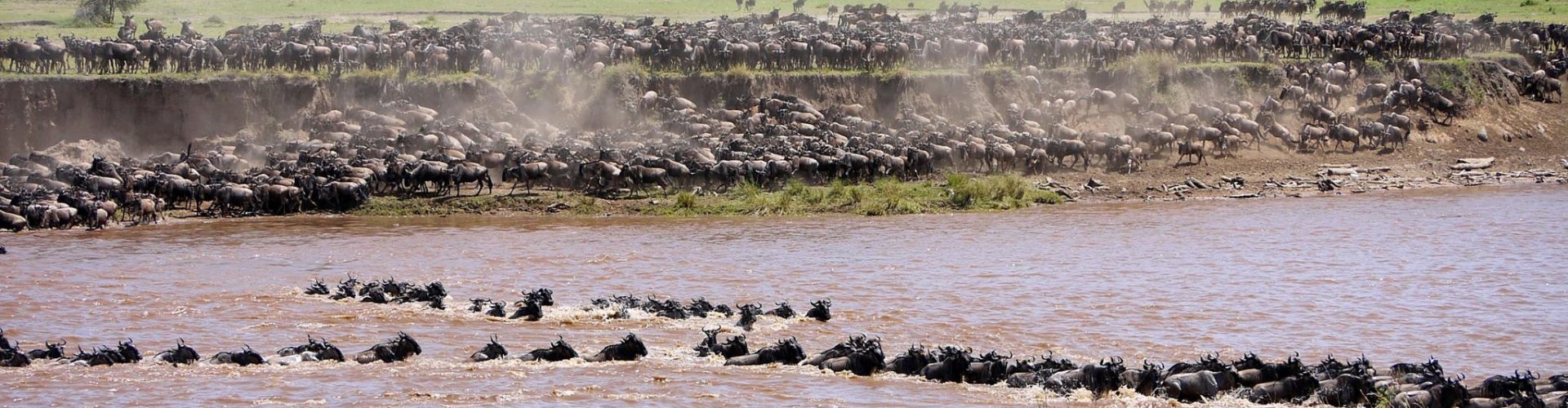
  • Two ways to see it. From July to October, the famous crossing of the Mara River in the north. Around the end of January, the calving season in Ndutu, when thousands of young are born every day with predators close by.
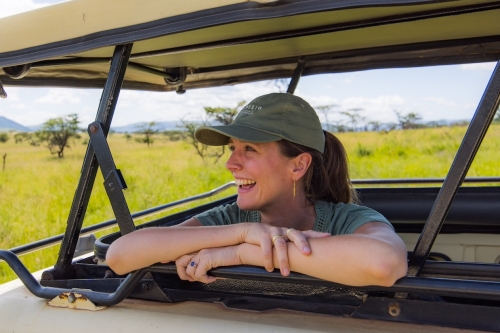
  • Your own 4x4 with a private guide. You travel with your own guide and your own Landcruiser with an open roof. Our guides know the area and the herds, and they know how to get you close to the animals even when the crossing is busy.
  • Sleeping in our own camp in the north. At Kimbilio, our own camps at Lobo and Bologonja, you sleep well away from the crowded crossing points. The game here is strong all year, migration or not, and you are often alone with the animals.
  • Tarangire and the Ngorongoro Crater too. Alongside the Serengeti you visit Tarangire, known for its elephants, and the Ngorongoro Crater, where thousands of animals live together inside the crater walls.

Download the great migration safari itinerary, with the day-by-day and the price

You get the complete 9-day trip in your inbox, worked out day by day, with the price per season. Treat it as a starting point, because we match your trip and your travel dates to where the herds will be.

  • The whole route day by day, from Tarangire to the northern Serengeti
  • The accommodation, including our own Kimbilio camps in the north
  • The guide price per person, per season
  • Which travel time suits what you want to see of the migration
  • Practical tips for preparing your trip
  • Both itineraries, the calving season and the river crossing, so you can compare them
50%
Download the 9-day migration itinerary
Both itineraries, the calving season in Ndutu and the river crossing in the north, with the route day by day and the price per season. Written by us, in Moshi.
Yes, send me the migration itinerary
Makasa Tanzania Safaris Sample itinerary Great Migration

The great migration is not one moment

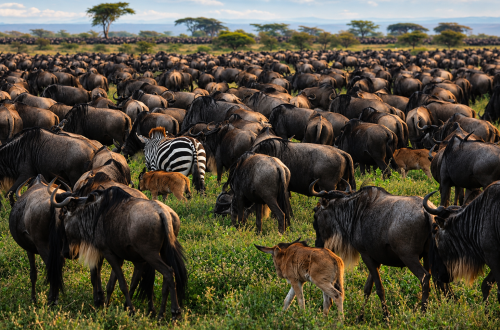
Most people think the great migration is one moment, the famous crossing of the Mara River in the northern Serengeti. In practice it is a cycle that runs all year. More than a million wildebeest and zebra move through the Serengeti with the rains, always looking for fresh grass. The calves are born in the south in January, the herds move north for the crossing in summer, and then back again. So there is no single best moment, there is the moment that suits what you want to see. And because we live here and follow the herds every year, we know where they will be on your travel dates.

Two seasons, two spectacles

From July to October, the crossing of the Mara River, the most famous moment of all. Around the end of January, the calving season in Ndutu, thousands of young a day, with predators close by. Both remarkable, both different.

Straight talk about the crossing

The river crossing is a spectacle, but nature will not be pushed. On any given day the crossing is never guaranteed, and the well-known spots have grown busy in recent years. We are straight with you about that, and our guides know how to work with it.

We know this ground

Our guides pick their moments and their places well, early or late in the day, away from the busiest points. That is how you get the most out of the crossing, and on the other days in the north you are often alone with the game.

Worth the trip without the crossing

Around our camps at Lobo the game is there all year, with lions, leopards and elephants that never leave. So you do not have to pin your great migration holiday to one moment to have a safari worth the flight.

Your migration safari through Tanzania, stage by stage

These nine days are the backbone of your great migration safari in Tanzania, built towards the high point. Landing and settling in first, then Tarangire and the Ngorongoro Crater, and after that deep into the Serengeti, where you spend several days looking for the herds. That is what this trip turns on, the millions of wildebeest and zebra, and the river crossing. If you want longer, more days in the Serengeti, or a few nights on Zanzibar at the end, we build the programme out. This is the route in outline, and the itinerary has it day by day.

Arrival at Kilimanjaro

You land at Kilimanjaro Airport, where your guide is waiting. The first night you sleep in Moshi, a green, unhurried town at the foot of the mountain. Time to recover from the flight, and on a clear morning Kilimanjaro filling the whole horizon. That way you start the safari rested instead of rushed. Coming from North America or Australia you cross seven to ten time zones, so that first slow morning in Moshi does more work than it looks.

Tarangire, the elephant park

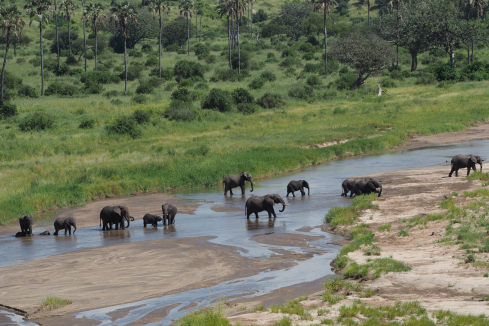
Your first safari day takes you to Tarangire, one of the finest and most underrated parks in Tanzania. In the dry season hundreds of elephants come down to the river here, sometimes in herds of fifty at a time, among baobab trees that can live a thousand years. You also see lions, giraffes and large groups of zebra and wildebeest, a first taste of the numbers waiting for you in the Serengeti. A wide, unhurried opening day, where your eye gets used to looking before you move on to the big plains.

The Ngorongoro Crater

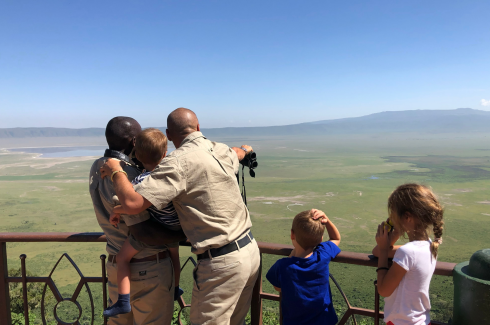
Early in the morning you drop down the steep walls of the Ngorongoro Crater, with the whole plain far below you. Down there lies a world of its own, the largest intact volcanic caldera on earth, formed when an enormous volcano collapsed millions of years ago. Some twenty-five thousand animals live together inside those walls all year, from rhinos and elephants to the lions that hold their own kingdom here, and the flamingos that turn the crater lake pink. It is one of the few places in Tanzania where you still see the rare black rhino. A morning on the crater floor feels unreal, as though every animal in Africa had gathered in this one green landscape, ringed by walls six hundred metres high.

Ndutu, the calving season from January to March

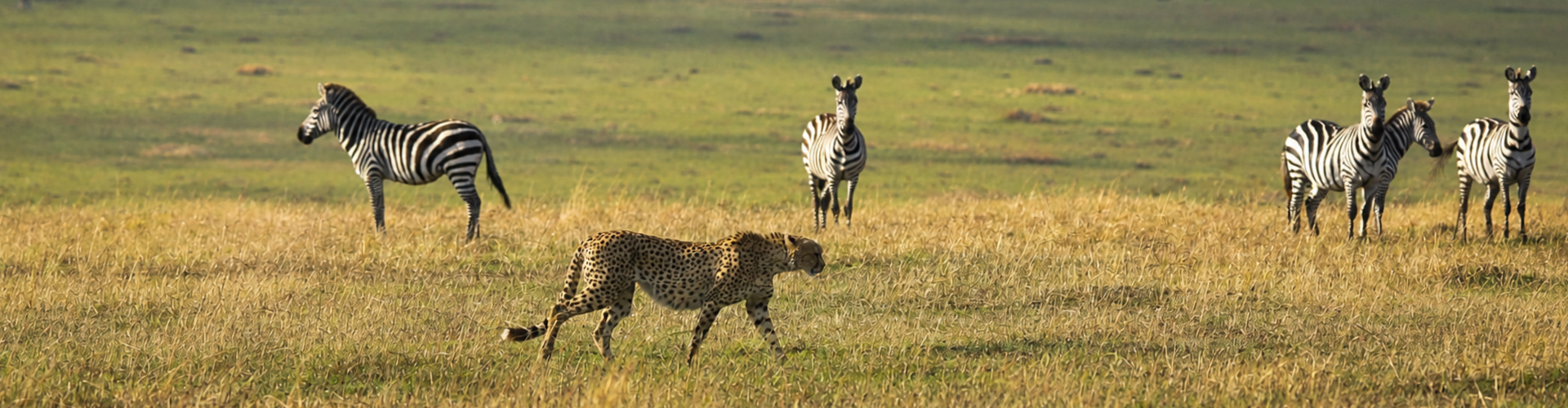
If you travel between January and March you head for Ndutu, in the south of the Serengeti on the edge of the Ngorongoro area. Here the herds gather on the short grass to calve, and thousands of young wildebeest are born every day. You watch them stand for the first time on unsteady legs, while the predators are never far, cheetah, lion and leopard working the weakest. It is one of the most dramatic and photogenic stretches of the year. And because off-road driving is allowed here, our guides get close to the animals without disturbing them. You sleep in a camp in the middle of it.

The river crossing in the north

If you travel between July and October you head deep into the north, where the herds gather to cross the Mara River. Millions of wildebeest and zebra as far as you can see, hesitating at the bank, until all at once they take the jump, with the crocodiles waiting. The crossing can never be predicted for a given day, and the well-known spots have grown busy, but our guides know this ground and pick their moments well. You sleep at Kimbilio, our own camp at Lobo or Bologonja, a little further from the busiest crossing points, where the game is strong all year and you hear the lions at night.
So in nine days you travel from Kilimanjaro, by way of Tarangire and the Ngorongoro Crater, to the Serengeti, to Ndutu for the calves from January to March, or to the Mara River for the crossing from July to October. This is the trip in outline, the full day-by-day, the accommodation and the price per season are in the migration itinerary.
Highly recommended!
You don't need to read any further. Just book a safari through Makasa and you will simply thank me later :) These guys know what you need for a great Safari!! I am already talking about a next trip with them.
Review Tanzania Great Migration
Abhishek Dwivedi
Fantastic trip
We did the 7-day safari to the Serengeti in October. Makasa worked out the details perfectly. Our guide Jamal was very very good. It felt like he was part of our family. It was amazing seeing all the wildlife.
Review Tanzania Great Migration
John Turner
Extraordinary experience
Jamal our guide was very helpful, and he was very keen. He has eyes like an eagle. We saw the big 5 and many other animals including the almost endangered wild hunting dogs. We could definitely recommend Makasa.
Review Tanzania Great Migration
Art Nelson

The same two people, from your first email to your flight home

Booking a trip this far away with a company on the other side of the world feels like a leap for most people. So you are never dealing with an anonymous office here. Zara answers every English enquiry, from Moshi. She thinks it through with you, replies in your language, and knows your trip from the first question to the last day.

Selma runs Makasa from Moshi with her husband Ngomi. The person planning your trip and the people following the herds live in the same town, so your question always lands in the right place. You get both halves, someone who writes back in your language, and people on the spot who know the country, the parks and the seasons.

Zara

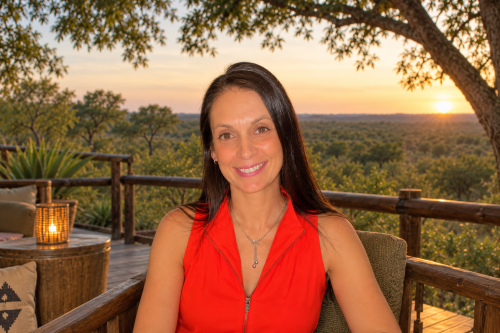
Zara came out to visit Selma in Tanzania in 2024. In early 2025 she moved from Australia to Moshi with her two young children, so she knows the drives, the seasons and the camps from living here, not from a brochure. She also knows what everyone asks first, when to come, and she answers it with where the herds will be. Zara looks after every English enquiry, from your first question to the day you fly home.

Selma

Selma moved from the Netherlands to Tanzania in 2009 and has run Makasa since 2010 together with her husband Ngomi. With their three children, who are growing up among the parks that Selma and Ngomi know inside out. She knows the camps, the seasons and the places from her own experience. While Zara plans with you, Selma makes sure your trip in Tanzania runs the way it was meant to.
Tanzania Great Migration

We will tell you where the great migration is on your dates

Settled before you pay, from your deposit to your flight home

A trip this far raises questions, and we understand that. So we have answered the most important ones here, which means you can book with your mind at rest.
Makasa Tanzania Safari

Your money goes to a company, not a person

Makasa is a licensed Tanzanian operator with TALA, and a member of TATO, and you pay into the company account.
Makasa Tanzania Safari

Everything confirmed in writing

Before you pay the balance you get written confirmation naming every camp, every date and your vehicle.
Makasa Tanzania Safari

One contact, start to finish

Zara answers your enquiry from Moshi, and your guides on the ground speak excellent English.
Makasa Tanzania Safari

Is Tanzania safe?

Yes. Tanzania has been one of the most stable countries in Africa for decades, with warm, welcoming people.
Makasa Tanzania Safari

What about malaria?

Tanzania is a malaria area. Your doctor or a travel clinic will advise you what suits your trip.
Makasa Tanzania Safari

Is a safari dangerous?

No. You are always with an experienced guide. Follow his instructions and there is hardly any risk.

Your trip leaves something behind

We live in Tanzania, so this country is not our market, it is our home. You notice it in the small choices we make every day. Our own camp Kimbilio runs on solar power, and the packed lunches you take on the road use materials that break down, so we leave nothing behind in the nature you came for.

We look at the accommodation and the partners we work with the same way, at what flows back to the people who live there. And the people we work alongside, our guides and colleagues, are Tanzanians, many of them trained by Ngomi himself. So most of what you spend on your trip stays in the country, with the people who make your trip possible.

If you want to go further, we are glad to think with you. We can add a visit to a local project to your trip, so you see for yourself where your money goes.

This is an example, your migration safari becomes yours

The trip you just read is one of our best migration safaris, but it is a starting point, not a fixed package. The herds are in the Serengeti all year, so we match your trip and your travel dates to where they will be. You get both itineraries, the calving season and the river crossing, so you can compare them at your own pace. More days in the Serengeti, a slower pace, or finishing on Zanzibar, all of it is possible.

50%
The 9-day great migration safari, day by day
Both itineraries, the calving season in Ndutu and the river crossing in the north, with the route day by day and the price per season. Written by us, in Moshi.
Yes, send me the migration itinerary
Makasa Tanzania Safaris Sample itinerary Great Migration