Video Aspect Ratio: 4:1

Tanzania safari lodges, hotels and tented camps, where you sleep on safari

Where you sleep shapes how your safari feels. On this page you will find what sets a hotel, a safari lodge and a tented camp apart, how a night in a tent in the middle of the bush goes, and which safari accommodation suits you. We know the places we book from our own experience, because we live here.

A safari keeps moving, so you sleep somewhere different every few nights

On a safari in Tanzania you drive from park to park, and you sleep close to wherever you are on game drives those days. On a two week trip that means five or six different places, usually two or three nights each. It also means you do not have to choose between a tent and a lodge. You get both, and that is the point. We vary the accommodation deliberately, because every place has its own character, and that variation makes the trip richer than the same thing five times.

What these places have in common is that they have something of their own. No chains with two hundred identical rooms, but small places, often run by people who live there. One sits on a river with a pool to drop into after a dusty day. Another stands on Maasai land, where your stay pays into the school and the health care of the community around it.
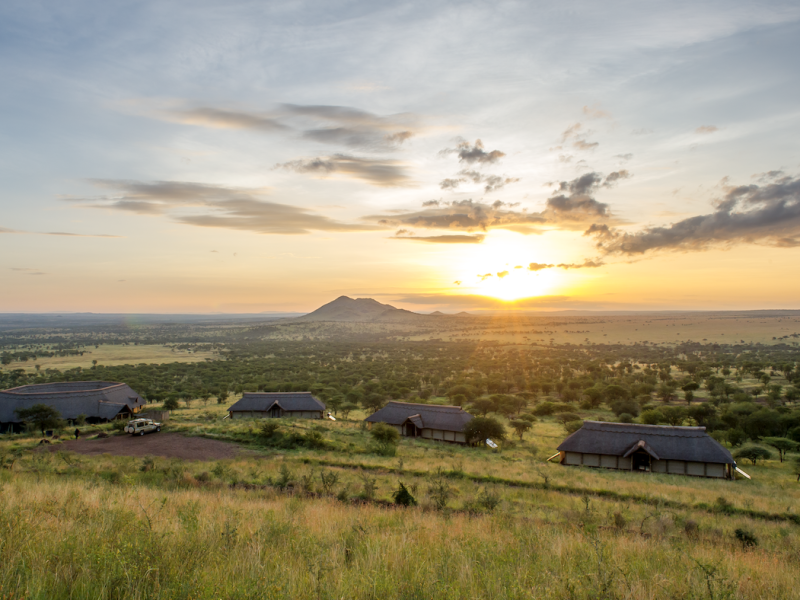
Another looks out over the valley, or stands so close to the wildlife that giraffes walk past your veranda. Location weighs heavily with us. A place close to the animals means you are already among the wildlife in the early morning, instead of two hours on the road before your safari starts. And we choose places outside the busiest areas on purpose, because you do not come to the Serengeti to sit in a line of jeeps, or to have breakfast among two hundred other guests. Within that frame, anything is possible. If you want part of your trip to be high luxury, we arrange that.

Hotel, safari lodge or tented camp, what the difference is

The names get used interchangeably, and that makes it confusing. In short, the difference is in the build, the location, and how close to nature you sleep.

Small-scale safari hotel

A building with rooms, usually in or just outside a town like Moshi, Arusha or Karatu. You have a door that closes, hot water whenever you want it, and often a pool and a garden. This is where you usually sleep the first and the last nights of your trip, to recover from the flight or to close your safari off quietly. We pick these Tanzania safari hotels close to the airport or to the start of your route, so you are not driving for hours on the day you land or the day you fly home.

Safari lodge

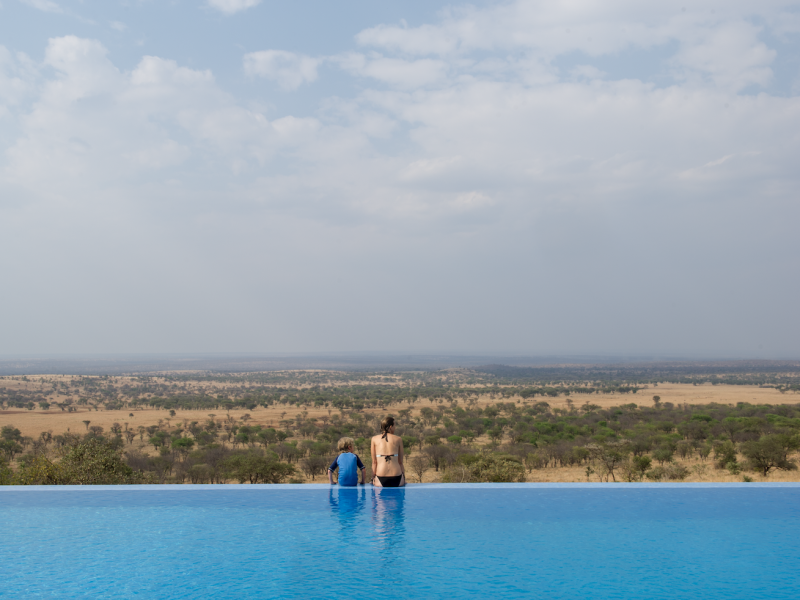
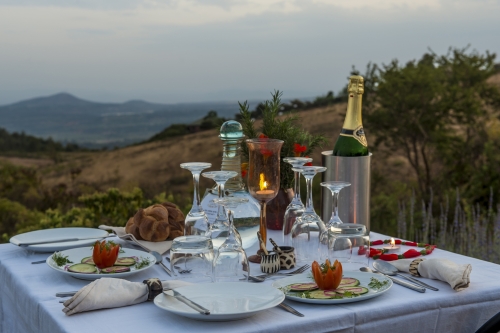
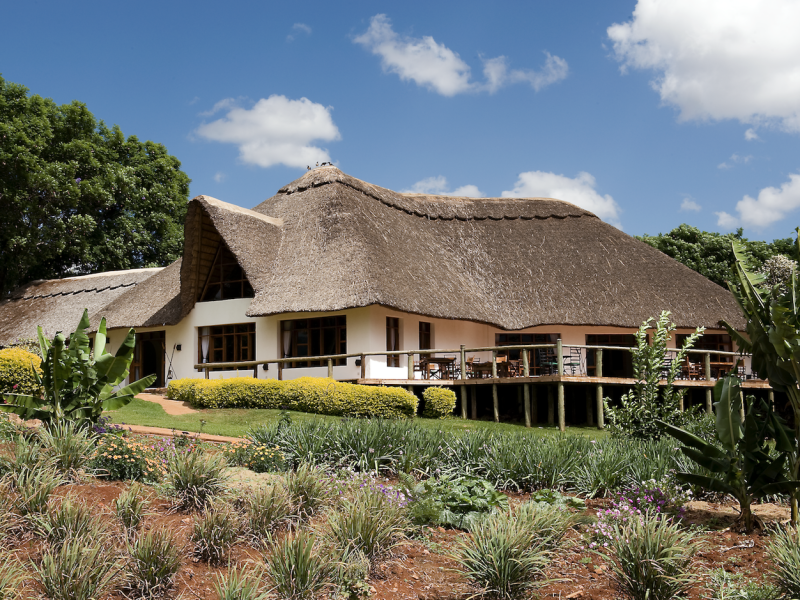
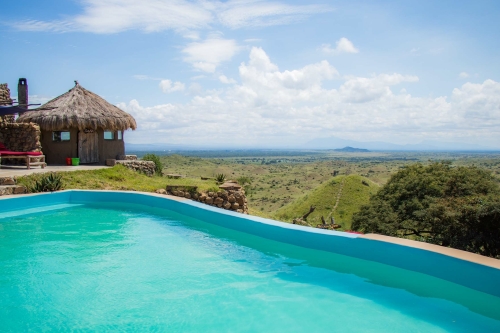
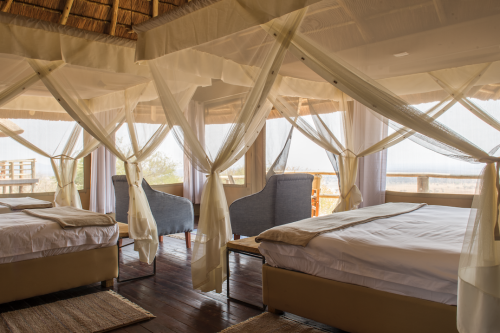
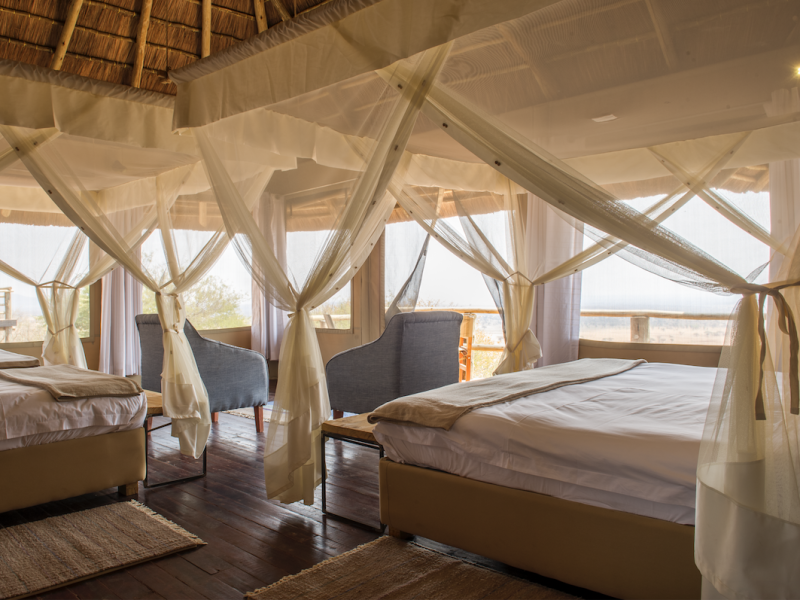
A permanent building of stone and wood, in a park or on its edge. Sometimes it is one building with rooms, more often separate cottages or chalets spread over the grounds, with a central restaurant and usually a pool. You have your own bathroom and hot water, and many lodges sit on a spot with a view over the valley or the plain. From comfortable to high luxury, and at the top end, lodges with a private pool at your room and a butler who brings your breakfast.

Tented lodge

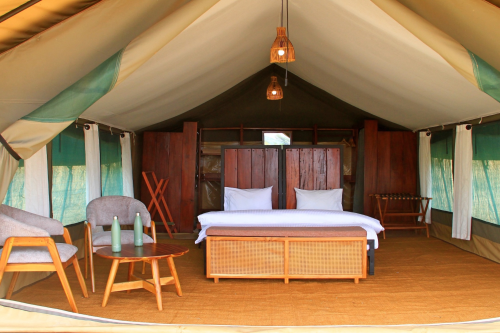
The form in between, and the name says it. A fixed structure, often on a raised platform, with canvas walls instead of brick. Inside it is a lodge room, with a real bed and your own bathroom, but you do hear the night. For anyone who wants the feeling of a tent with the comfort of a lodge, this is the one that works best.

Tented camp

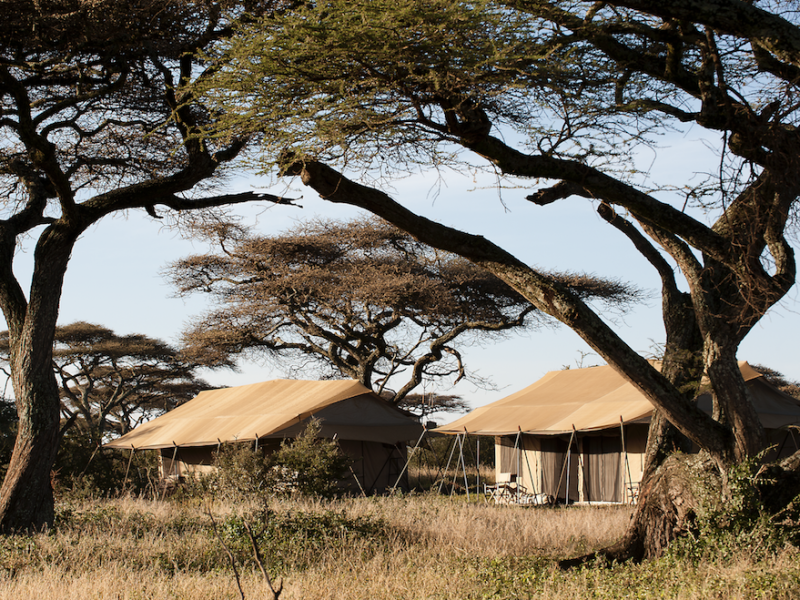
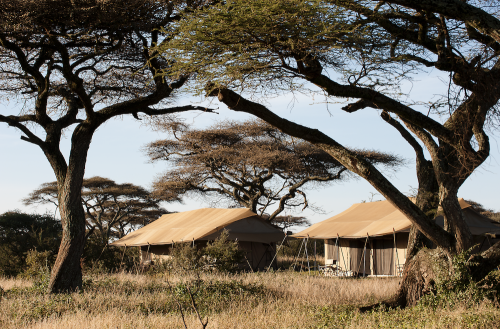
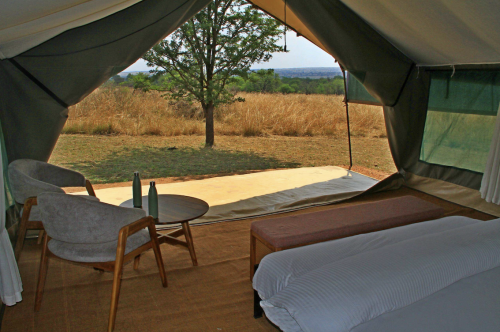
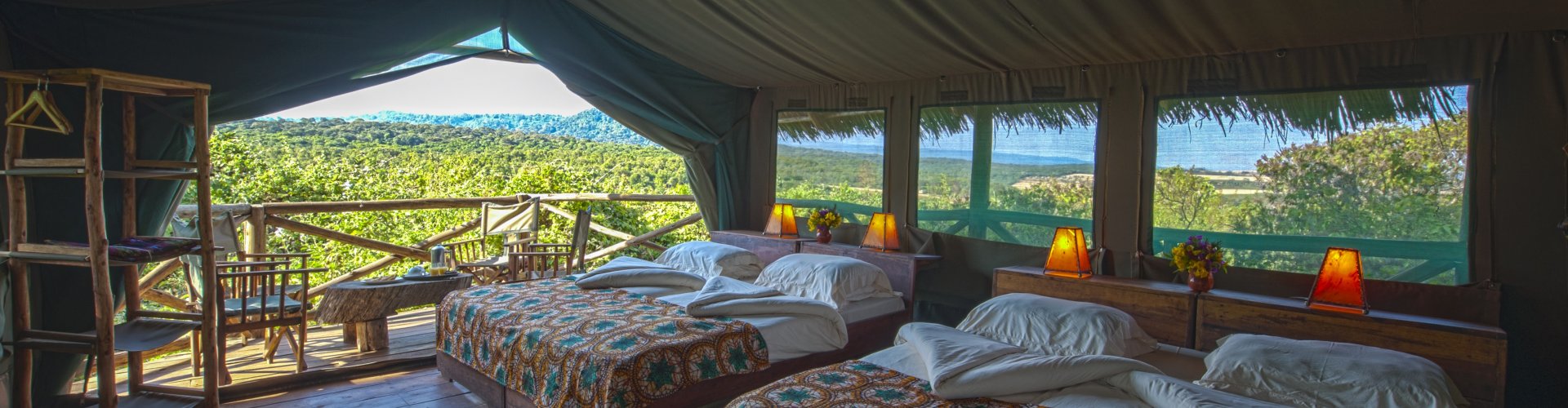
The form that stands closest to nature, and the one most people do not know. A roomy canvas tent with a good bed and your own toilet and shower inside the tent. The walls unzip, and then you are looking straight out into the savannah. Camps are small, eight to twelve tents on average, and they stand in the middle of the bush. Some tented camps stay in one place, others move a few times a year with the great migration.

What to expect at safari camps in Tanzania

Power

Almost all camps run on solar. You can always charge in the restaurant tent, and in some camps in your own tent as well. That varies by place, and we tell you beforehand what to expect.

Wifi

These days there is wifi in nearly every camp and lodge, so you can let people at home know all is well. Fast it is not always, but it works.

Hot water

There is hot water everywhere. In some camps it is heated at set times, around morning and evening, exactly when you need it.
Of these forms the tented camp is the least known, and it raises the most questions. You will also see it called glamping in Tanzania, and we explain the tented camp further below.

Tent safari, how a night in a tented camp really goes

Say tent and most people picture a campsite. Putting it up yourself, an air mattress, a shared bathroom block some way off. A tented camp has nothing to do with that. Your tent is already standing, you get it with everything in it, and the only thing you do yourself is put your suitcase down.

What a tent looks like

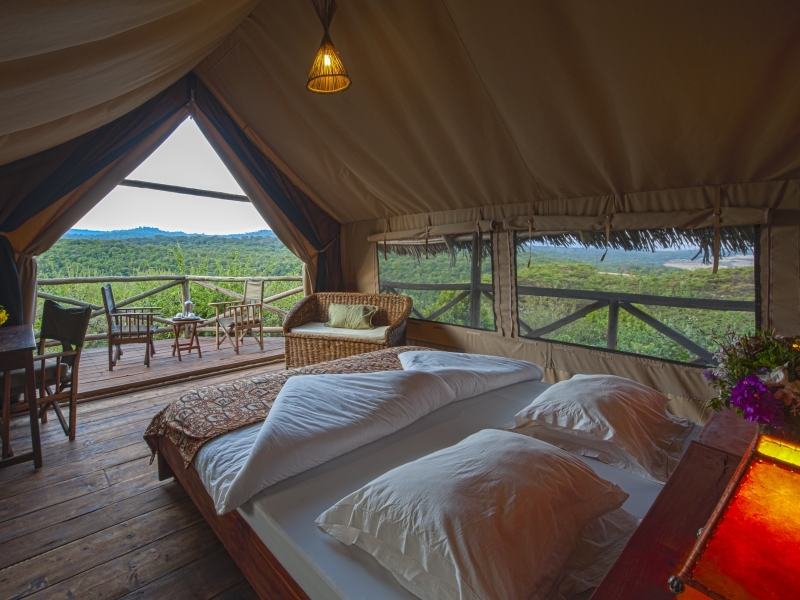
A tented camp is a large canvas tent, roomy enough to stand up in and walk around. Inside there is a real bed with a mosquito net where needed, a wardrobe or rack for your things, and your own toilet and shower in the tent. In front of the tent you often have a veranda with chairs, where you sit in the afternoon looking out over the plain. The canvas walls unzip, with mesh behind them, and then you are sleeping almost in the open.

How a camp works

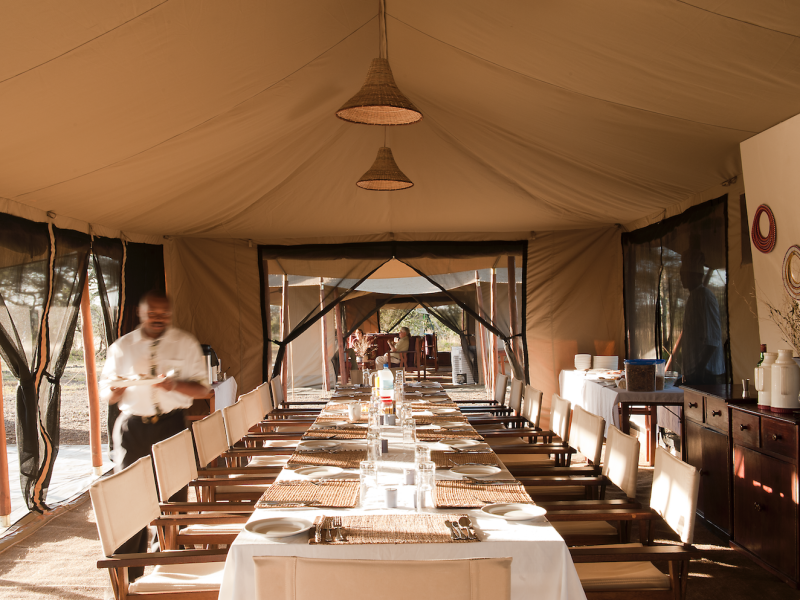
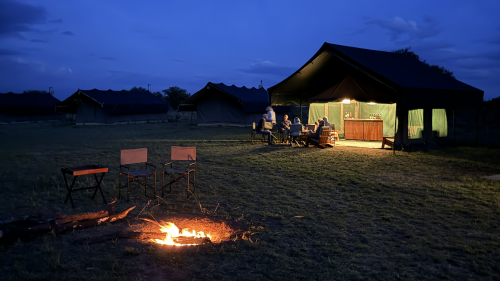
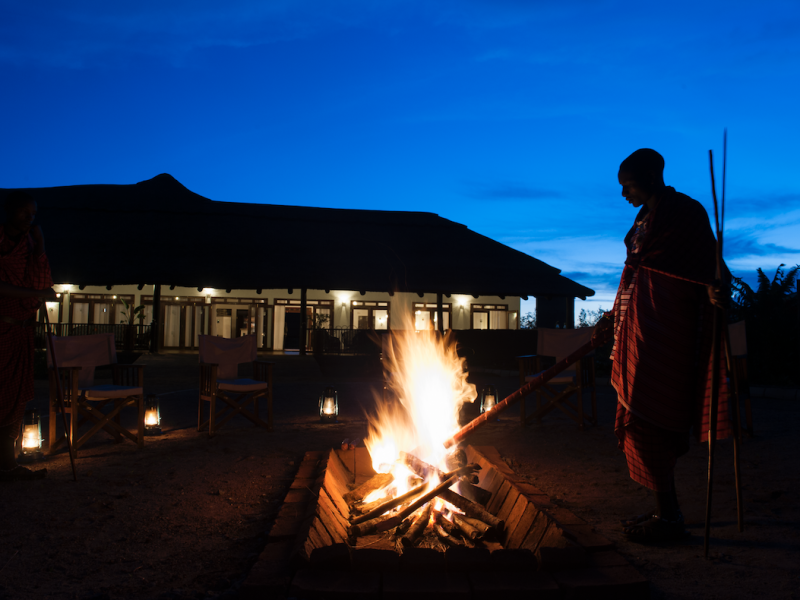
A camp is small, eight to twelve tents on average, spread over the grounds so you do not hear each other. In the middle stands a larger tent where you eat and where you sit in the evening, with a fire burning in front of it. A small team works there, a camp manager, cooks and hosts, and after two days they know your name and how you drink your coffee.

How a day goes

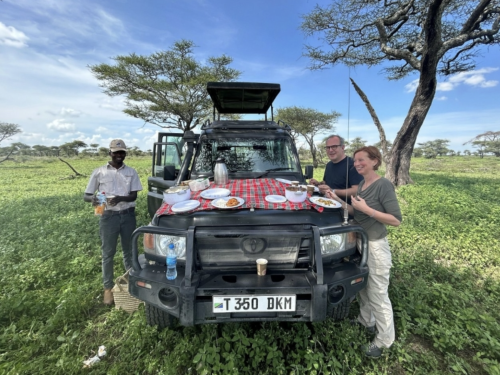
Up early, because the animals are active at sunrise. Breakfast in camp, or an early breakfast box with you in the car. Then the morning on safari, back for lunch, and through the hottest hours you rest on your veranda or by the pool if the camp has one. At the end of the afternoon out into the field again, until the sun drops. Back in camp a drink by the fire, and then dinner with the others. After that it is dark and quiet, apart from the sounds outside.

The food

The food in a camp is better than people expect, and it is one of the things guests mention most often. Freshly made, usually three courses at dinner, with African and western dishes side by side. If you are out all day you get a packed lunch. You pass on dietary requirements beforehand, and they are taken into account.

What you hear at night

This is the part people talk about afterwards, and the part they doubt most beforehand. You lie in your bed, the canvas is thin, and so you hear everything. Hyenas calling, a lion in the distance, grass rustling as something walks past. Because the animals do walk there. Camps and lodges in the national parks of Tanzania have no fence around them, that is not allowed and it is not the idea either. The park belongs to the animals, and the camp stands there as a guest. That holds for a luxury lodge just as much as for a tent.

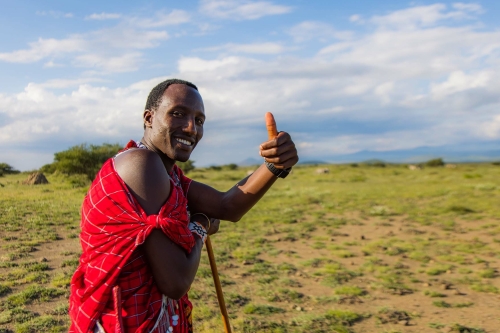
So a camp works with an askari, a night watchman who keeps an eye on the grounds. Ours are Maasai, people who grew up here and read the behaviour of the animals the way you read traffic. After dinner he walks you to your tent with a lamp, and he checks that the way is clear. During the day you walk around as normal, and at night you stay in your tent, with the walls zipped shut. That is the only rule, and it is easy to keep, because after a day like that you are tired anyway.

In practice, little happens. A buffalo grazing past the camp, hyenas keeping their distance. Guests write afterwards that they felt safe and at ease, and that the sounds at night were the most special part of the trip.

Why we recommend it in the Serengeti

You can sleep in a lodge in the Serengeti too, and that is fine. But if you want to sleep in a tented camp once, that is where. The plain is endless, the animals are there all year, and in a tent you lie in the middle of it instead of looking at it from the side. For most of our travellers those nights are the part that stayed with them most.

Our own camps in the north of the Serengeti

We do not only book camps, we have two of our own. They came out of irritation. We watched the central Serengeti get fuller, with lines of jeeps at one lion and camps growing into hotels, and we wanted to show that it can be done differently.
In 2022 we opened Kimbilio, which means safe haven in Swahili. Two small camps in the quiet north, both on solar power. Kimbilio Lobo sits among the hills of the Lobo area, where lions, leopards and elephants are there all year, so you do not have to wait for the herds. Kimbilio Bologonja stands closer to the Mara River, about an hour from the crossing points, but away from the crowds at Kogatende. Both camps are small, around eight to ten tents, with your own toilet and shower in the tent. A permanent team works there that we trained ourselves, and you notice it.

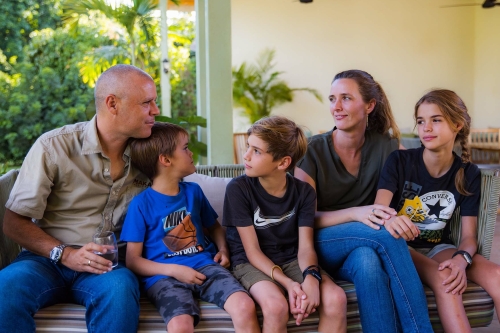
On TripAdvisor, Kimbilio Lobo stands at five stars from more than forty reviews, and the highest scores go to the location, the cleanliness and the service. One thing families mention often, and we set it up that way on purpose. At many camps you get split up as soon as you are more than four people. With us a family can sleep together in one tent.

You do not have to sleep with us to travel with us. We book a lodge or a camp belonging to someone else just as happily, if that suits you better or fits your route better. But if you sleep a few nights in the northern Serengeti, as you do on the great migration trip or on the Lake Natron trek, we would like to show you why we do it this way ourselves.

Safari lodges in Tanzania, from comfortable to high luxury

Accommodation in Tanzania varies widely in price, and the difference is often not in the room but in the location, the space, and the number of people on hand for you. Stars say little here, because Tanzania has no official classification system. What does say something is where a place stands and how it feels when you arrive. At one end of the scale are tidy, small-scale lodges and camps with your own bathroom, good food and a pleasant location. You are well placed there. For many travellers that is enough, because you are outside all day anyway. A step further gets you more space, a better location, often a pool, and more attention per guest, with camps small enough that the team knows your name.

Most of our travellers come out around there. And at the top end you find large suites and tents with a private pool, and a butler who brings your breakfast to the veranda. The difference there is mostly in the facilities, the furnishing, the food and the service, with more staff per guest and a kitchen cooking at restaurant level.

What most people do not know is that it does not have to be the same level everywhere. That is perhaps the most useful tip on this page. The variation is what makes a touring trip work. The night before your flight home you sleep in a pleasant hotel near the airport, nothing special needed there. Somewhere in the middle, a simple camp where you sit in the middle of nature. And then one place where you treat yourself, a lodge with a large terrace and a view, or a suite with a private pool.

A high point like that feels more special because the rest of your trip is different. Where it fits best depends on your route and on what you are after. We are glad to think that through with you, and we will tell you which places earn their price and which are mainly expensive. We know them from our own experience, we have been there ourselves, and our travellers come back to them. You get that advice from us, even when it means you spend less.

What we look for when we choose your safari accommodation

Our experience

We book places where we have slept and eaten ourselves. That way we know.

Location

Close to the wildlife, so you can get into the field quickly in the morning, and away from the busiest places.

Local benefit

We like to choose places that give something back to the people and the nature around them.

Value for money

We always check whether the price matches what you get, and we say so plainly when it does not.

Frequently asked questions about sleeping on safari

Is it safe to sleep in a tent in the Serengeti?

Yes. Camps work with an askari, a night watchman who keeps an eye on the grounds and walks you to your tent after dinner. At night you stay in your tent, with the walls zipped shut, and that is the only rule. What guests write afterwards is mostly that they felt at ease, and that the sounds at night were the most special part of the trip.

Is there a toilet and a shower in the tent?

Yes, in the camps we book every tent has its own toilet and shower. So you do not have to go outside at night.

Can children come to a tented camp?

They can, and many families find it the best part of the trip. Do watch the age limits, because some camps do not take very young children. In our own camps a family can sleep together in one tent, while at many other camps you get split up as soon as you are more than four.

Is a tented camp suitable if you are unsteady on your feet?

That depends on the camp. The tents are spread over grounds with sand and grass paths, and sometimes they stand on a raised platform with a few steps. Tell us what you need, and we will pick a camp that works, or we book a lodge where everything is closer together.

Is there a laundry service in the camps?

In most camps and lodges you can have laundry done, often for a charge. That saves luggage, because you can manage with less clothing than you think.

Do you eat together at one table?

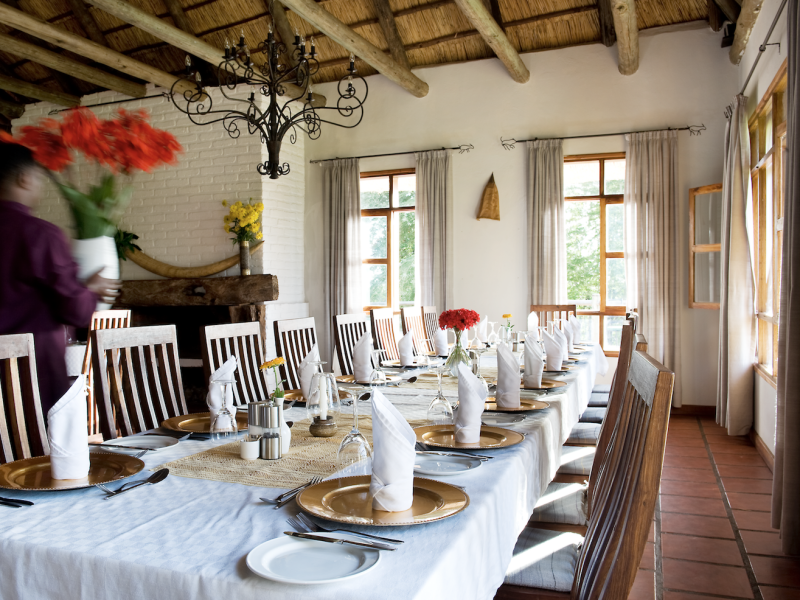
That varies by camp. Some camps put all guests at one long table, which is sociable and often produces good conversations. Others have separate tables, so you sit with your own party. If you would rather have one or the other, let us know.

What do you take to a tented camp?

Little. Your suitcase goes into the tent with you, and you need no bedding or towels, that is all there. A flashlight and warm clothes for the evening are useful, because the Serengeti cools down a fair amount at night.

How many nights do you sleep in one place?

Usually two or three nights per property. Staying longer in one place gives you rest and saves driving time, so if your route allows it, we recommend it.

Can you combine a tent and a lodge in one trip?

Yes, and that is exactly what we recommend. The variation makes the trip better, and that way you experience both.

Do you also book high luxury accommodation?

Yes, from comfortable mid-range to suites with a private pool and a butler. Tell us what you are looking for and what you want to spend, and we will build the trip around that.
We chose a nice mixture of lodges and tented camps. All were equipped quite well. The service was amazing and the food was also very good.

Where you sleep best, we choose together

Which places suit you depends on your route, who you are travelling with, and what you enjoy. Tell us what you are looking for, and we will build the trip with accommodation that fits. You are not tied to anything, and a call puts you under no obligation.