Gombe National Park

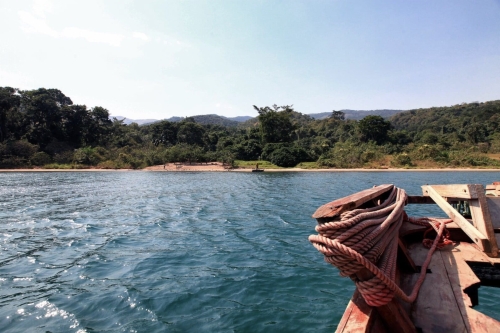
Gombe Stream, the smallest national park in Tanzania, sits on the steep shore of Lake Tanganyika and is reachable only by boat. This is where Jane Goodall began her research in 1960, and where the longest running wild chimpanzee study in the world still carries on.

Gombe Park in short

Size

Just over thirty square kilometres (twelve square miles), the smallest park in Tanzania

What Gombe, formerly Gombe Stream National Park, is known for

Chimpanzees, the work of Jane Goodall and Lake Tanganyika

Gombe from Kigoma

By boat only, one to two hours with a fast boat

Best time to visit Gombe

July to October for the easiest paths, possible all year

We recommend

Two nights, so that you can trek twice

Why go to Gombe Stream National Park

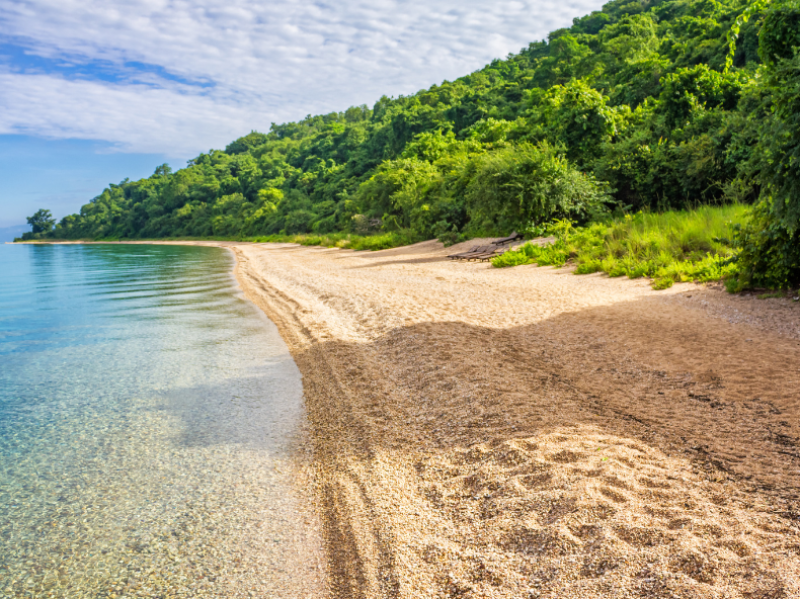
On 14 July 1960 a twenty-six year old British woman with no university degree stepped ashore on a pebble beach on Lake Tanganyika. Jane Goodall came at the request of the palaeontologist Louis Leakey, to observe chimpanzees, and what she found changed how science looked at animals and at ourselves.

She watched a chimpanzee she called David Greybeard strip the leaves from a twig and use it to fish termites out of a mound. He was not only using an object, he was making a tool of it, and until that moment that counted as something only humans did. Leakey wrote back to her that we must now either redefine tools, or redefine man, or accept chimpanzees as human.

That research has never stopped. The daily observations have run without a break since 1960, which makes it the longest running study of wild chimpanzees in the world. Anyone who comes here walks through the forest where all of it happened, past the old feeding station and along the paths that generations of researchers have worn down. And the landscape is something in itself. Gombe is a narrow strip of mountain rainforest on the steep fault wall of the Rift Valley, cut through by thirteen to sixteen valleys with streams that carry water all year.

Below lies Lake Tanganyika, the second deepest lake in the world, with clear water and hundreds of fish species that occur nowhere else. After a hard morning in the mountains you can walk straight into the lake.

Gombe is small, and that means something. About 77 chimpanzees still live here, spread over three communities, which is almost half the 120 to 150 of the sixties.

There is hardly any other large game. No lions, no elephants, no Big Five, and there are no roads so no game drives either. A traveller summed it up bluntly, apart from the chimpanzees there is no other animal to speak of.

The terrain is steep and often slippery, and a trek takes one to three hours, sometimes longer. And the accommodation in the park is simple.

What you get back for it is a place where history was written, chimpanzees that have been used to people for generations, and a lake you can swim in at the end of the day.

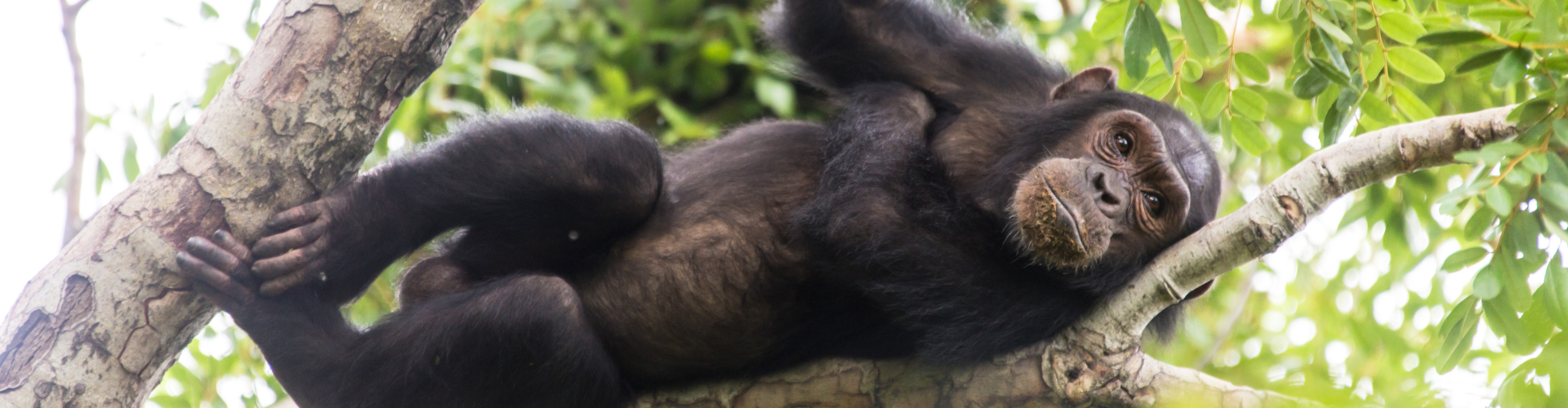
What you see in Gombe National Park

Gombe turns on primates, and that is not a shortcoming but the starting point. What you see depends on where the chimpanzees are that morning and on how many times you head out.

The chimpanzees

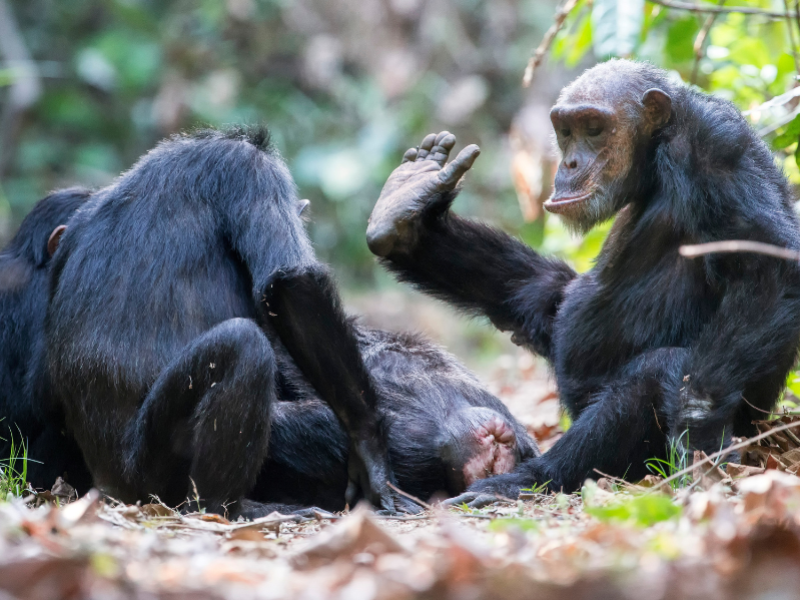
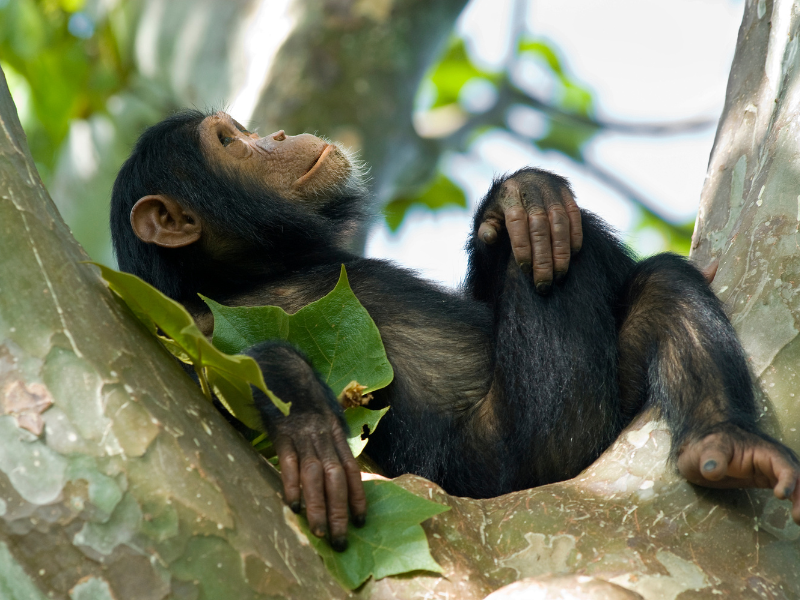
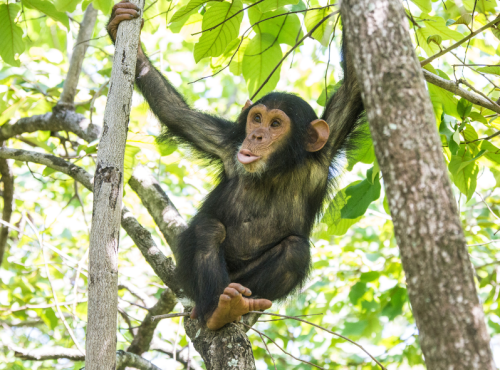
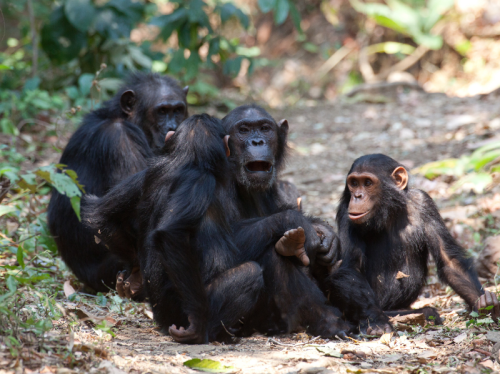
Three communities live in the park. Kasekela in the middle is the best habituated and is the group Jane Goodall studied, and it is also the group most visitors see. Mitumba in the north is the second community open to visitors, quieter. Kalande in the south has largely collapsed and is not opened up for tourism. Sightings are never guaranteed, and the park authority says so itself. In the dry season the chances are good, in other months guides on the ground sometimes put it at about half. That is exactly why we recommend two nights, so that you can trek twice.

The rules with the chimpanzees

Chimpanzees share almost all our genetic material, and with it our diseases. In Gombe that is painfully visible, because more than half of the deaths are linked to disease, and there have been several outbreaks of respiratory illness over the years. So strict rules apply. You go with a maximum of six visitors and a guide, you stay an hour at most, you keep ten metres (33 feet) away and you wear a face mask close to the animals. Eating and drinking near the chimpanzees is not allowed, and anyone who is ill does not go.

What else you are almost certain to see

Olive baboons, a troop that has been studied since the sixties and that often simply walks along the beach. Beyond that red-tailed monkeys, blue monkeys and vervet monkeys. For birdwatchers there are more than 200 recorded species.

What not to count on

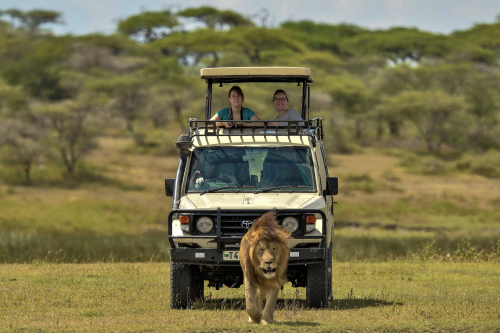
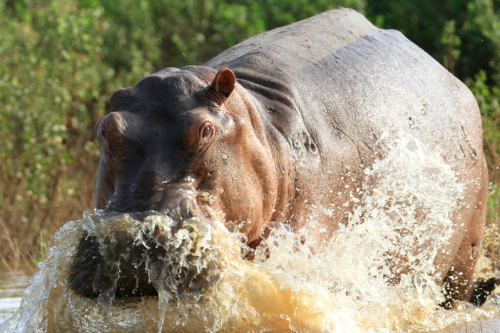
There is no large game and no predators of any significance. Hippo pass along the shore now and then, and leopard tracks are seen occasionally but the animals themselves almost never. Operators who present Gombe as a Big Five destination or as an ordinary safari are wrong. This is a chimpanzee park on a lake.

Where you are in the park

Gombe is small and narrow, so you move within an area you can hold in your head. Kasekela in the middle is the heart. This is where the park headquarters, the research centre, most of the accommodation and the old feeding station are, where Goodall came to know the chimpanzees. From here the paths run into the forest, to the Kakombe waterfall and up to Jane's Peak, with views over the lake and the valleys. Mitumba in the north is the second community open to visitors, and it is quieter there. Kalande in the south is not accessible to visitors. There are more than forty-five kilometres of paths in the park, so there is more walking here than the chimpanzee trek alone.

Your trackers makes the difference

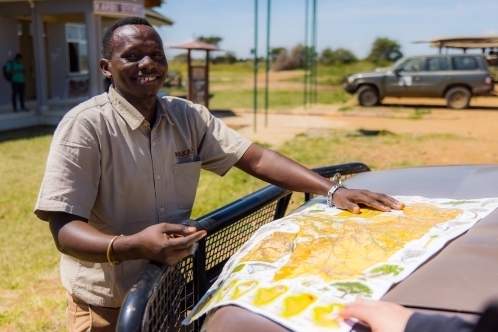
The chimpanzees of Gombe have been followed daily for more than sixty years, and that is exactly why you can find them. The trackers know where the group built its nests the evening before, and that is where the morning starts. They work on sound and on tracks. Calling that rolls across the valley, broken branches, freshly eaten fruit on the ground. As soon as they find the group you hear about it, and then you climb up to them.

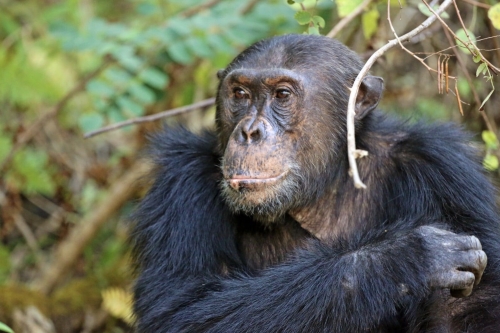
What makes the guides here unusual on top of that is their knowledge of the animals themselves. Many chimpanzees are known by name, with their family line and their history, because it has been recorded for decades. So you are not looking at a random ape, but at an animal someone can tell you who its mother was.

And your guide sets the pace. The slopes are steep and often slippery, and sometimes you have to push through scrub. Walking calmly and stopping in time is not a luxury here.

The best time to go to Gombe National Park

Chimpanzee trekking is possible all year, and no month drops out. What differs is how hard the paths are and how far the chimpanzees sit from the camp, and those two work against each other. If you want the easiest walking, go between July and October. If you want the best chance that the chimpanzees sit close to the camp, the wet months are in your favour, provided you can handle a hard climb.

July to October

The main dry season and the best period for walking. The paths are firmer, the vegetation thinner and the climbing easier. The chances are best towards the end of the dry season. This is the peak period.

November and December

The short rains. The forest turns green, the migrant birds arrive, and the chimpanzees often stay closer to the camp because there is more to eat. That can make them easier to find in these months.

January and February

A drier break between the two rainy periods, with reasonable conditions for walking. A good and quiet time to go.

March to June

The long rains, with the heaviest and most slippery paths of the year, and boat transfers that can be delayed. The forest is at its greenest though and there are few visitors, and the chimpanzees often sit lower and closer. In June the paths dry out and the park moves into the good season.

How long to stay

Two nights at least. The reason is simple. Chimpanzees are never guaranteed, and with one trek you put everything on a single attempt. If they are far off that morning or high in the trees, the visit disappoints and there is no second chance. With two nights you trek on two mornings, and that raises your chance considerably.

A day trip from Kigoma is possible, and travellers do it. For someone already in Kigoma with little time, that is a defensible choice. But you travel far and pay a lot for one attempt, and that is exactly why we would rather plan it differently.

What you can do here alongside the chimpanzees: walking the more than forty-five kilometres of paths, to the Kakombe and Mkenke waterfalls and up to Jane's Peak. Birdwatching. And out on the lake, with a boat trip, snorkelling or swimming among the cichlids.

Where it fits in your route

Gombe lies about twenty kilometres (twelve miles) north of Kigoma and there is no road to it, so you go by boat, in one to two hours. You fly to Kigoma from Dar es Salaam or Arusha, and because the flights are limited, the departure days shape your trip. From Kigoma it is about an hour's flight to Katavi, a strong combination, because then you set the forest next to the plains and the hippo.

Gombe or Mahale? We get this question often, because both parks lie on the same lake and are about chimpanzees. Choose Gombe for the history, the accessibility and lower costs for your stay. Choose Mahale for more chimpanzees, better accommodation and mountains that rise straight out of the lake.

Like Mahale, Gombe works best as an addition to a larger trip. You usually do your safari in Tanzania first and then fly west.

Where you sleep at Gombe

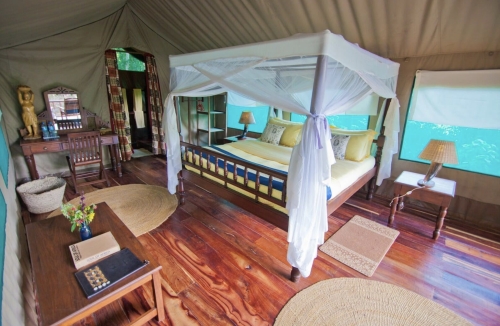
The choice in Gombe is small, and in practice one camp comes into consideration for our travellers. Gombe Forest Lodge lies on the shore, with seven tents on wooden platforms under old mango trees, for a maximum of fourteen guests at a time. Each tent has its own bathroom and a veranda on the water, and they are named after chimpanzees the researchers know by name. You eat inside or on the beach, and in the evening you sit by the fire with the lake in front of you. What is pleasant about this camp is that the daily chimpanzee trek and the kayaking are in the rate, so you know in advance where you stand. The camp is closed in March, April and May.

Frequently asked questions about Gombe National Park

Am I certain to see chimpanzees in Gombe?

No, and nobody can promise that. The park authority says so itself. In the dry season the chances are good, in other months guides on the ground sometimes put it at about half. With two nights, and so two treks, you raise your chance considerably.

How do you get to Gombe?

By boat only, from Kigoma. There is no road at all into the park. With a fast boat you are there in one to two hours, with the local boat taxi it takes longer. You fly to Kigoma from Dar es Salaam or Arusha.

How hard is the trek?

Demanding. The terrain is steep and often slippery, and sometimes you have to push through scrub. A trek takes one to three hours on average, and sometimes longer. Travellers regularly underestimate this. Anyone unsteady on their feet or troubled by their knees will not get what they came for here.

How many chimpanzees still live in Gombe?

About 77, spread over three communities, against 120 to 150 in the sixties. The population is small and isolated, and disease is the main cause of death. That is why the rules around visits are so strict.

What is the link between Jane Goodall and Gombe?

Her research began here, on 14 July 1960, and here she made the observations that changed science. She had not worked permanently in Gombe for decades and travelled the world as a speaker. Jane Goodall died on 1 October 2025, aged ninety-one. The research she began carries on in Gombe as before, and the trackers still know the chimpanzees by name.

Is Gombe a Big Five park?

No, and it is not an ordinary safari destination either. There is no large game and no predators of any significance. You come here for chimpanzees, other primates, the forest and the lake.

Can you swim in Lake Tanganyika?

Yes, and many visitors do. The water is clear and hundreds of colourful fish species live in it, most of which occur nowhere else. Snorkelling and kayaking are possible too.

What is the difference between Gombe and Mahale?

Gombe is smaller, closer to Kigoma, easier to reach and cheaper to stay in, and it is the place where Jane Goodall began her research. Mahale has far more chimpanzees, better accommodation and mountains that rise straight out of the lake, but is more remote and more expensive.

Gombe in your Tanzania trip

Gombe is small, simple and not easy to reach, and even so it is one of the most unusual places in Tanzania. You walk through the forest where in 1960 a young woman sat down to watch and turned science on its head, and where that work still goes on every day. Tell us when you want to go and what you already have in mind, and we will think with you about the route, how many nights you need, and the choice between Gombe and Mahale.

Combining Gombe with a safari

Gombe Stream National Park is an addition to a safari, not a replacement for it. You usually do your safari first and then fly west for the chimpanzees and the lake. These three itineraries combine most easily, although we put every trip together to order, so we fit Gombe into another route as well.
Tanzania Safari Makasa Jeep

Safari and Zanzibar

The classic tour through the north, from Lake Manyara, the Ngorongoro Crater and the Serengeti, with Zanzibar to finish. The flight west to Kigoma fits on after the north, and a boat covers the last stretch.

Tanzania Great Migration

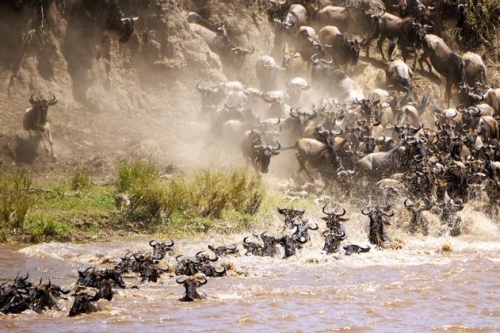
Nine days following the migration through the Serengeti, with Tarangire and the Ngorongoro Crater on the way. From Arusha you then fly west to Kigoma, and from there it is a boat to the forest.

Southern Tanzania

Fifteen days through Nyerere, Mikumi and Ruaha, far from the crowds. This is the longest way round to Gombe of the three, because the flights to Kigoma leave from Dar es Salaam and Arusha.