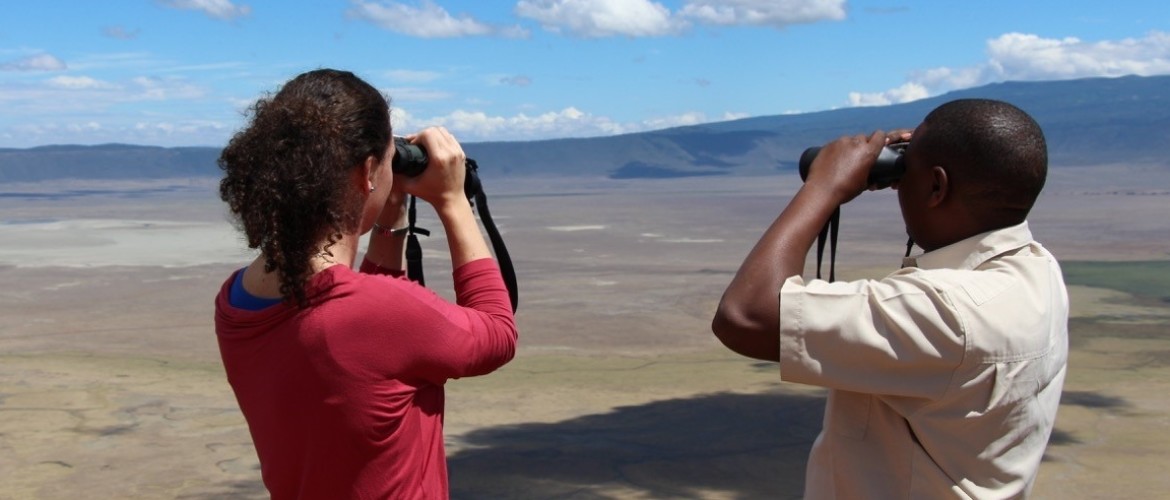
The best binoculars for safari
For a safari, a pair of 8x42 binoculars is the best choice for most people. They magnify enough to pick out a leopard in a tree, let in enough light for the early morning, and you can hold them steady in a vehicle. If you want to see further, take 10x42. Bring one pair per person on safari.
What the numbers mean
The first number is the magnification, the second the diameter of the lens in millimetres.
Binoculars | Magnification | Who they suit |
8x32 | 8 times | light and compact, good for children and in your hand luggage |
8x42 | 8 times | the best all-round choice, also in low light |
10x42 | 10 times | seeing further, birds, but harder to hold steady |
A larger lens lets in more light. That counts at sunrise and late in the afternoon, which are the best hours on safari.
Why not stronger
Binoculars of 12x or more sound useful, but every movement of your hand is magnified too. In a vehicle that has only just stopped, with the engine still ticking over, all you see is shake.
One pair per person
Afterwards, guests tell us more often that they were glad of their binoculars than of their camera. Sharing sounds fine, until a cheetah is lying in the grass and you both want to see it. Bring one pair per person, children included.
What to look for
- Waterproof and dustproof. Safari dust gets into everything. Nitrogen-filled binoculars also will not fog up when the morning is cold.
- Weight. Around 600 to 800 grams for an 8x42. They hang around your neck all day.
- A good strap. Or a harness that spreads the weight across your shoulders.
- A lens cloth. For the dust, not your shirt.
Binoculars or camera
Both. A camera records, binoculars let you look. A phone is fine for the landscape and falls short for an animal at a distance. More on cameras and lenses in our blog about photography on safari.
Everything else to bring is on our packing list.
Where you will use them
Which parks you see and how many days you spend in the vehicle is set out for each of our itineraries.