We booked other people’s camps in the Serengeti for sixteen years. In that time the centre of the park filled up, with lines of jeeps at one lion, camps that grew into hotels, and breakfast among two hundred other guests. So we went northeast instead, into the part of the park most travellers drive past, and in 2022 we built our own. Kimbilio means safe haven in Swahili. There are two of them, both small, and we intend to keep them that way. This is what they are, and when we would not send you there.
Two camps, both small
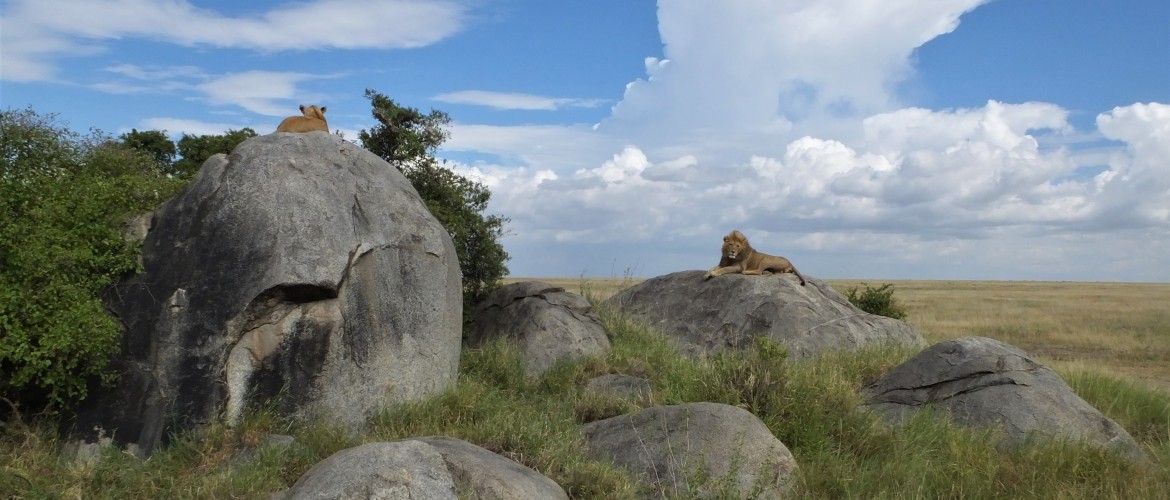
Kimbilio Lobo sits among the hills of the Lobo valley, around ten tents. Lions, leopard and elephant stay in this area all year because the water does, so a good safari here does not depend on waiting for the herds. Kimbilio Bologonja lies further north, around eight tents, about an hour from the Mara River and deliberately away from the traffic at Kogatende. In crossing season you drive out to the river from there, and you sleep in a part of the park where almost nobody goes. Eight and ten tents is the size we chose, and it is the size they will stay.
How you sleep there
A canvas tent with room in it and a proper bed. Each tent has its own flush toilet and a shower with running water. The canvas walls unzip, with mesh behind them, so you can lie there and look out over the plain, and in front there is a veranda with chairs, which is where the afternoon goes when it is too hot to drive. You eat in the large tent or outside by the fire. The same people work here all season, we trained them ourselves, and after two days they know your name and how you take your coffee. Kimbilio Lobo holds five stars on TripAdvisor across more than forty reviews, with the highest marks for location, cleanliness and service.
Why it is quiet here
Lobo is the least visited part of the Serengeti. A full day of driving without meeting another vehicle is a realistic thing to expect there, and in the centre of the park it no longer is. That comes with a trade. The bush here is denser than the open plains in the south, so you work harder for a sighting and they come less easily. What you get for the work is being the only ones there when you find something. And the Lobo valley is, with Seronera, one of the few places in East Africa where you have a real chance of all three big cats.
When the herds come through
From about the middle of September to the end of November the wildebeest and zebra move back south along the eastern side of the park, and they pass Lobo on the way. Come then and you are in the migration without the crowds of crossing season. In July and August the herds are further north, around the Mara River. That is when Bologonja is the camp that puts you closest to them.
On solar power
Both camps run on solar. You charge your phone and your camera in the restaurant tent rather than in your own, and in a place where everything has to be brought in from a long way off, we keep what we use as small as we can.
With children
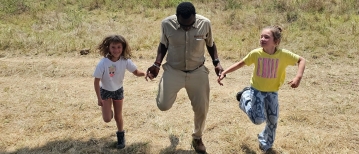
Families are welcome here, and that is not a line. Many camps split a party once there are more than four of you, and our family tents take a family together, up to four children. There is no swimming pool. What there is instead is a fire at sunset, a guide who walks the children round the camp and shows them what made the tracks beside the path, and hyenas close enough at night that nobody needs persuading to stay in the tent. Ngomi’s own children grew up coming here, and that shapes how families get looked after.
You do not have to stay with us
We book other lodges and camps when they suit your route better, and we say so. In calving season Ndutu is the more logical place to be. In crossing season Kogatende can be the more practical one. But if your route takes you through the northeast of the Serengeti for a few nights, you will see for yourself why we built camps there.