
On family safari in Tanzania, and what parents ask us most
Most parents who write to me open by apologising for how many questions they have. Then the questions come anyway. From what age. Malaria. How many hours a day in the car. Whether it gets too much for a small child. Whether they will remember any of it in ten years.
I do not find those emails difficult. They are the questions I asked myself, and I answer them every day for my own three, who have been going into the bush their whole lives.
All of them are below, each one with an answer, written the way I would give it to a friend.
Short answer. Tanzania’s national parks have no minimum age, so a child of any age can go on safari. We travel privately only, so every family has its own guide and its own jeep and sets its own pace. Malaria prophylaxis is needed, for children too, and on Zanzibar as well, and it can be arranged properly. And the best month depends on what you want to see and how much company you can stand, which means it is not automatically the summer holidays.
A private safari, with your own guide and your own jeep
I start here, because this one thing answers about half the questions in this article.
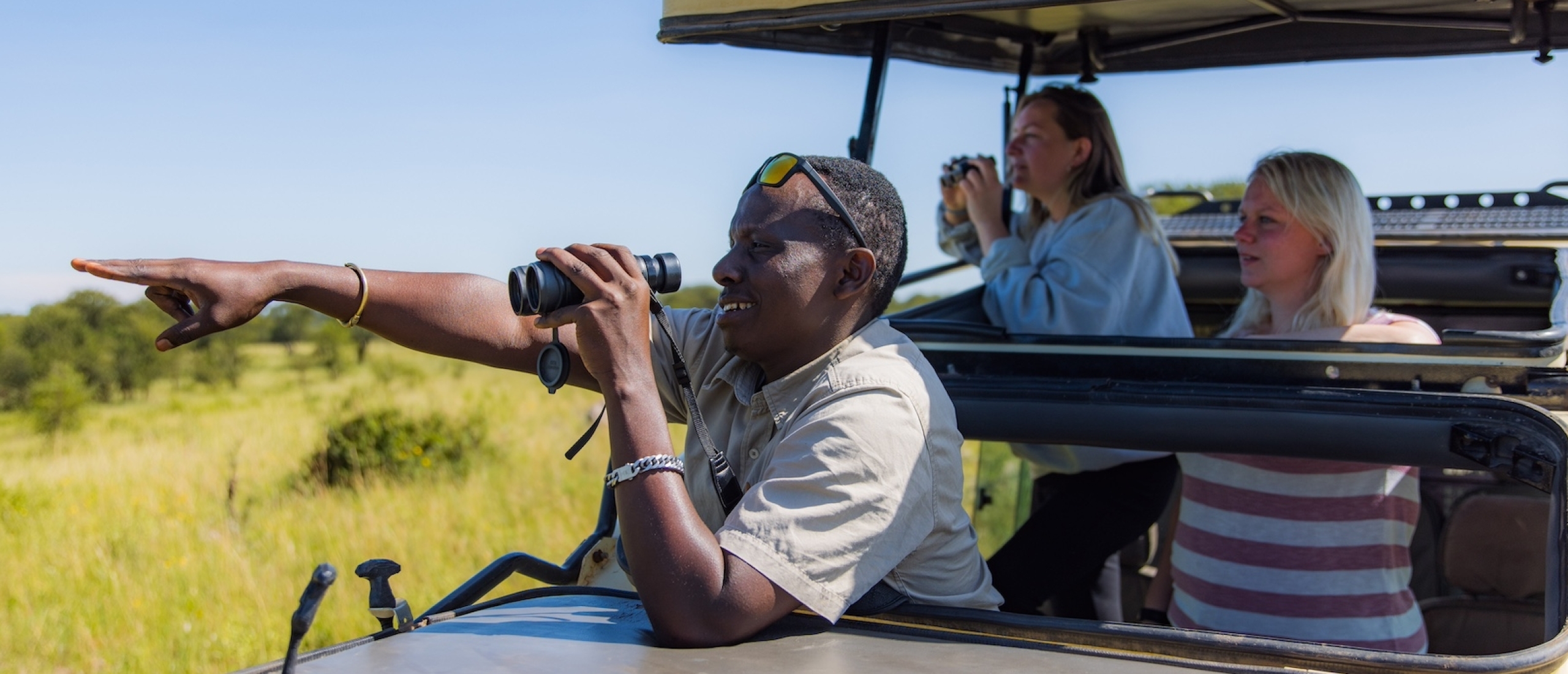
Every family travels with its own guide and its own Toyota Land Cruiser with an open roof. Not a shared vehicle with four other adults in it, each of them wanting something different that morning. No departure time you have to fit into. This is not an upgrade you buy from us. It is the only way we work.
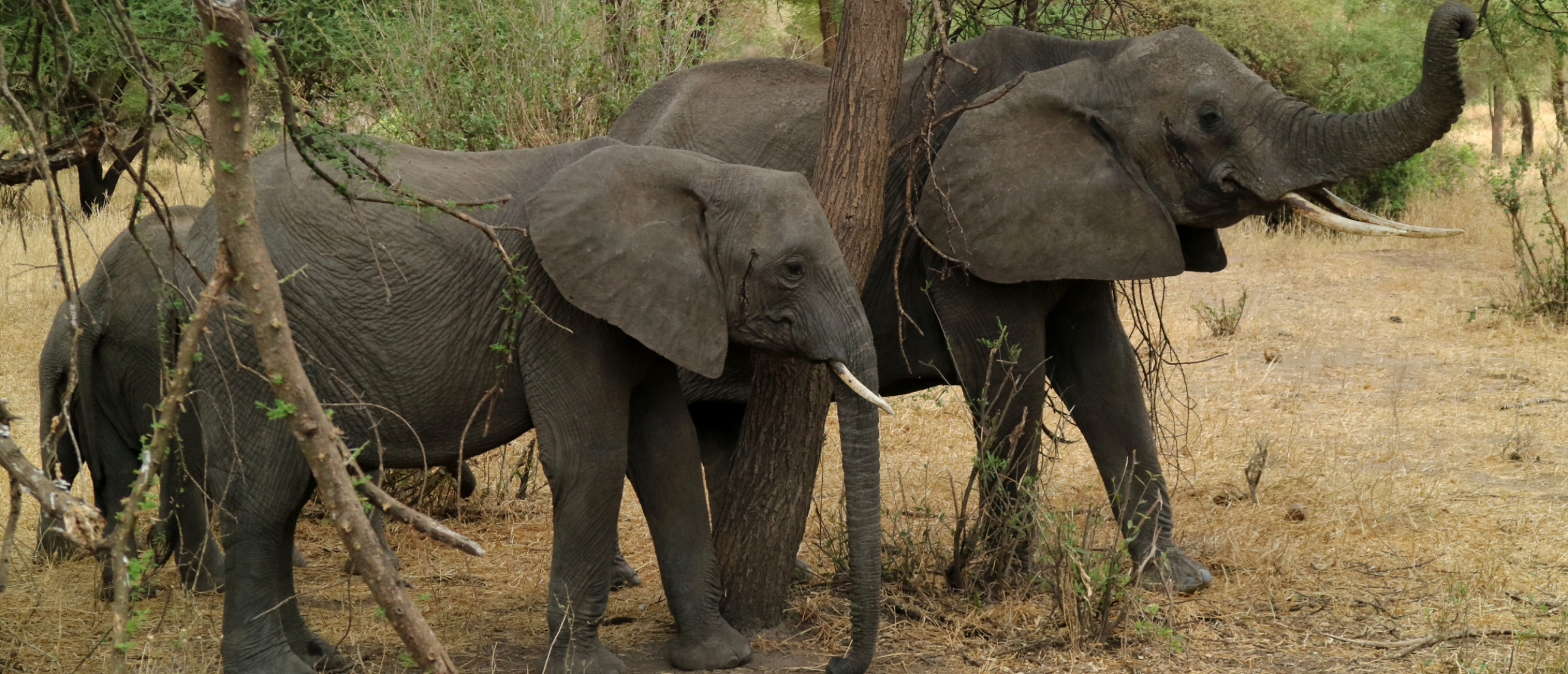
With children, the difference shows up on the second day. You stop when somebody needs the toilet. You stay half an hour with the same herd of elephants because your daughter does not want to leave. You drive back when your son has had enough, at eleven in the morning if that is when it happens, and you go out again an hour later once he has slept.
The guide is the trip, and with children even more so
If one thing decides whether a safari works for children, it is the guide.
We read every review our guests write. In almost every family story the subject is not the lion and not the lodge. It is the man who sat next to them in the car, and he is usually named in the first or second sentence.
A Swiss family wrote about Robert, who knew when to pull the children in and when to leave them be. Robert is a father himself. That instinct does not come out of a training course.
Ayse travelled with children of nine and twelve, with Medi driving. Renate came with her three teenagers and Augustino. Both stories carry the same note, that the guide made the difference between a trip the children sat through and a trip they were part of.
Our three children, eleven, nine and six, thought it was a wonderful adventure, and they enjoyed the company of our friendly and knowledgeable guide. Sophie D.
We had an excellent guide who was also great fun with the children, thirteen and fifteen. Jolanda N.
The families above cover every age from six to fifteen, and the verdict does not change across that range.
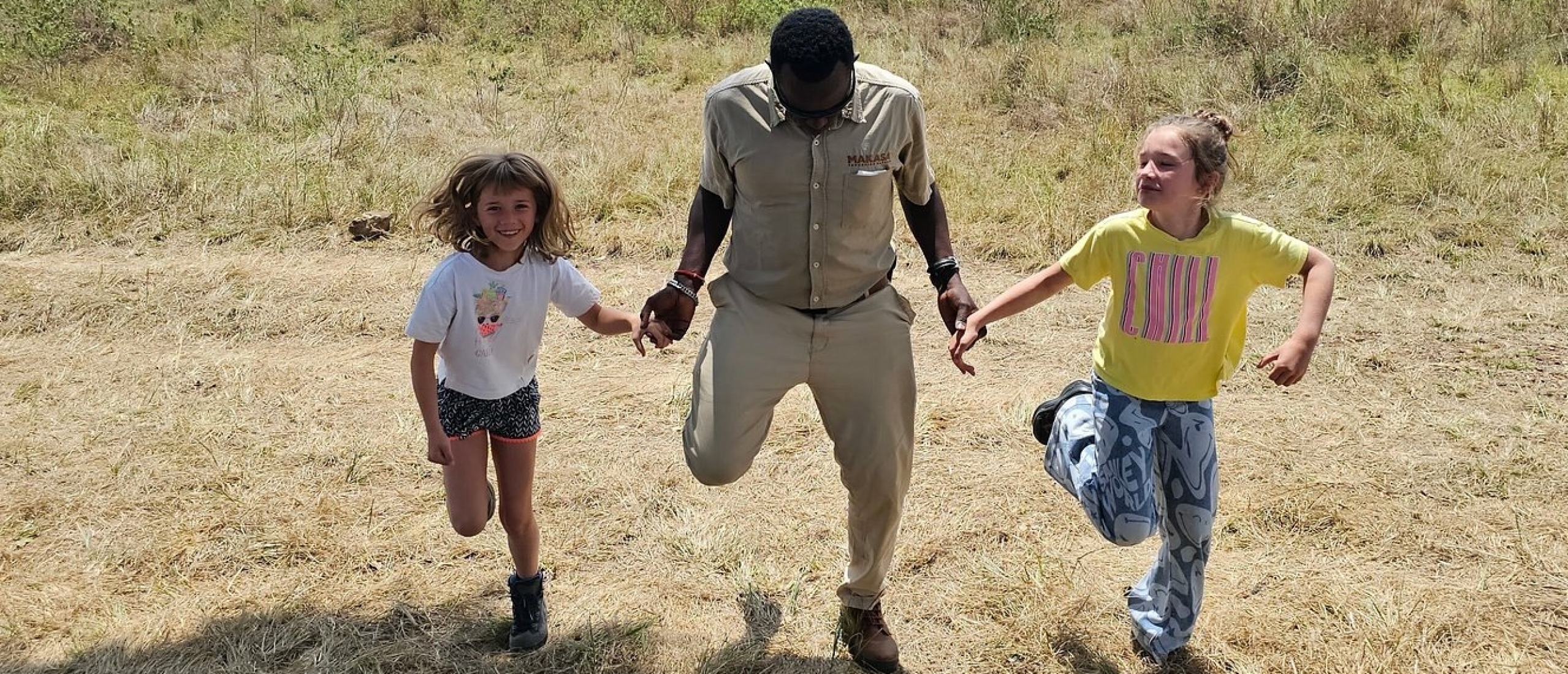
Every guide who drives for us is somebody we know ourselves and chose ourselves, patience with children included. They point things out, they turn a sighting into a game, they teach children to count in Swahili, and they answer the same question the seventh time it is asked.
From what age a child can go on safari
Tanzania’s national parks set no legal minimum age. A child of any age may go in, babies included.
A few individual activities do carry age limits, and those are the ones people confuse with the rules of the parks themselves. Here is what applies.
What | From what age |
The national parks | No minimum, all ages |
No minimum age | |
A game drive in your own vehicle | All ages |
A balloon flight over the Serengeti | From 5 years |
Most camps and lodges | No age limit |
Some camps | From 5, and the occasional camp from 12 |
A walking safari with a ranger | Usually from 12 |
A camp that starts at twelve is rarely doing it for safety. It is atmosphere. A camp that fills up with honeymooners may not want children at its pool, which is their right. Other places work the other way round and are glad to see you coming.
Parents often ask whether their child will remember it. Children grow on what they experience, including the parts they cannot tell back to you later. You travel as a family, together. What changes with age is not whether you can go, it is how you build the day.
Tanzania with small children, what works and what does not
A safari works with toddlers and pre-schoolers, as long as you build the day differently.
What works, and this is what we do. Game drives of two to three hours and no longer. Out early and back for lunch. The afternoon at the pool. Two or three nights in one place instead of packing up every day. A camp whose staff are used to children, which in Tanzania is nearly all of them. And a guide who does not mind turning back.
What does not work is five parks in ten days. That is a lot for adults. With a four-year-old in the car it mostly adds hours of driving.
Small children also notice different things than you do. Mine, at that age, were more taken with dung beetles and a lizard on a rock than with lions in the distance. A good guide follows that and stops for the things that are not in the guidebook.
Children under five pay no park entrance fee, which makes those days cheaper as well.
Where you sleep on a kid-friendly safari
This is the part I like talking about most, because this is where most of the fun happens.
Far more is possible for families here than people assume. Family rooms with two bedrooms and a bathroom between them. Lodges with a pool where children swim the whole afternoon. Camps where the chef makes pasta for a child who wants nothing off the menu. Tents where you hear hyenas at night.
We recommend those places because we have been to them, with our own children, and not because we found them on a list somewhere.
We also have our own camps in the northern Serengeti, Kimbilio Tented Camps, away from the busy spots. You sleep under canvas with the bush around you, and the family tents take up to four children. For a lot of children this is the part of the trip they talk about longest.
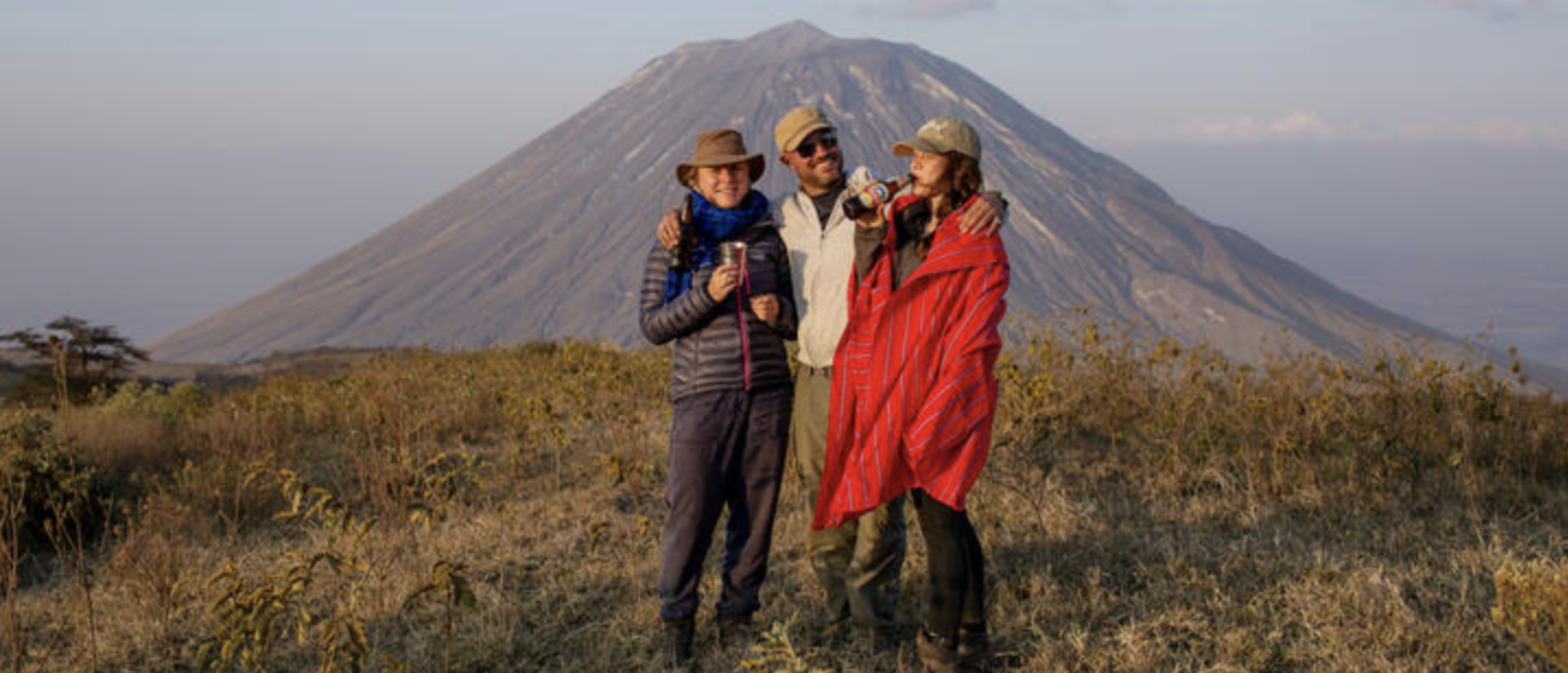
Near West Kilimanjaro you can stay on Maasai land, at Osiligilai Maasai Lodge, where the guides are Maasai themselves. A family with children of nine and twelve called it the high point of their trip, between the spear throwing and walking out with a donkey. Children tell that story at home for longer than they talk about lions.
And children are welcome everywhere in Tanzania. They get picked up, walked with and talked to. A child does not stand out here.
Malaria on safari with children, and the other vaccinations
This is the question that holds families back more than any other, so here is the whole answer.
All of Tanzania is a high-risk malaria area, the northern parks and Zanzibar included, all year round. A malaria-free safari in Tanzania does not exist, and anyone promising you one is selling you something other than Tanzania.
It sounds heavier than it is. We live here with three children. There is a mosquito net over every bed, long sleeves and trousers after sunset, DEET on bare skin, and malaria tests in the cupboard the way paracetamol sits in a kitchen cupboard. On safari we do exactly the same.
Children take prophylaxis too. There is a paediatric form of the standard tablet, and the dose follows the child’s weight rather than their age, so a lighter child gets less of the same medicine rather than a different one.
Which tablet, and how much of it, is for your own travel clinic or your doctor to decide, and the registered options differ from one country to another. Not for us, and not for you. It is the one thing on this page I would rather you did not take from a website, including this one.
The other vaccinations follow your own health service’s advice for Tanzania. Cover for tetanus, diphtheria and polio is usually on that list, and so is hepatitis A. Rabies is a choice that depends on your circumstances.
Yellow fever is the one that catches people out. It is not required if you fly in from a country where yellow fever does not occur. It becomes mandatory if you transit for more than twelve hours in a country where it does, and the certificate then has to be at least ten days old by the time you arrive. Cheap flights with long layovers are where this bites.
Go to a travel clinic six to eight weeks before you fly. Vaccinations and tablets both need a run-up.
How hard the trip is, and how much you drive
The flight first. From Europe there are non-stop flights to Kilimanjaro of around nine hours, out in the morning and landing in the evening. From North America or Australia you change once on the way, and that leg is usually overnight. Either way you land at night and you are in bed about an hour later, because your transfer is already arranged and your guide is standing there with your name on a board.
Tanzania runs three hours ahead of GMT all year and never puts its clocks forward. From the UK and most of Europe that is a shift of one to three hours, small enough that children keep their own rhythm and sleep the first night. From North America or Australia the shift is real and you will feel it, which is why we start you with an easy day rather than a park gate.
Then the driving, and there is no way around it. The parks lie a long way apart, the roads between them are not motorways, and inside the parks you are on unpaved tracks. Anybody who tells you this part is easy has not done it with children in the back.
Route | Driving time |
Kilimanjaro Airport to Arusha or Moshi | About an hour, paved |
Arusha to Tarangire | Two to three hours |
Arusha to the Ngorongoro rim | Three to four hours, paved up to the gate |
The Ngorongoro rim to the central Serengeti | Four to five hours, unpaved and corrugated |
We build the route so the long days do not stack up. One driving day, then two nights in the same place. A night halfway instead of one long haul. And where it fits, a domestic flight of about an hour and a half instead of a day in the car.
The guide does the rest. He knows the road, he knows where it is worth stopping, and he keeps the drive itself interesting, because animals do not stop at the park boundary.
Car sickness is the worry that almost never materialises. You are looking outside all day, you drive slowly, and there are few bends. It is the opposite of a motorway drive with your head in a book. If your family is prone to it, bring something for it, and most families never open it.
When to go on a family safari, and why that is not automatically July
Almost every family lands on the same month, and it is worth talking about before you book it.
July to September. The dry season. The grass is short so the animals are easier to see, and the migration is in the northern Serengeti. It is also when school is out across most of the countries we write to, so it is the busiest period of the year and the most expensive, for the flights and for the trip, and at the popular spots you will sometimes queue.
Mid-March to mid-May. The green season, and one of the best times of the year to travel with children. It is also the best kept secret in this business.
It rains, and less than you think. The showers come late in the afternoon or at night rather than as all-day drizzle, and the mornings are usually clear. The country is green instead of dusty yellow. And there are far fewer vehicles, which is the difference between watching a leopard on your own and watching one with twenty cars around you. In low season the same money buys a better lodge, or the same trip costs considerably less.
The catch is school. Across most of Europe and North America the long break is July and August, so the green season means either pre-school children or taking them out for a week. If your school will allow it, this is the best time of the year to come.
February. The second month worth putting on your list, and the one nobody mentions. The wildebeest calves are born in the southern Serengeti, thousands a day, with everything that hunts them close behind. Children find young animals far more interesting than adult ones, and February is when you see them in numbers.
Month | What you see | Crowds and price |
February | Calving season in the south, predators close behind | Quieter, mid-range price |
Late March to mid-May | Green season, few vehicles, lodges at their best | Least crowded, most affordable |
July and August | The migration in the north, dry season, short grass | Busiest, most expensive |
October | End of the dry season, visibility still good | Quieter than the summer |
None of that is an argument against the summer holidays. Plenty of families have no choice, and it is a good season. But if your school will let you travel another month, we will build you a quieter and cheaper trip, and in some ways a better looking one.
What a family safari in Tanzania costs, and how children’s rates work
The park rates work in your favour, and most parents do not know it.
Children under five pay no park entrance fee at all. From five to fifteen they pay about a third of the adult rate. From sixteen they pay the adult rate. So a family with a seventeen-year-old is charged very differently from a family with three small ones.
The descent fee for the Ngorongoro Crater is charged per vehicle rather than per person, so a family of five in one jeep pays what a couple pays. It is the only cost on the trip where being more of you works out cheaper each.
The rest is flights, accommodation and transport, and those scale with the number of you. A child under five is not a cheap traveller overall. They are cheaper on one line of the invoice.
We build the safari inside your budget rather than around it. More nights in a simpler camp, or fewer nights somewhere better. The green season instead of the summer. We would rather have that conversation at the start than at the end.
How safety works in a camp
You will read a great deal about this online and much of it is wrong. Lodges and camps in Tanzania are not fenced. It takes some getting used to, and it is also the reason you came, because the animals walk through the place where you sleep.
With small children that means you watch them, consciously rather than anxiously. A child does not walk to the dining tent alone, and does not walk back alone either. After dark a member of staff comes to collect you and walks with you. That is not a formality, it is the protocol the whole thing rests on.
What families notice on the first evening is that Tanzanians like children, and that helps more than any rule. The staff join in without being asked. They keep half an eye on your child, take them along to the kitchen, teach them to count in Swahili. Your child is not an inconvenience here, your child is company.
You do need to be a little adventurous, and we say so before you book. Afterwards it tends to be the part families talk about most.
Zanzibar after the safari
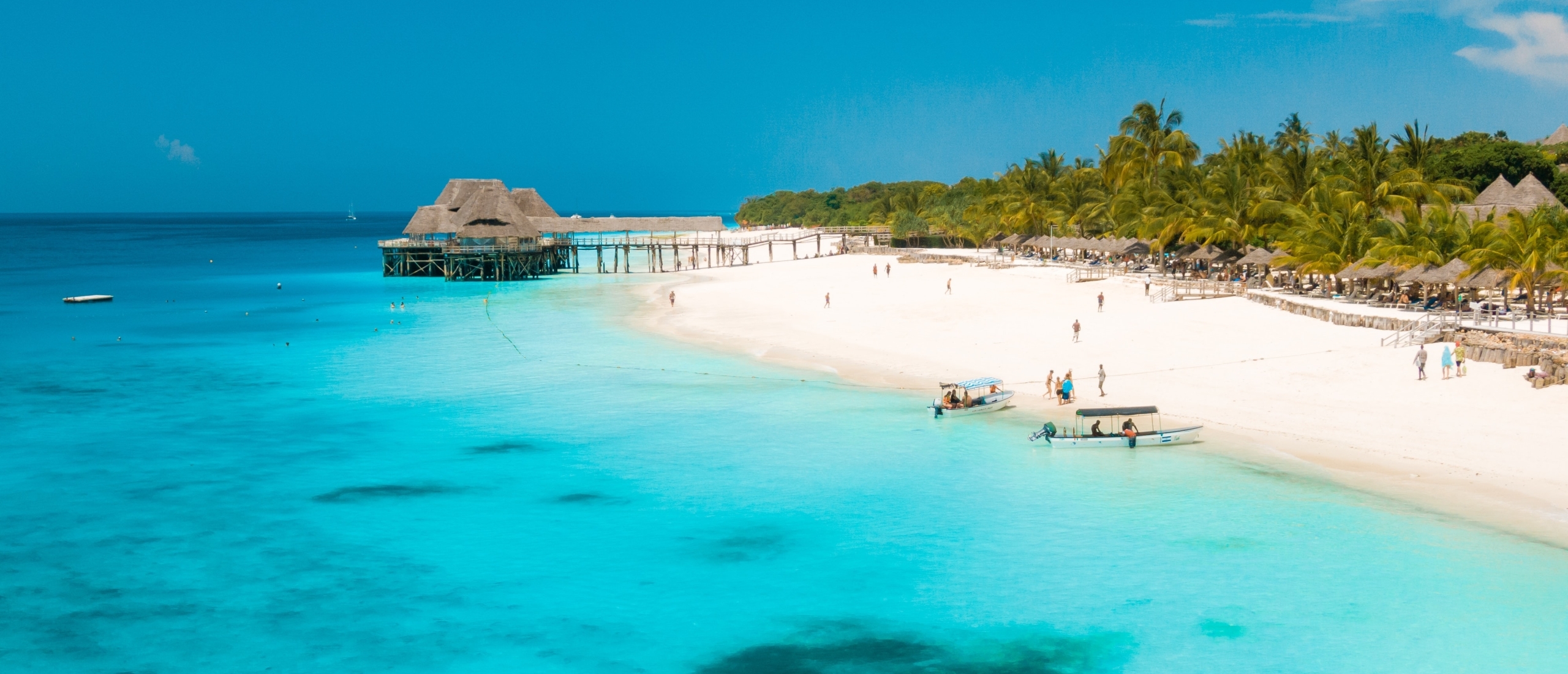
After ten days of dust, early mornings and long drives, a week by the sea is what a family needs. The children are in the water all day, you do nothing at all, and everybody goes home rested rather than wrecked.
And it is close. From the Serengeti or Arusha it is about two hours in the air and you land somewhere else entirely. White sand, warm water, dhows on the horizon, fish off the grill in the evening.
We pick the beach with you, because it depends on how old your children are and what they want to do with their days, and the coasts differ more than people expect. We will tell you which one suits you.
Two practical things. Zanzibar is a malaria area, so the tablets carry on through the beach half of the trip. And since October 2024 every visitor arriving on Zanzibar has to hold inbound travel insurance, at a reduced rate for under-eighteens and free for children under two. You arrange that one yourselves, and we send you the steps once you have booked.
What a safari does to a child
One last thing, about why I do this work.
A family safari is not a holiday to tick off. It is two weeks without school, without anybody checking email, with the whole family in the same vehicle all day. For most families that on its own is rarer than seeing a lion.
And what a child takes home is rarely what you expect. Not the lion, but the guide who taught them their first words of Swahili. Not the crater, but a week of not knowing what time it was. What they see and feel at that age sinks in and stays, even if it never comes back out as a story. It changes how they look at the world, and you only notice that years later.
The messages we get afterwards are hardly ever about the animals. They are about a guide who took his time. A nine-year-old who would not stop throwing a spear with the Maasai. Three teenagers who did not ask for their phones for a week because there was no signal, and who talked about that more than anything else.
My own children grew up here. They pitch their own tents, light their own fires, and they know the world is bigger than the street they live on. I never explained that to them. They learned it by being in it.
How we build your family safari
We do not sell packages. Every safari is built around the ages of your children and the pace of your family. I ask how old the youngest is before I ask about the budget, and that is the working method rather than a line in a brochure.
More beach or more safari. Shorter days for the little ones, or a walking safari for a teenager. A lodge with walls and a pool, or canvas open to the bush. The green season because it is quieter and cheaper, or the summer because there is no other option. All of it is possible, and we will tell you which one we would pick ourselves.
There is a separate article on what to take on safari with children, with the binoculars, the snacks and the colour of the clothes.
And there is a fourteen-day example trip that puts the safari and the beach together, planned out day by day, with an indicative price per season. Take it as a starting point, because yours will look different.
Safari njema.
Frequently asked questions about a safari with children
From what age can you go on safari in Tanzania
There is no legal minimum age in the national parks and a child of any age may go in. Individual camps sometimes set their own limit, usually five and occasionally twelve. A walking safari is generally from twelve.
Is two too young for a safari
It is allowed and it works. At that age the trip is mainly for the parents, because a two-year-old will not keep it as a memory of their own. Keep the days short and pick a camp with a pool and staff who are used to small children.
Which malaria tablets can my child take in Tanzania
There is a paediatric form of the standard prophylaxis, and the dose follows your child’s weight. Which one and how much is for your travel clinic or your doctor to decide, and the registered options differ from one country to another.
Is there a malaria-free safari with children
Not in Tanzania. The whole country counts as a high-risk malaria area, the northern parks and Zanzibar included, and prophylaxis is needed, children too.
What is the best time for a safari with children
July to September is dry and it is when school is out, which makes it the busiest and the most expensive. Mid-March to mid-May is the green season, quiet and cheaper. February is strong because of the calving in the southern Serengeti.
How long does a game drive with children last
You agree it with your guide each morning. With young children it usually means one drive, back to the lodge for lunch, and perhaps another in the afternoon. Every family has its own guide and its own jeep, so nothing is fixed, and your guide will ask how it is going before he drives on.
Will my child be bored in the jeep
That is mostly down to the guide. Ours turn it into a game, teach children to count in Swahili, and stop for dung beetles.
Is Zanzibar safe with children
Yes. Malaria is the one thing to plan for, so the tablets carry on through the beach part of the trip. The water is warm, a great deal of the accommodation is set up for families, and we pick the beach with you.
What does a safari with children cost in Tanzania
Children under five pay no park entrance fee, and from five to fifteen they pay about a third of the adult rate. The Ngorongoro Crater descent fee is charged per vehicle rather than per person. The biggest costs are flights, accommodation and transport, and those go up with the number of you.