Serengeti National Park

Grass plains to the horizon, the largest lion population in Africa, and more than a million wildebeest moving with the rain. The oldest park in Tanzania, and big enough to leave the crowds behind you.

The Serengeti in short

Size

14,763 square kilometres (5,700 square miles), larger than Yellowstone and Yosemite put together

What Serengeti National Park is known for

The migration of the herds, the highest density of predators in Africa, endless plains

Serengeti National Park from Arusha

About 325 kilometres (200 miles), seven to eight hours by road, or 45 to 90 minutes by air

Best time to visit Serengeti National Park

All year, and when depends on what you want to see

We recommend

At least three nights, four or five if you have the time
Why go to Serengeti National Park

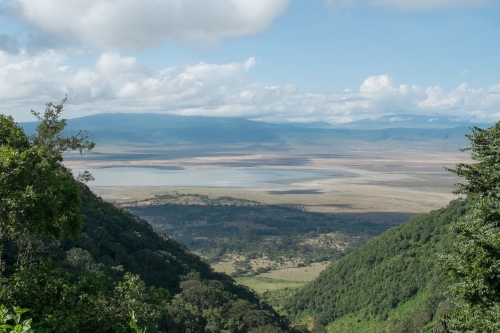
You drive through Naabi Hill Gate and after a few kilometres the landscape stops ending. Grass as far as you can see, with an acacia here and there and an island of granite, and above it a sky with no edge. Siringitu, the Maasai called it, the place where the land runs on forever, and only when you stand there yourself do you understand why.

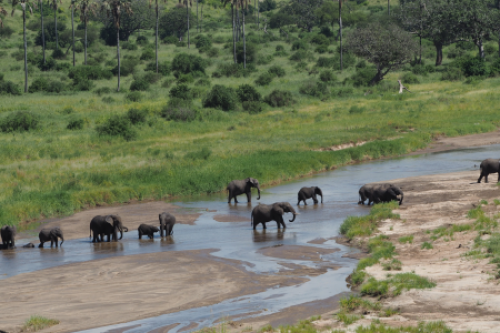
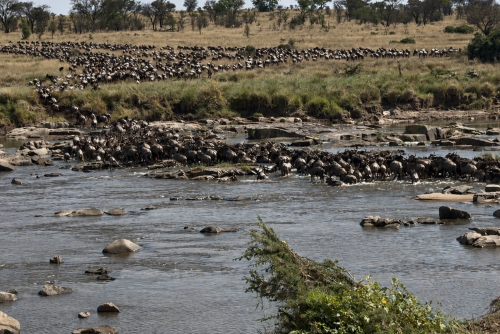
Through that landscape moves the largest herd migration on earth. More than a million wildebeest, two hundred thousand zebra and hundreds of thousands of gazelle move in a circuit behind the rain, all year round, from the southern plains through the west to the rivers in the north and back again. In February half a million calves are born on those southern plains, most of them within two to three weeks. And from July to October the herds stand on the banks of the Mara, waiting for one of them to take the leap.

Why they do it lies in the soil. The plains in the southeast sit on a thin layer of volcanic ash from the Ngorongoro highlands, which keeps the grass short and rich in calcium and nitrogen, exactly what a wildebeest cow needs in order to calve. So the herds come back every year, and that is why they move the way they move.

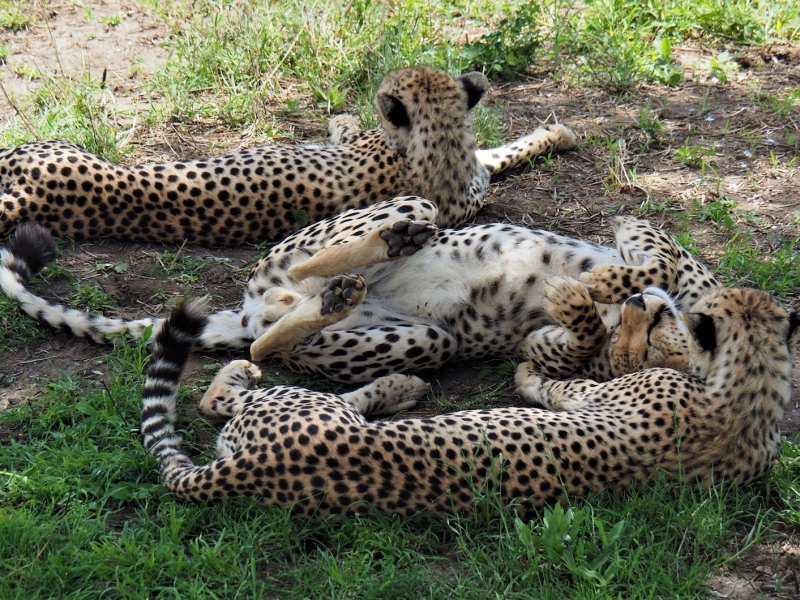
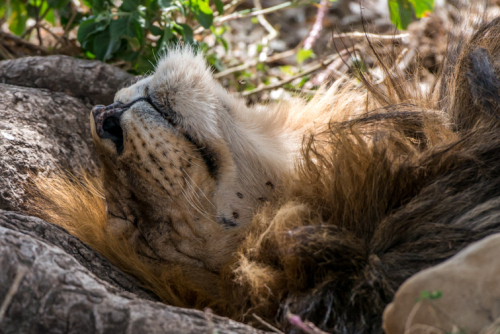
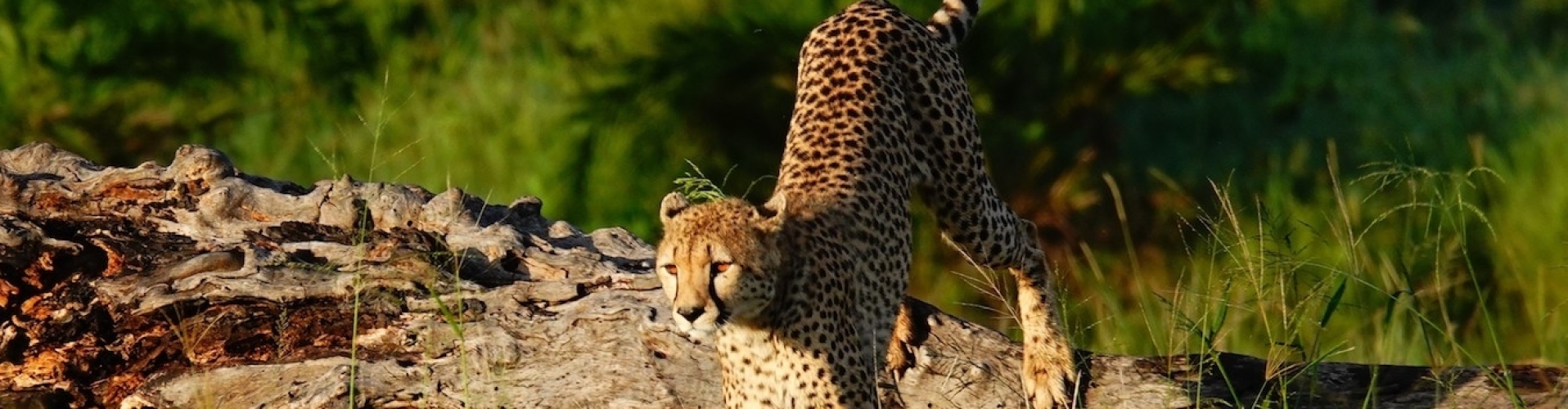
All that game draws predators, and the Serengeti has the largest lion population in Africa, around three thousand animals. Alongside them some seven and a half thousand hyena, around a thousand leopard and five to six hundred cheetah. You will not find those numbers together anywhere else. And the park is old. It became the first national park in Tanzania in 1951 and has been on the UNESCO World Heritage list since 1981.

What you see in Serengeti National Park

The Serengeti is the richest wildlife area in Tanzania, and the numbers are real. It is worth knowing what is guaranteed and what is not, because here too the travel industry sometimes promises too much.

What you will almost certainly see

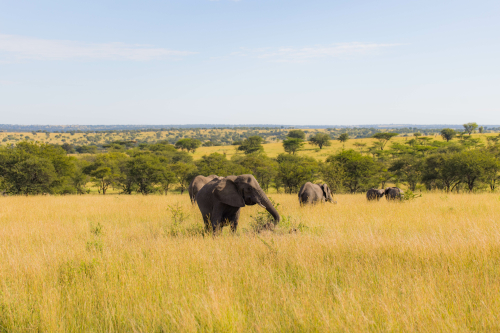
Wildebeest, zebra and gazelle, giraffe, buffalo, elephant, lion and spotted hyena. Also impala, topi, Coke's hartebeest, waterbuck, warthog and baboon. Hippo and crocodile at the rivers. Elephants have recovered from the poaching of the eighties, with more than five thousand animals counted in the park in 2014.

What you see with luck

Leopard, above all in the Seronera valley and around Lobo, where they lie in the trees along the river. Cheetah on the open plains, scanning the grass from a termite mound. Also serval, caracal, aardwolf, bat-eared fox and honey badger. And the herds themselves. Where they are standing depends on the rain of those particular weeks, so which part of the park you visit in which month decides your chances.

What not to count on

Black rhino do still live here, but with fewer than seventy animals in the whole park, mostly around the Moru Kopjes and only reachable with a special permit. So seeing the Big Five complete is not a realistic expectation, and operators who promise it are promising too much. Wild dogs disappeared from the park in 1992 through disease and have been cautiously back since 2000, but they remain rare.

What to watch for

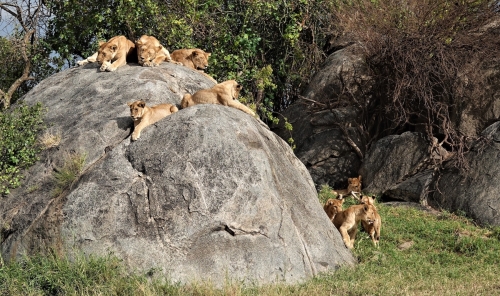
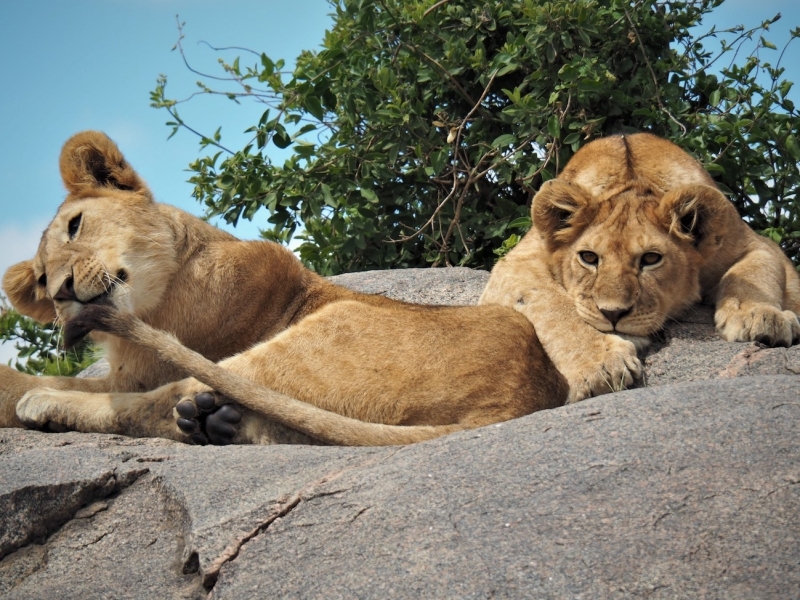
The granite islands in the middle of the plain, called kopjes, are the key to the cats. They hold rainwater in hollows, they give shade and a view over the grass, and that is why lions lie on top of them and leopards in the trees around them. Klipspringer and rock hyrax live there too, and you will not find those anywhere else in the park. If you drive past a kopje, it is always worth stopping and looking.

Where to go on safari in the Serengeti

The Serengeti is so large that where you sleep decides your whole safari. Seronera in the centre has the most resident animals all year, with leopard in the river valley and lion around the kopjes, and it is also the busiest part. The southern plains and Ndutu are the calving grounds from January to March, and largely empty outside that. Lobo Valley is, with Seronera, one of the few places in East Africa where you have a real chance of all three big cats, and from July to November the herds pass through.

Your guide makes the difference

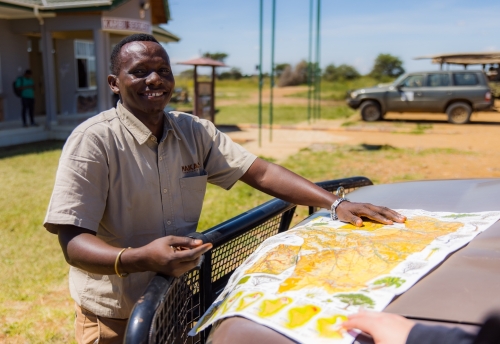
In a park of nearly fifteen thousand square kilometres, your guide decides where you are that day and so where you are not. Our guides drive here in every season. Off-road driving is not allowed in the park, so a good guide works on position rather than on cutting across. He places the car so the light falls well and the animal moves towards you instead of away from you. They know where the herds are this week, which kopjes hold lions, and which trees along the river to watch for leopard.

Our own camps in the quiet north

After years of guiding travellers through the park, we watched the central section fill up. Lines of jeeps at a single lion, camps that grew into hotels. So we moved northeast, into the parts most travellers skip, and opened Kimbilio there in 2022. Kimbilio means safe haven in Swahili.

Kimbilio Lobo stands among the hills of the Lobo valley, where lion, leopard and elephant are present all year because the water stays. So you do not have to wait for the herds there to have a good safari, and from July to November they pass through.

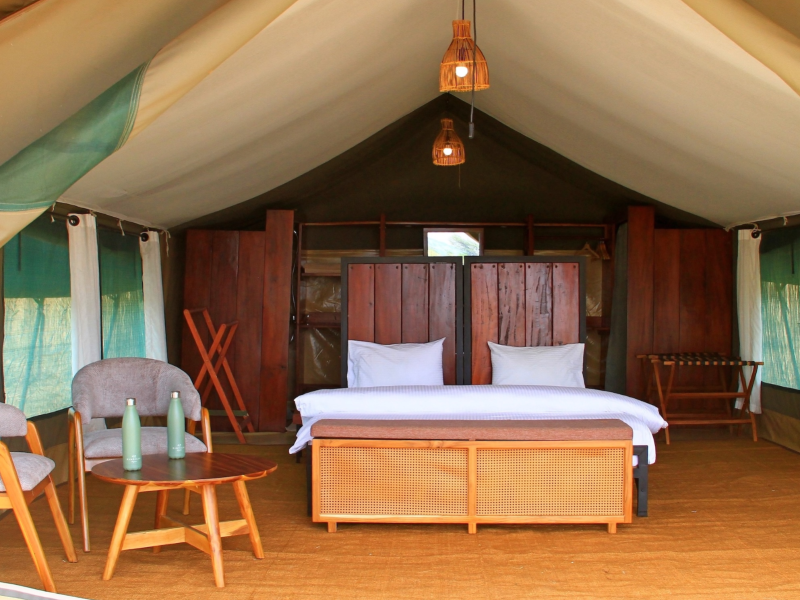
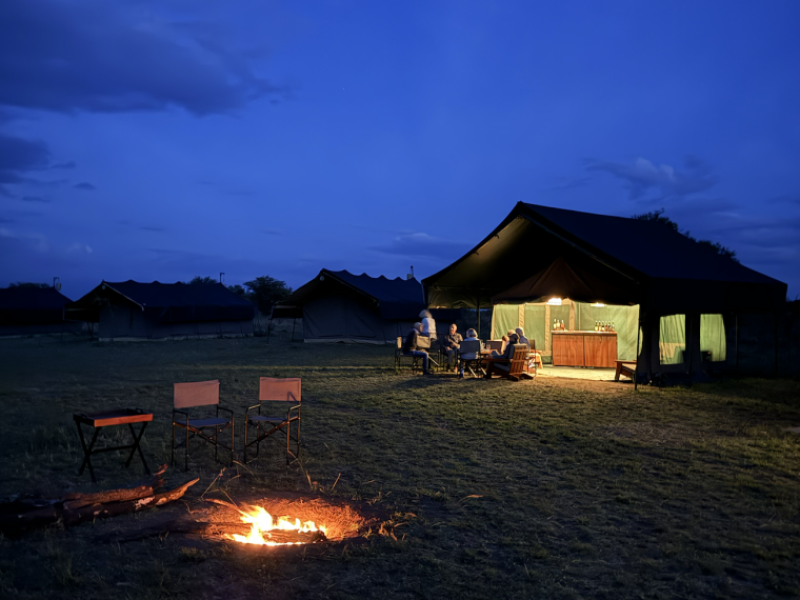
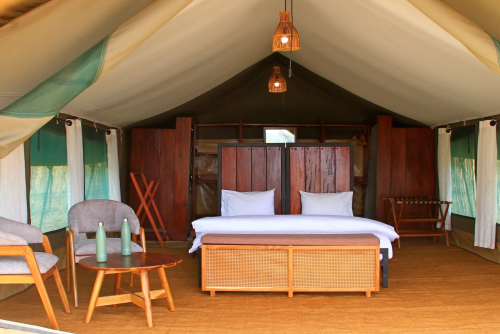
Kimbilio Bologonja stands closer to the Mara River, about an hour from the crossing points, but away from the crowds at Kogatende. In the crossing season you drive out to them, and in the evening you sleep in a part of the park where almost nobody comes. Both camps are small, eight to ten tents, on solar power, with your own toilet and shower in the tent.
And you do not have to sleep with us. We book a lodge or a camp belonging to someone else just as happily, if that suits you better or fits your route better.

The best time to go to Serengeti National Park

The Serengeti drew almost five hundred thousand visitors in 2025, and you notice that in two places, in Seronera and at the crossing points in August and September. Outside those, the size of the park thins the crowds out quickly. Lobo, Bologonja and the southern plains outside the calving season are quiet, and that is what we steer towards.

For the calving, January to March

The herds stand on the short-grass plains in the south and around Ndutu. Calving starts at the end of January, February is the peak, and in March they stay on until the plains dry out. This is the time of year with the most predator activity, and at the same time a relatively quiet period for visitors. Off-road driving is allowed at Ndutu, so you get closer here than elsewhere.

For the river crossings, July to October

In July the herds shift north and the first crossings at the Mara can begin. August and September are the peak, with herds spread across the northern Serengeti and the Masai Mara, sometimes crossing back and forth several times. In October the return begins, with late crossings still possible. This is also the busiest season, and at the well known crossing points there can be dozens of vehicles.

For quiet and green, April, May and November

April and May are the long rains, November the short ones. The landscape is at its greenest then, there are few visitors, and prices are twenty to forty per cent lower. Game viewing can be excellent, because the animals are still there. The roads in the western corridor and around Moru do get heavy though, and in April and May part of the day can be rained out.

For the herds past Lobo, October and November

The herds move back south along the east side of the park and Loliondo, and that brings them past the Lobo valley. According to the camps in that area, mid September to the end of November is the strongest period there.

How long to stay

For the Serengeti there is a rule that holds harder than for any other park. Stay longer in one place than you are inclined to. At least three nights in one area gives you two full days in the field. Under two nights, too much time goes on checking in and out and on driving, and that costs exactly the early morning hours when the animals are active. Four or five nights is what we recommend if this is your first safari. Then there is room for morning and afternoon drives, and for staying a long time with something special instead of driving on to the next thing.

Driving or flying

On paper it is seven to eight hours from Arusha to Naabi Hill Gate, and the drive to your camp comes on top of that. But nobody drives it that way, and we never plan it that way either. On a touring trip it goes in stages, with Tarangire or Lake Manyara on the way, and a night at the crater. Then every day is a safari day instead of a driving day, and you arrive in the Serengeti rested.

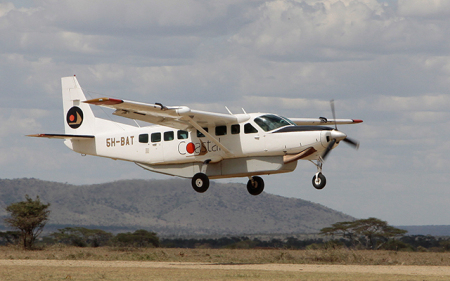
One arrangement that often works well is to go out by road past the other parks, and fly out from the Serengeti. You drive the route that takes in the best places along the way, and you do not have to come all the way back at the end. From an airstrip in the park you fly straight to Zanzibar, or to Kilimanjaro for your flight home. If you want only the Serengeti and not the whole northern route, you fly in and out. The roads in the park are unpaved, and the bumping and the dust are the complaint travellers mention most.

Where it fits in your route

The Serengeti sits at the end of the northern route, and there are more ways to get there than most travellers think. The classic loop goes through Tarangire and Lake Manyara to the Serengeti, and back through the Ngorongoro crater. If you want to fly out, you turn it around. And there is a route almost nobody offers, by way of Lake Natron. Which of the three it becomes depends on your days and your flight home, and we decide that together when we put together your safari in Tanzania.

Where you sleep in the Serengeti

Permanent tented camps and lodges stand in fixed places and are open all year. Mobile tented camps move a few times a year with the herds. The concentrations are at Seronera all year, at Kogatende and Lamai in the crossing season, and around Ndutu in the calving season. Lobo has a few camps and one lodge, and that is exactly why it is quiet there.

Frequently asked questions about Serengeti National Park

Will I see the river crossing?

Nobody can promise that. The herds gather at the bank and can stand there for hours or days. Your chances improve with more nights near the river in August or September, and with a guide who knows where they are holding. If you are coming for the crossing, build some margin into your programme.

What does a visit to the Serengeti cost?

Entry is seventy dollars per adult per twenty-four hours in high season, about eighty-two dollars including VAT, and sixty dollars in low season from mid March to mid May. If you sleep inside the park, a concession fee of fifty to sixty dollars per person per night comes on top. In high season that brings you to around one hundred and sixty dollars per adult per twenty-four hours, in park costs alone. We always put those costs in the proposal in full.

Is off-road driving allowed?

Not in the national park. That means an animal lying a hundred metres from the road stays a hundred metres away. In the Ngorongoro Conservation Area, which includes Ndutu, it is allowed, and that is one of the reasons you get closer in the calving season.

Can you do a night drive?

Not in the park. Night drives are possible in the neighbouring concessions and game areas, such as Grumeti, Ikoma and Loliondo. If you want that as part of your trip, we plan a night in one of those areas.

Can you take a balloon flight?

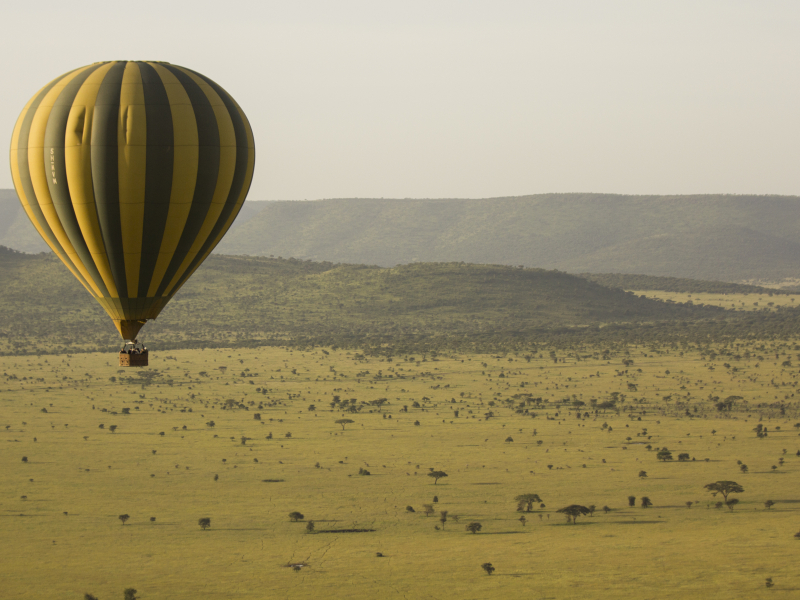
Yes. You lift off at sunrise for a flight of about an hour, with breakfast in the bush afterwards. Reckon on around six hundred dollars per person. The launch sites change by season, central and Seronera all year, Ndutu from late December to mid March, the western corridor from June to October and the north from July to October.

Can you do a boat safari in the Serengeti?

No, there is no navigable water. A boat safari is possible in Nyerere in the south of Tanzania, or at Lake Manyara in the north.

Can you walk here?

Yes, with a mandatory armed ranger and in designated areas, including around the Moru Kopjes. It is a different experience from being in the car, because you learn to look at tracks, plants and sounds.

Is it crowded?

In two places, yes. In Seronera and at the well known crossing points in August and September there can be dozens of vehicles at one sighting. But the park is nearly fifteen thousand square kilometres, and outside those it goes quiet quickly. In Lobo and Bologonja a whole day of driving without seeing another vehicle is realistic.

Is Ndutu in the Serengeti?

No, and that surprises a lot of people. Ndutu, where the wildebeest calve, lies in the Ngorongoro Conservation Area. Different rates apply there, and off-road driving is allowed. That makes a difference to your costs and to how close you get to the calving.

Is the Serengeti suitable with children?

Well suited, as long as you take the distances into account in the planning. The drives are long and the roads bumpy, so flying to an airstrip saves a lot. Stay longer in one place and you spend less time in the car. Children under five pay no entry fee.

The Serengeti in your Tanzania trip

What the Serengeti becomes for you depends on when you go, how long you stay and which part you sleep in. Those are three choices that make more difference than which camp you book. Tell us when you can travel and what you most want to see, and we will think it through with you, the area, the number of nights, and whether flying is worth it.

Other parks in northern Tanzania

A safari is almost always a tour past several parks, with two or three nights per place. The Serengeti sits at the end of the northern route, after Arusha National Park, Tarangire, Lake Manyara and the Ngorongoro crater. Every park has its own character, and that variation is what makes the trip.

Tarangire National Park

Elephants in families of dozens at a time, among baobabs centuries old.


Ngorongoro Crater

A collapsed volcano with thousands of animals on the floor, close together.


Lake Manyara

Small and green, with a lake full of flamingos and dense groundwater forest at the entrance.