Lake Manyara National Park

A narrow strip between the wall of the Rift Valley and a soda lake, with groundwater forest, elephants close up and hippo. The park that turns your first day of travel into a safari day.

Lake Manyara in short

Size

648 square kilometres (250 square miles), a large part of it lake

What Lake Manyara is known for

Groundwater forest, elephants close up, monkeys and waterbirds

Lake Manyara from Arusha

About 125 kilometres (78 miles) on tarmac, two to two and a half hours

Best time to visit Lake Manyara National Park

All year, with the green season the quietest period

We recommend

Half a day to a full day, on the way to the Serengeti
Why go to Lake Manyara National Park

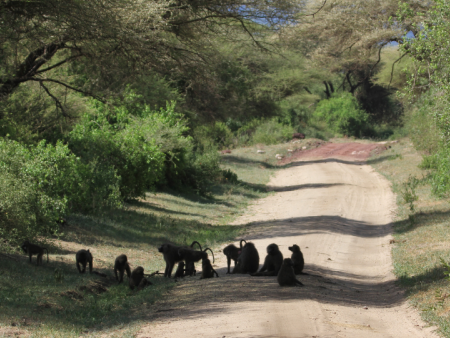
You drive through the gate and you are straight into forest. No savannah, no open plain, but tall trees with light falling through them in stripes, and troops of baboons sitting along the road. That forest does not live on the rain but on springs that come out of the wall of the Rift Valley, and so it stays green all year. Groundwater forest it is called, and nowhere else in northern Tanzania do you meet it like this.

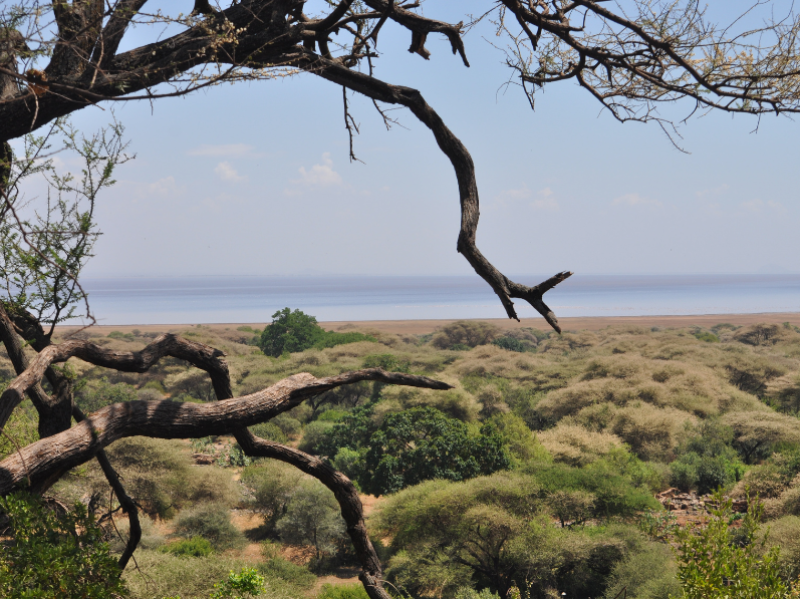
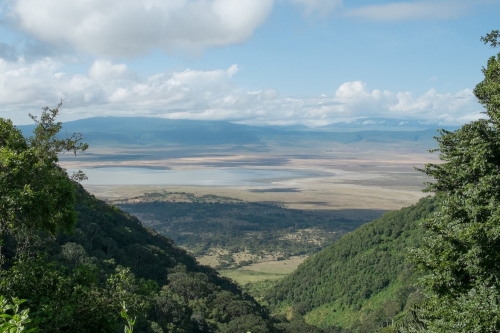
A few kilometres further the forest stops and you look across open ground to the lake, with the rift wall behind you rising six hundred metres (2,000 feet). In a small area the landscapes follow one another, from dense forest through acacia woodland to the shore of a soda lake. That makes Manyara different from the parks that come after it, where you drive for hours through the same landscape.

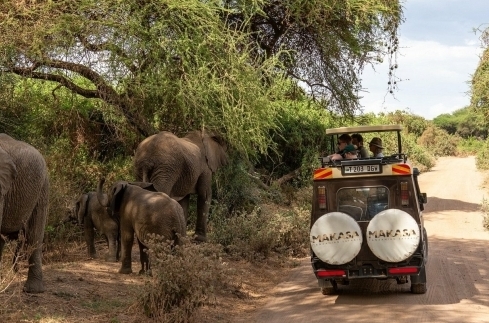
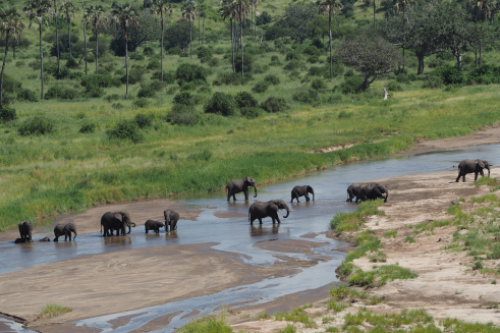
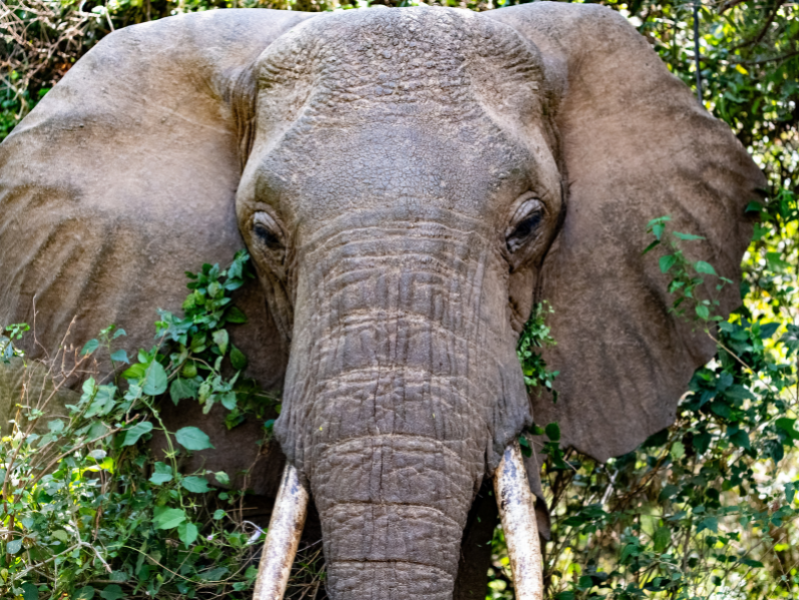
And then the elephants. Manyara is the place where Iain Douglas-Hamilton did the research in the late sixties that showed the world how elephant families are put together. The elephant close up is still the high point travellers mention most here. In the forest they sometimes stand a few metres from the car, among the trees, and that feels different from seeing a herd out on a plain.

Manyara is not the park where you stay three nights. It is the park that lies on the road from Arusha to the highlands and the Serengeti, and that turns a long drive into a safari day. You step out of the world of tarmac and villages and within half an hour you are among the elephants. For many travellers this is the first wildlife they see in Tanzania, and they do not forget it.

What you see in Lake Manyara National Park

Lake Manyara National Park is small, and that means you see a lot of different animals and landscapes in a few hours. Travellers who expect little of it often come out pleasantly surprised. It is worth knowing how the park stands at the moment. Manyara is a soda lake with no outflow, so the water can only leave by evaporating, and after the heavy rains of 2023 and 2024 the level has stayed high. The open shore flats are largely under water and the south is not always reachable. For a visit of a few hours you notice little of that.

What you will almost certainly see

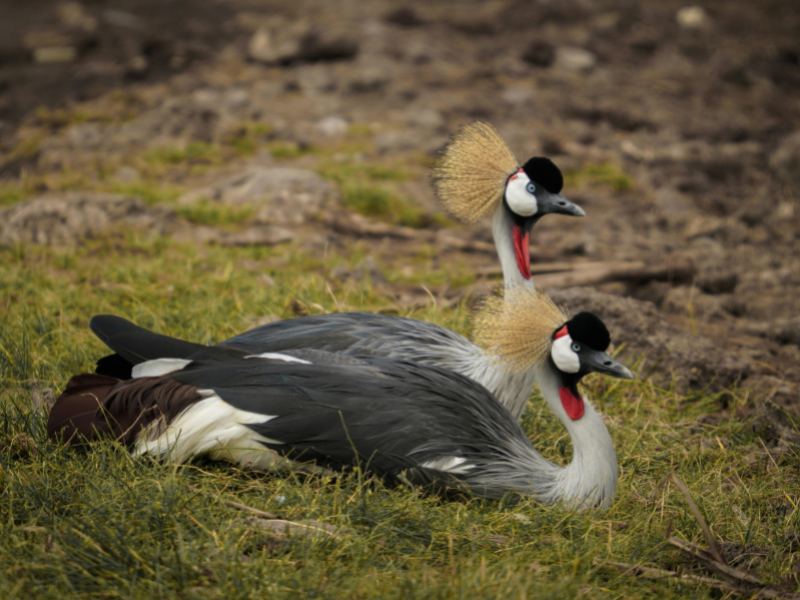
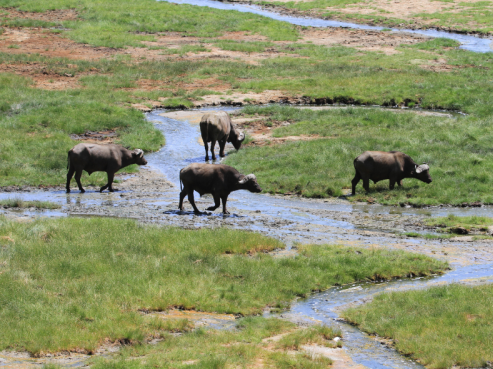
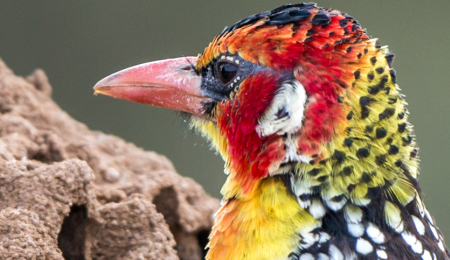
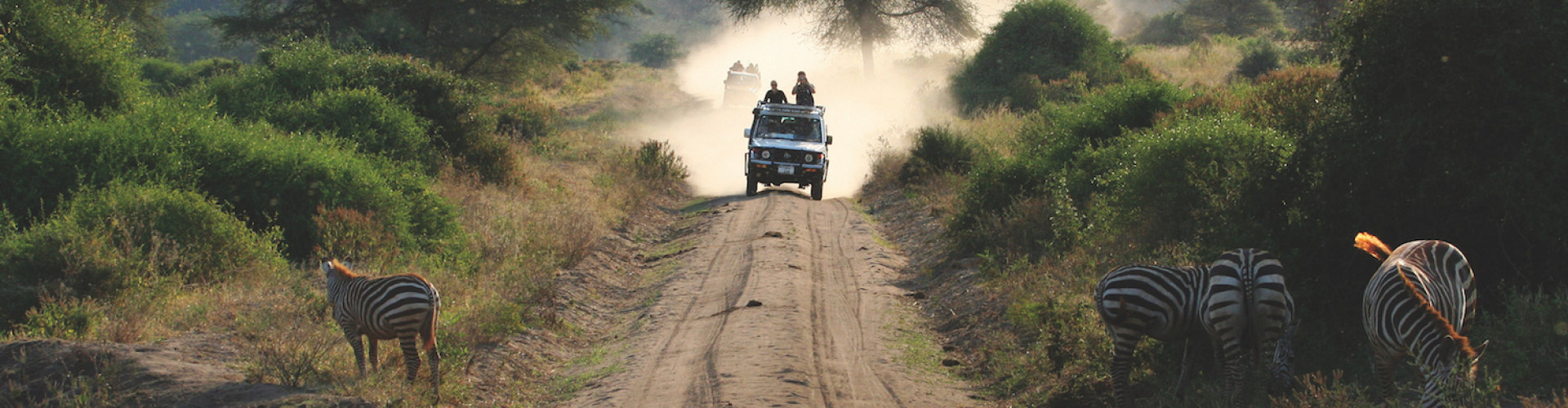
Baboons in large troops, often with young, right behind the gate. Elephants in the forest and the acacia woodland. Hippo at the hippo pool, sometimes dozens at a time. Then giraffe, zebra, wildebeest, buffalo, impala and bushbuck. And along the water pelican, stork and ibis. For birdwatchers this is a rich park, with an estimated three hundred and fifty to four hundred species in a small area.

What you see with luck

Lions are here, but they are not often seen. Leopard live here too and you see those even less. Then klipspringer, dik-dik and mongoose, if you are paying attention.

A monkey that lives only here

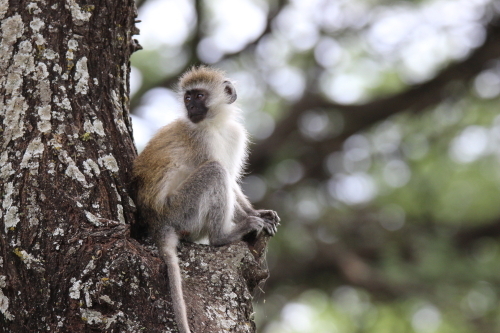
There are two kinds of monkey in the forest, vervet and the Manyara monkey. The latter is a subspecies found only in Tanzania and listed as endangered on the Red List. On many sites it is simply called blue monkey, but it is an animal you see almost nowhere else in the world.

What not to count on

A lot is written about the tree-climbing lions of Manyara, and that behaviour was well described here in the sixties. But lions in trees are rare here today, and they climb trees in Tarangire and the Serengeti too. Anyone who comes here for that one picture often goes home disappointed.

On safari in Lake Manyara

The park is a narrow strip, so you drive it lengthways. Right behind the gate lies the groundwater forest, where the baboons, the monkeys and the bushbuck are and where you can meet your first elephants. The canopy walkway hangs here too. Further on, where the forest gives way to open ground, lies the hippo pool at the Simba river, with waterbirds around it. Behind that lie the shore flats, the part that has been largely under water since the rains. In the acacia woodland sit the elephants and the giraffe, and here the chance of lions is greatest.

Deep in the south lie the hot springs of Maji Moto, where almost nobody comes, although that part is not always reachable when the water is high. The viewpoints over the park are up on the rift wall, outside the park boundary, where some of the lodges are too. From there you see at a glance what the strip between wall and lake looks like. The crowds are in the northern section. Because almost everyone drives the same route, jams form as soon as something is standing by the road.

Your guide makes the difference

In a small park with one main route it comes down to timing and pace. Our guides know where the elephants are in this season, how far the south is reachable at the moment, and when it is better to drive on and stand alone at something five minutes later. They know the water level week by week, and that decides more here than in any other park. And they know what there is to see in the forest if you stop. That is the gain of this park, because more happens among the trees than you notice from a moving car.

The best time to go to Lake Manyara

Lake Manyara National Park can be visited all year. The groundwater forest stays green and there is always water, so there is no month in which the park is empty. What differs is the visibility, the crowds and how far you get. As for the flamingos, they do not depend on the month but on the water level and the food in the lake. Since the water has been high, they are largely gone.

June to October

The dry season. The vegetation is shorter and the animals sit closer to the water, so spotting is easier. This is also the busiest period, because almost everyone driving to Ngorongoro and the Serengeti comes past here.

November and December

The short rains. The landscape turns green, the migrant birds arrive, and waterfalls start up along the rift wall. Quieter than July and August, with the exception of the holidays.

January and February

A drier break between the rains. Green, clear, and one of the best periods for birds. Comfortable temperatures and less traffic on the route.

March to May

The long rains, and the greenest landscape of the year. This is the quietest period, and the park fee is lower from mid March to mid May. Loose tracks can be closed for a while, and in wet years water comes up on the shores.

How long to stay

Manyara is small, and that is exactly why it works. In a few hours you see the forest, the hippo pool and the acacia woodland, with the elephants and the monkeys in between. Travellers who spend a full day there without an extra activity often find that long. We include Manyara in many trips, and we use the park in two ways. As a first safari day, for a few hours, on the way from Arusha to the Serengeti. Without Manyara your first day is too long a drive.

Close to the entrance lies Mto wa Mbu, with a lively market, banana plantations and small workshops. You can cycle through the fields and past the rice paddies towards the shore, or take a walk with someone who lives there. Together with a few hours in the park that turns your stop into a full and varied day.

Where it fits in your route

We put Manyara early in your safari in Tanzania, usually on the way out. Travellers who schedule it at the end, after the Serengeti, are more often disappointed by it. Not because the park is worse, but because your eye has been set to endless plains and large numbers. Come here as one of the first parks and it is small and varied and surprising, exactly what it is.

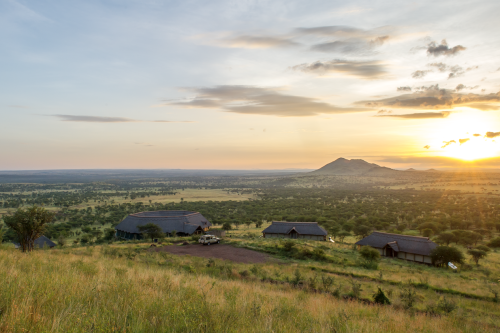
Where you sleep at Lake Manyara

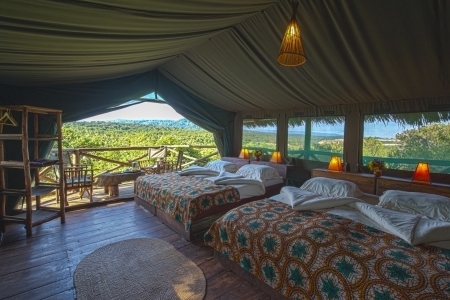
There are three ways to sleep here, and each has its own advantage. Inside the park there are a few small camps and lodges. There you are in the middle of the area, and at sunrise you are the first into the forest. A night drive is also possible from inside the park. With a spotlight you go looking for animals that sleep during the day.

In Mto wa Mbu, the village beside the gate, the choice is wider, from simple guesthouses to small lodges. You are a few minutes from the park entrance. And many travellers sleep in Karatu, some way further on towards the highlands. There the choice is largest, and the next morning you are already closer to the Ngorongoro Crater and the road to the Serengeti.

Frequently asked questions about Lake Manyara National Park

Is the park under water?

Part of it is. Lake Manyara is a soda lake with no outflow, and after the heavy rains of 2023 and 2024 the level has stayed high. The open shore flats are largely under water and the south is not always reachable. The park is simply open, and the part you come for, the groundwater forest, the hippo pool and the acacia woodland with the elephants, is easy to visit. We tell you beforehand how it stands at that moment.

Will I see tree-climbing lions here?

Probably not. Manyara became famous for it through research in the sixties, when lions were often seen in trees here. Today it is rare, and lions climb trees in Tarangire and the Serengeti too. You can be lucky, but we do not promise it.

Are there flamingos on the lake?

At the moment, hardly. Flamingos depend on the water level and the food in the lake, and since the water has been high they have largely gone. In earlier years there were sometimes thousands. Do not count on them, and bring binoculars in case they are there.

How long do you need in Lake Manyara?

Half a day is enough for most travellers to see the forest, the hippo pool and the acacia woodland. With a night nearby you can add a night drive, the canopy walkway or a cycle ride through Mto wa Mbu, and then it becomes a full day.

Can you do a night drive here?

Yes, and that is not possible in most Tanzanian parks. You leave around a quarter to eight in the evening from the main gate for about two and a half hours, with a spotlight looking for animals that sleep during the day. It has to be arranged beforehand with a permit.

What is the canopy walkway?

A suspended bridge path of three hundred and seventy metres through the groundwater forest, up to eighteen metres above the ground, with ten bridges and viewing platforms around the trunks. It was the first in Tanzania, opened in 2016, and a circuit takes about an hour. You see birds, monkeys and butterflies there, not large animals.

Is Lake Manyara a Big Five park?

No. The black rhino disappeared here at the end of the eighties through poaching. You see plenty of elephant and buffalo, lion and leopard are here but are rarely seen.

Is it suitable with children?

Well suited, and one of the better first parks for children. The drive is short, there is something to see straight away, the baboons and the monkeys are close, and the canopy walkway is an outing in itself. Watch your food at the picnic site, because the baboons are bold.

Lake Manyara National Park in your Tanzania trip

Lake Manyara National Park is the park that lets your trip start gently, with wildlife on the first day instead of a long drive. How much time you give it depends on your route and whether you want to add something, such as a night drive or a day in Mto wa Mbu. Tell us when you are going and what you want to see, and we will think through the order with you.

Other parks in northern Tanzania

A safari is almost always a tour past several parks, with two or three nights per place. Lake Manyara lies early on the northern route, between Tarangire and the Ngorongoro crater, with the Serengeti further on. Every park has its own character, and that variation is what makes the trip.

Tarangire National Park

Elephants in families of dozens at a time, among baobabs centuries old. The park where most travellers begin their safari.


Serengeti National Park

Endless plains, the largest predator population in Africa, and the stage for the migration of the herds. The park where you want to stay longest.

Ngorongoro Crater

A collapsed volcano with thousands of animals on the floor, close together. One of the few places in Tanzania with black rhino.