Katavi National Park

Plains and swamps in the far west of Tanzania, with buffalo herds of more than a thousand animals and pools full of hippo. One of the emptiest parks in the country, where you can drive a whole day without seeing another vehicle.

Katavi National Park in short

Size

4,471 square kilometres (1,726 square miles), in the Rukwa Rift in western Tanzania

What Katavi is known for

Hippo, crocodile, enormous buffalo herds and emptiness

Katavi from Ruaha or Arusha

By air only, on Monday and Thursday

Best time to visit Katavi National Park

August to October, when the pools have shrunk the furthest

We recommend

Three or four nights, usually combined with Mahale Mountains

Why go to Katavi National Park

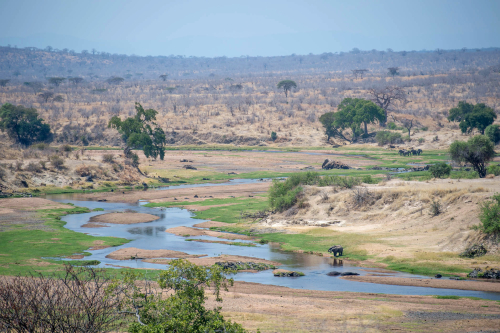
Katavi lies in the Rukwa Rift, a side branch of the Great Rift Valley between Lake Tanganyika and Lake Rukwa, and it is so remote that it was only discovered as a safari destination in the late eighties. You still notice that. Where the Serengeti draws hundreds of thousands of visitors a year, a few hundred foreigners come here. Travellers report driving a whole day and meeting one or two other vehicles. The heart of the park is the Katuma, a river that cuts through the Katisunga plain and drains into the seasonal lakes Katavi and Chada. In the wet season those plains flood and the game spreads over an enormous area. And then it dries out.

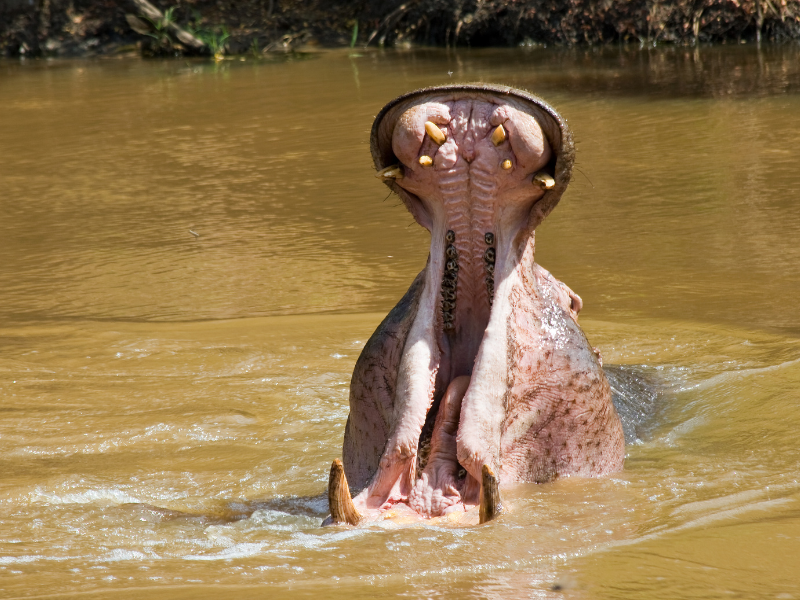
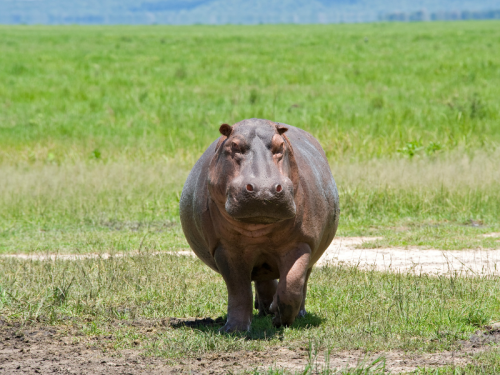
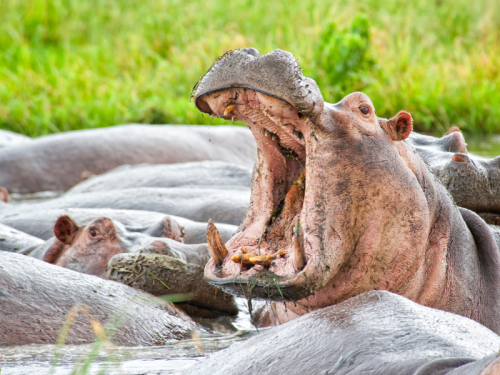
That is what Katavi owes its reputation to. As the dry season goes on, the Katuma pulls back to a thin flow and separate pools, and everything that drinks comes there. In those shrinking pools hundreds of hippo can crowd together, so tightly packed that they climb over each other and fight for room.

Crocodiles dig themselves into burrows in the bank to sit out the drought. And across the plain move buffalo herds of more than a thousand animals, with reports of groups up to sixteen hundred.

That contrast between wet and dry is fiercer than in almost any other park in Tanzania, and it is the reason you come here.

Katavi is not a park for a first safari, and experienced travellers say so too. There are no rhino, so no Big Five. Leopard are here but are seen irregularly. It is hot and dusty, and there are tsetse flies, sometimes plenty of them.

What you get back for it is wilderness in the old sense of the word. Animals that are hardly used to vehicles, a handful of small camps in an area about half the size of Yellowstone, and the chance to go into the field on foot. For the traveller who already knows the north and wants to go further, there is little in Tanzania that matches it.

What you see in Katavi National Park

In the dry season Katavi is one of the richest wildlife areas in Tanzania, with densities you seldom see anywhere else. In the wet season it is a different park, greener and emptier. What follows applies above all to the months June to October.

What you are almost certain to see

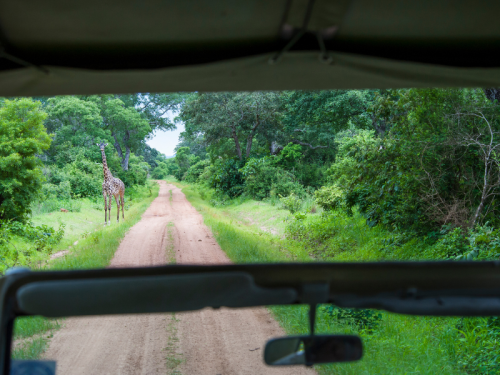
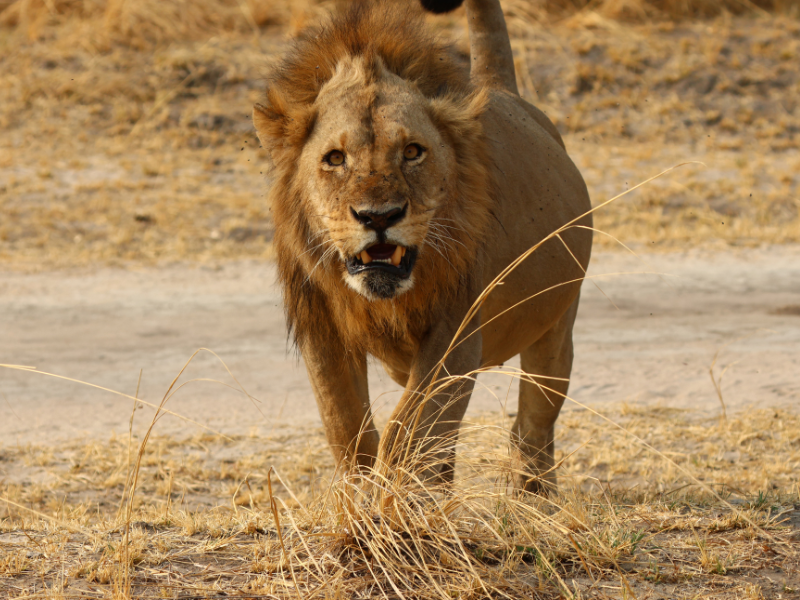
Hippo in large numbers in the pools of the Katuma. Crocodile along and in the river. Buffalo, often in very large herds. Beyond that elephant, zebra, Masai giraffe, impala, topi, waterbuck and reedbuck. Lion you hear and see regularly, and spotted hyena too. Along the water sit fish eagles, saddle-billed storks, open-billed storks, spoonbills, herons, crowned cranes and pelicans. From November to April the migrant birds are added to that.

What you see with luck

Leopard are present but irregular. Roan and sable antelope live in the miombo woodland and are shy. Beyond that eland, and sometimes a pack of African wild dog moving through the area seasonally. And then the puku, an antelope you find almost nowhere else in Tanzania. Katavi is, alongside the Kilombero valley, one of the few places where they occur, and for those who know their game that is a reason in itself.

What not to count on

Rhino do not live in Katavi. So of the Big Five you see four, and that is more honest than what some operators write. Cheetah are sometimes mentioned, but this miombo landscape is not typical cheetah country and sightings are rare to absent. The same goes for wildebeest, which do not occur here in numbers. And there are no boat safaris, despite the odd operator promising them. The Katuma is a seasonal river that shrinks to pools and mud in the dry season.

The hippos of the Katuma

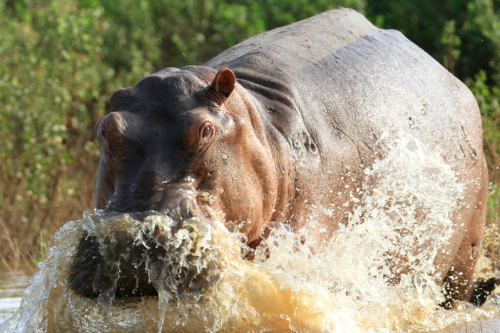
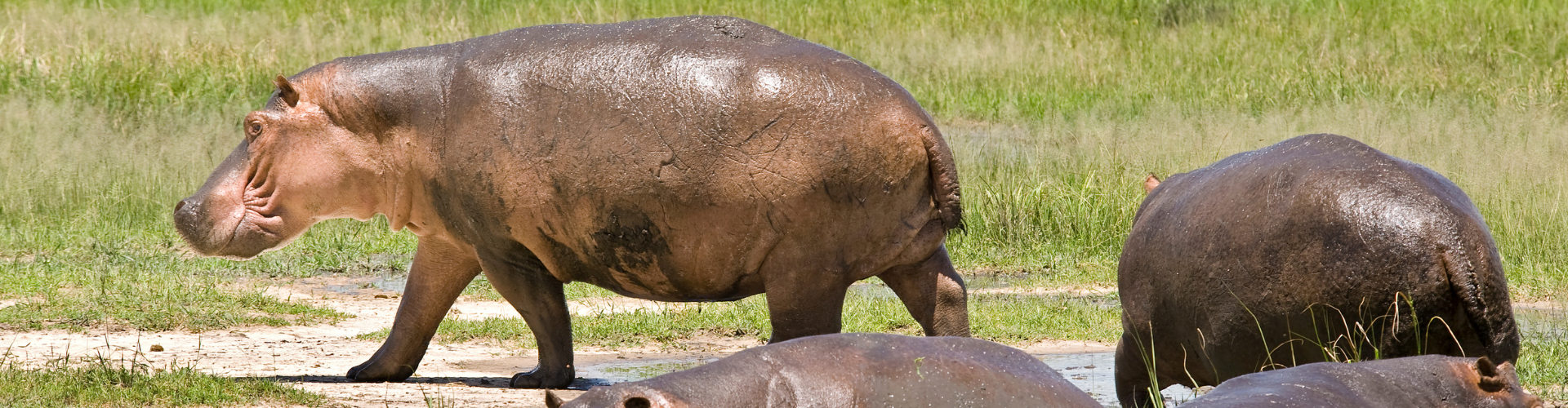
This is the image Katavi is known for. Towards the end of the dry season, somewhere in September and October, the river has pulled back to a string of pools. Hundreds of hippo then sit on top of each other there, in water that is barely deep enough to cover them. It gets rough. The males fight for room, and the back of just about every animal is covered in scars. It is not pretty and it is not sad, it is how a drought works.

Where to go on safari in Katavi

The park is large and the distances are long, so exploring one sector can take a whole day. That is at once the reason you stay several nights here.

The central part turns on the Katisunga plain, a grassland of just over four hundred square kilometres that is the focal point in the dry season for buffalo, elephant and the grazers. Close by lies the Ikuu ranger post with the airstrip, and the circuit along the Katuma with the hippo pools. That is the most productive area of the park, and at the same time the only one where you now and then meet another vehicle.

To the southeast lies the Chada plain, a broad floodplain around Lake Chada. Research points to this area as the part with the highest mammal numbers, and in the dry season there are many elephant here.

In the north lies Lake Katavi, a seasonal lake that is full of birds in the wet months. And all around lie the miombo woodland and the escarpment edges, where the roan, the sable antelope and the eland live.

Your guide makes the difference

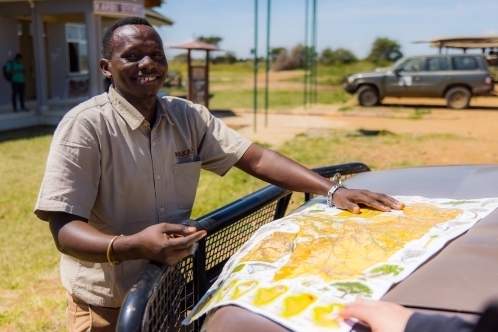
In a park of nearly five thousand square kilometres with a handful of camps there is nobody to tell you where the animals are. No radio traffic from colleagues, no line of vehicles to show you the way. Your guide has to find it himself.

He knows which pools still hold water this month and which have dried up, and that shifts from week to week. He knows where the buffalo herds are and which lions are behind them. And he knows the miombo, where the roan and the sable antelope hide and where you have to drive slowly to see anything.

He also knows how to get around the tsetse. They sit mainly in the wooded parts, and the floodplains along the water are the least troubled by them. That makes more difference to the pleasure of a day than you would think.

And here you walk. Katavi is known for its walking safaris, with an armed ranger, and that is one of the things that sets this park apart from the north. On foot you learn to look at tracks, plants and sounds, and you hear the landscape instead of the engine.

The best time to go to Katavi National Park

Katavi is emphatically a dry season park, and that difference is bigger here than anywhere. It is not that the other months offer nothing, it is that you are then visiting a different park.

June to October, the dry season

This is what you come for. The plains dry out, the Katuma pulls back to pools, and the game concentrates along the water. June is the start, with improving roads and game drawing together. July to September is the core, with strong concentrations and good access. August to October gives the fiercest sights, because the pools are then at their most shrunken. September and October are hot and dusty, and the first thunderstorm can come at the end of October.

November and December

The first rains. The landscape turns green, the game starts to spread out and the migrant birds arrive. Still workable, and considerably quieter.

January and February

The green season. Dramatic skies, birds in abundance, and a landscape that looks nothing like the bleached plains of October. The game is spread out because there is water everywhere, so searching takes more time.

March to May

The heavy rains. The plains flood, the black clay soil makes parts of the park impassable, and most camps close. Flights are limited. This is not a good time to go to Katavi.

How long to stay

Three or four nights, and as with Mahale the flight days largely set that, because the scheduled flight runs on Monday and Thursday. That works out well, because the park is large and the distances are long, so exploring one sector can take a whole day. With three or four nights you combine the central area around Katisunga and the Katuma with the Chada plain in the southeast, and keep time for a walking safari. Alongside the ordinary drives you can walk here with an armed ranger, which Katavi is known for, and fly camp, a night in a simple tent far from the camp. And anyone who is set on it drives. Katavi connects by road to the southern route, via Mbeya, and from there it is another five hundred and fifty kilometres (340 miles) over rough roads. A long drive, not possible in the wet season, and for those who like that sort of thing one of the last real overland routes in Tanzania.

Where it fits in your route

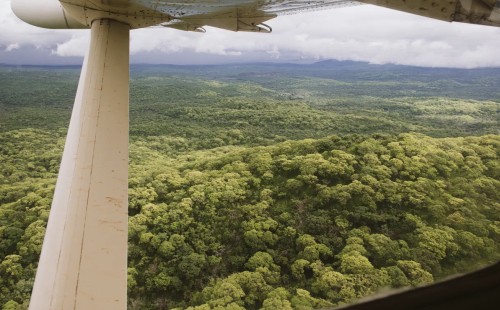
Katavi lies in the far west, and you get there by plane. The scheduled flight runs on Monday and Thursday from Ruaha to Katavi and on to Mahale. From the north there are shared charters from Arusha, or picking up from the Serengeti, on the same days and likewise on to Mahale.

Because Katavi and Mahale belong together, and not only because the flights connect them. Together that is about seven nights, with the plains and swamps first and then the chimpanzees in the mountain forest on Lake Tanganyika, with a beach to recover on. You then couple that package to your main trip, in the north or the south.

This is the trip that comes after the north. Anyone going on safari for the first time is better off in the Serengeti and the Ngorongoro Crater. Anyone who already knows those and wants to go further finds something here that no longer exists in the north. Katavi is a sequel to your safari in Tanzania, not a beginning.

Where you sleep in Katavi

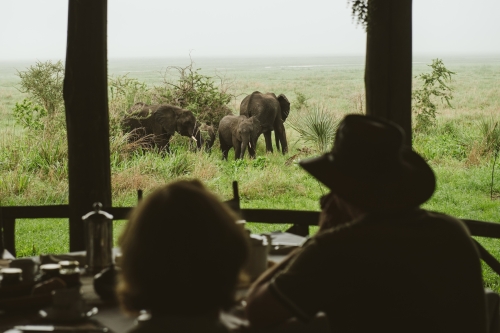
There are only a handful of camps in Katavi, and that is exactly why it stays so empty. The most classic is a small tented camp of six tents, without a fence, with walking safaris and the option of fly camping, where you sleep a night in a simple tent far from the camp. That camp runs only in the dry season, from June to the middle of November. A second camp, also with six tents, lies on the edge of the Katisunga plain by the Katuma, with a two-storey dining area where you look out over the plain from above while the game moves to the river. And the third is more comfortable, with eleven spacious rooms, a swimming pool and a family suite, for those who want the wilderness without the camping.

Frequently asked questions about Katavi National Park

When is the best time to go to Katavi?

August to October is strongest, because the pools of the Katuma are then at their most shrunken and the animals are packed most closely together. June and July are good too. From March to May most camps are closed and parts of the park are impassable.

Is Katavi a Big Five park?

No. Rhino do not live here, so you see four. Leopard are present but are seen irregularly. Katavi is not a park for ticking off a list, it is a park for density and wilderness.

Are there tsetse flies in Katavi?

Yes, and they can be plenty, above all in the wooded parts. Travellers name this as their biggest irritation. The floodplains along the water are the least troubled by them. The bite is unpleasant, but sleeping sickness in travellers is extremely rare. Wear neutral colours and covered clothing, because dark blue and black attract the fly, and bring insect repellent.

Can you do a walking safari in Katavi?

Yes, with a mandatory armed ranger, and Katavi is known for exactly that. This is one of the things that sets the park apart from the northern parks, where walking is allowed almost nowhere..

Can you do a night drive here?

Night drives are officially permitted in Katavi, but not every camp offers them. We arrange that in advance, so you know where you stand.

Can you do a boat safari in Katavi?

No. The Katuma is a seasonal river that shrinks to pools and mud in the dry season, and boat safaris are not offered here. The odd operator does claim them, and that is not correct. For a boat safari you go to Nyerere National Park.

Is Katavi suitable for a first safari?

Usually not. Experienced travellers advise against it as a first introduction, because it is far, expensive and demanding, and because the icons you expect from a first safari are partly missing. For someone who already knows the north, it is one of the strongest next steps.

How do you get to Katavi?

By plane, on Monday and Thursday, from Ruaha or on a shared charter from Arusha. All flights go on to Mahale or come from it. Driving overland takes two to three days from Arusha and is not an option for our travellers.

Is Katavi suitable for children?

Less so than the northern parks. The journey there is long, the camps are remote, it is hot and dusty, and the tsetse is a nuisance. For older children who have been on safari before it can be something special.

Katavi in your Tanzania trip

Katavi National Park is the wilderness of Tanzania in its purest form, with densities you seldom see anywhere and an emptiness that no longer exists elsewhere. It is remote and it asks for time, and more expensive than an ordinary safari, because there are only a handful of small camps and most travellers fly in. Driving is possible, via the southern route, but then reckon on days on the road. For those who already know the north and want to go further, this is often the trip that comes next, usually combined with Mahale. Tell us when you want to go and what you have already seen, and we will think with you about the route and the number of nights.

Combining Katavi with a safari

Katavi National Park lies in the west and is almost always combined with Mahale, together about seven nights. You couple that package to your main trip, and the flights make the southern route the smoothest connection. We put every trip together to order, so we fit Katavi into another route as well.

Mahale National Park

The fixed neighbour of Katavi, because the flights connect the two. First the plains and the hippo, then the trek to the chimpanzees in the mountain forest on Lake Tanganyika.

Ruaha National Park

The scheduled flight that runs on Monday and Thursday via Katavi to Mahale. Large elephant herds, baobabs and lions in strong prides, and a fraction of the visitors of the north.

Southern Tanzania

Our fifteen day itinerary through Nyerere, Mikumi and Ruaha. This is the trip Katavi connects to most smoothly, because from Ruaha you step straight onto the flight west.