Mikumi National Park

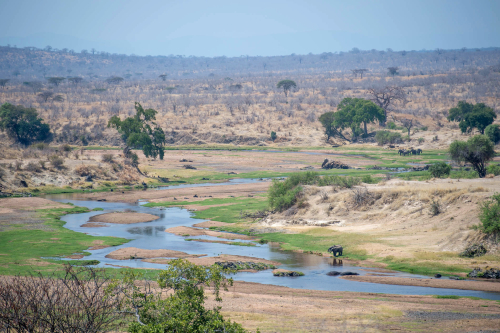
Open plains with elephant, giraffe and hippo, between the Uluguru mountains and the hills of the Lumango. The most accessible park in the south, and the logical first stop on the way to Nyerere and Ruaha.

Mikumi Park in short

Size

3,230 square kilometres (1,247 square miles), bordering Nyerere National Park to the south

What Mikumi is known for

The open Mkata plain, elephant, hippo and baboon

Mikumi from Dar es Salaam

About 290 kilometres (180 miles) on tarmac, four to six hours by road

Best time to visit Mikumi

June to October, with September and October the high point

We recommend

One to two nights, as part of a tour through the south
Why go to Mikumi National Park

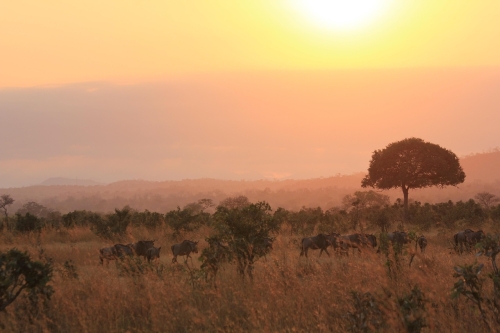
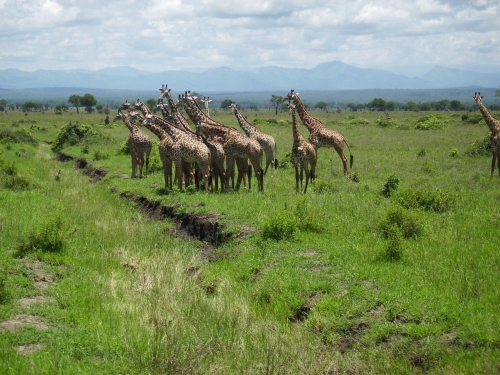
Mikumi National Park lies in a bowl between mountains. In the northeast the Uluguru mountains rise, in the west the hills of Rubeho and Lumango, and between them stretches the Mkata plain. Open grassland with acacia thickets, baobabs and the borassus palm the park owes its name to, with the mountain ridges as a frame around it.

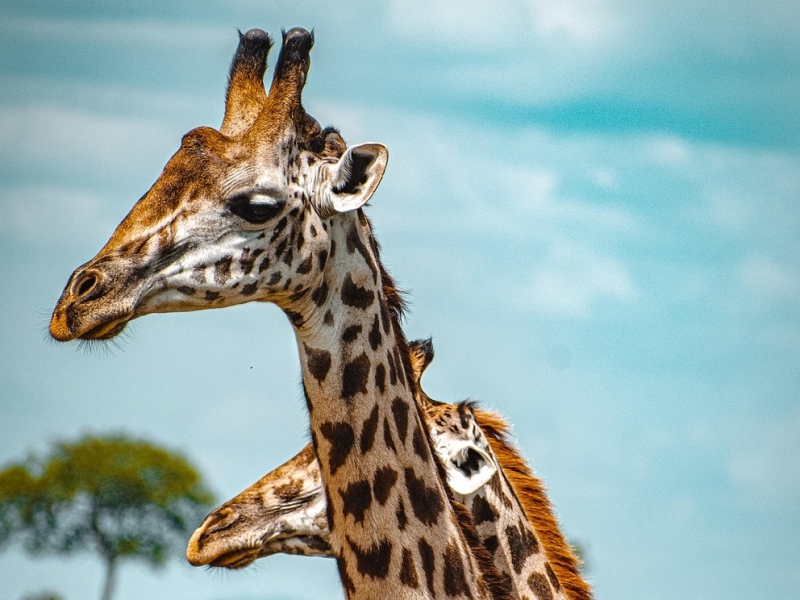
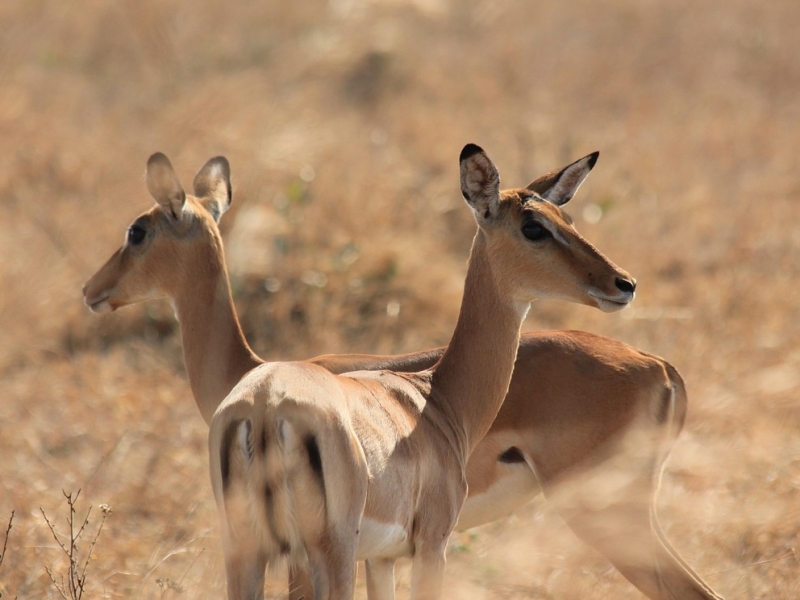
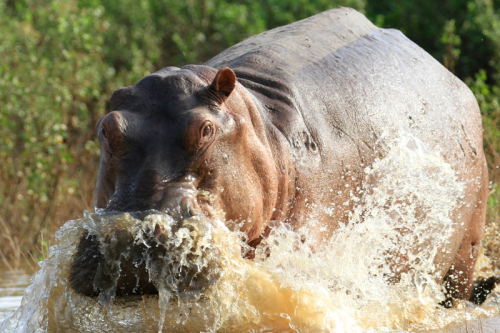
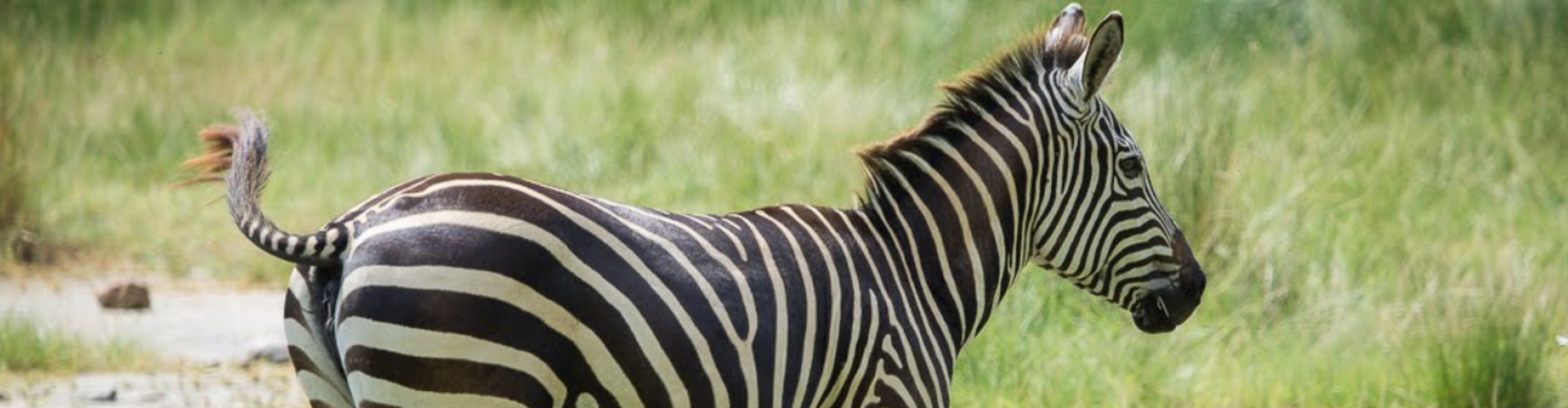
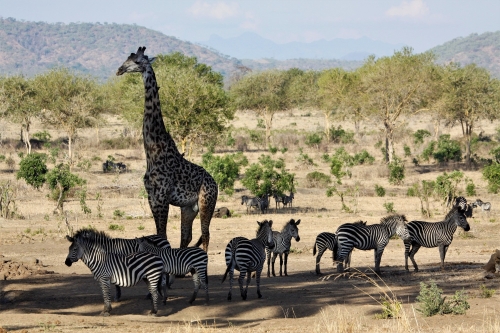
That open aspect is what gives Mikumi its character. You see a long way, and that makes spotting easy. Elephants move across the plain in family groups, giraffe stand among the acacias, and at the pools north of the main gate hippo often lie dozens together. Zebra, wildebeest, impala and buffalo graze in between, and yellow baboons are here in troops you cannot observe this well anywhere else.

Mikumi borders Nyerere National Park to the south and forms one ecosystem with it. You notice that, because the animals move between the two areas.

Mikumi is the only protected area in Tanzania with a through highway running across it. The A7 from Dar es Salaam towards Zambia cuts through the park for about fifty kilometres (31 miles), and you notice it. During a game drive you sometimes hear lorry traffic, and from some camps you can see the road. It is fair to say that, because anyone expecting complete wilderness here will be disappointed. At the same time it produces the sight travellers mention most often afterwards, an elephant family crossing the tarmac calmly while the traffic stands still.

What you see in Mikumi National Park

Mikumi National Park is open and easy to read, and that makes it a pleasant park in which to learn to look. The densities are lower than in the Serengeti, but what you see you usually see well, because there is little blocking the view.

What you will almost certainly see

In the dry season elephant, buffalo, giraffe, zebra, wildebeest, impala and warthog. Hippo at the pools, often many at a time. And yellow baboon and vervet monkey, so numerous here that behavioural research has been done on them for decades. For birdwatchers there are more than four hundred species, with a peak between October and April when the migrants from Europe and Asia are here. At the pools and the dam there are plenty of waders then.

What you see with luck

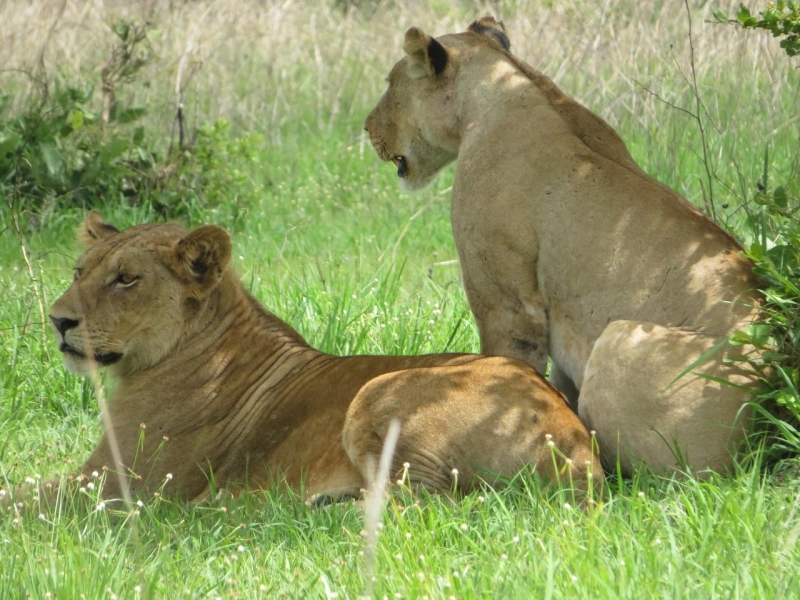
Lions are seen regularly, but nobody can promise them. Leopard are here and are seldom seen. Then spotted hyena, eland, crocodile and Lichtenstein's hartebeest. In the hills around the plain there are sable antelope and greater kudu, and now and then wild dogs pass through.

What you do not see here

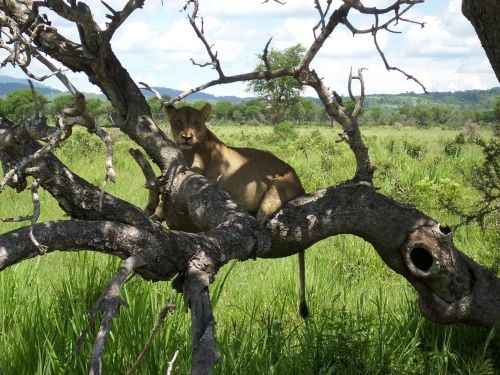
Rhino disappeared from Mikumi in the nineties through poaching and have not returned. So Mikumi National Park is not a Big Five park, however often you read that on other sites. Cheetah do not occur here either. And tree-climbing lions are sometimes written about as though they were a feature of Mikumi. There is no basis for that.

The elephants of the south

Mikumi belongs to the Nyerere and Selous ecosystem, an area of more than a hundred thousand square kilometres (38,600 square miles). In that ecosystem more than thirteen thousand elephants were counted in 2013, after years of heavy ivory poaching. At the count of 2022 there were more than twenty thousand, and the researchers found few fresh carcasses, which suggests the poaching is under control.

Where to go on safari in Mikumi

The visitor section of Mikumi National Park lies northwest of the highway, and there you drive a circuit of a few tens of kilometres. The largest part of the park, southeast of the road, is not opened up for visitors. That makes it easy to take in, and it also means you have seen the accessible part well in two days. The heart is the Mkata plain, open grassland where most of the game drives happen.

North of the main gate lie the hippo pools, a fixed stop, with hippo and waterbirds. Further north lies the Mwanambogo dam, a water point that draws animals in the dry season and where it is considerably quieter than on the main circuit. In the south, around Kikoboga, are the yellow baboons the park is known for. And along the hill edges, at the Vuma Hills, you have a view over the whole plain, with miombo woodland where sable antelope and kudu live. The crowds are on the main circuit, around the pools and at the picnic sites, and above all at the weekend and in the middle of the day. The north towards the dam is almost always quieter.

Your guide makes the difference

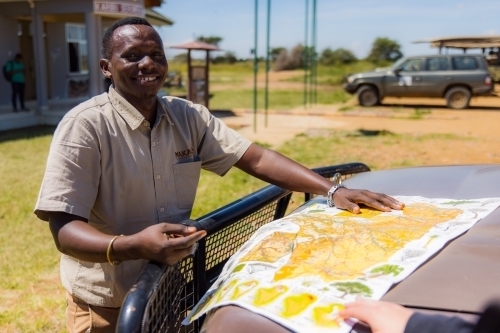
In a park where many visitors drive the same circuit, the difference is in timing. Our guides are there at sunrise, when the light is low, the predators are still active and there are hardly any other vehicles. They know when it is better to head north, towards the dam, and when the main circuit is the best place to be. They also know where the game drinks in this season, because on the Mkata plain the water points steer everything. In the dry season that is a handful of places, and anyone who knows which ones does not have to search.

And they drive slowly where they should. At the highway, where animals cross, and on the plain, where the view reaches far but the animals stand in the grass. What you see here depends above all on how much time you take to look.

The best time to go to Mikumi National Park

Mikumi National Park is open all year and can be visited all year. The difference is in the visibility, how passable the circuit is, and the crowds.

June to October

The landscape dries out, the vegetation thins and the game gathers at the last water points. June is quiet and already good. September and October are the high point, with large herds at the water and strong predator activity. October is the hottest and driest month. July and August are the busiest period, certainly at the weekend.

November and December

The first rains bring fresh grass, and among the antelope the calving season begins. The migrant birds arrive and the hippo pools in the north are full of waders. The landscape turns greener and the vegetation denser, and driving on the black clay soil of the plain becomes harder. A quiet period with young animals.

January and February

Green, warm and full of birds. This is, together with November and December, the strongest time for birdwatchers. The game is more spread out because there is water everywhere, so game viewing is less predictable than in the dry season.

March to May

The long rains, with April the wettest month. The landscape is at its greenest, the prices are lowest and there are the fewest visitors. Parts of the circuit on the Mkata plain can become impassable because of the heavy clay soil, the grass stands high which makes spotting harder, and the choice of accommodation is more limited.

How long to stay

One night is enough for most travellers, and it is the shape we plan most often. You then have an afternoon drive and a morning drive, and those are exactly the hours when the park is at its best. Two nights give room for the quiet north and the dam, for a walking safari or a night drive, and for a morning without hurry. If you have more time, you would rather combine with Udzungwa for mountain walking, or drive on to Nyerere or Ruaha. Mikumi can be done as a day trip from Dar es Salaam and from Zanzibar, and for someone sitting on the beach who has never seen wildlife before, that is a way to take something of it in.

Where it fits in your route

Mikumi National Park is the logical first stop of a safari in the south of Tanzania. From Dar es Salaam you drive there in four to six hours on tarmac, and from there you go on to Nyerere National Park for the boat safaris on the Rufiji, or west to Ruaha, about five hours further. That builds a southern trip combining three very different parks. Mikumi as open plain and gentle start, Nyerere for the water and the boat safaris, and Ruaha as the great wilderness. Many travellers finish that route with a few days in Zanzibar. The park also has an airstrip, at Kikoboga, so flying is possible.

Where you sleep in Mikumi

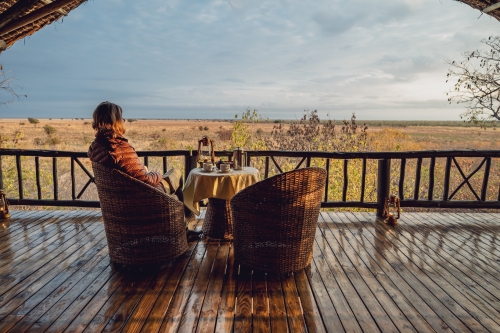
Inside the park there are a few lodges and tented camps, above all on the northwest side, in and around the opened circuit and on the hill edge with a view over the plain. That view is the strongest argument, because you look down over the whole open landscape. Outside the park you find simple lodges and guesthouses along the highway at the village of Mikumi, and a wider choice in Morogoro, about an hour's drive away. The range runs from budget to mid-range, with a few comfortable camps among them. If you sleep inside the park, a concession fee per person per night comes on top.

Frequently asked questions about Mikumi National Park

Does a highway really run through Mikumi National Park?

Yes. The A7 from Dar es Salaam towards Zambia cuts through the park for about fifty kilometres, and Mikumi is the only protected area in Tanzania where that is the case. You sometimes hear lorry traffic during a game drive. There is a speed limit with humps, because the road costs animals their lives, and it is at the same time the place where you see elephants crossing calmly.

Is Mikumi National Park crowded?

At the weekend and in the middle of the day, yes, because Mikumi lies close to Dar es Salaam and gets a lot of day visitors, school groups and fly-in day trips from Zanzibar. On weekdays and in the early morning it is a different park. The north towards the Mwanambogo dam is almost always quieter.

Can you do a walking safari in Mikumi National Park?

Yes, with a mandatory armed ranger, on three designated routes, at Kikoboga, at Vuma Hills and at the Mikumi Wildlife Lodge. A walk takes three to four hours. You learn to look at tracks, plants and sounds, and you hear the landscape instead of the engine.

Can you do a night drive in Mikumi National Park?

Yes, and that is exceptional, because in most northern parks it is not allowed. The drive runs from eight to eleven in the evening, with an armed ranger along and in a vehicle fitted for it. With a spotlight you look for animals that sleep during the day.

Is Mikumi a Big Five park?

No. Rhino disappeared from the park in the nineties through poaching and have not returned. You see plenty of elephant and buffalo, lion regularly, leopard seldom.

Can you do Mikumi as a day trip from Zanzibar or Dar es Salaam?

You can, and those trips are widely offered. We would rather plan Mikumi with a night, because then you take in the early morning and the late afternoon, exactly the hours when the park is at its best and the animals move most. A day trip falls outside that, and the drive from Dar es Salaam is long on top of it.

Can you do a boat safari or a balloon flight in Mikumi?

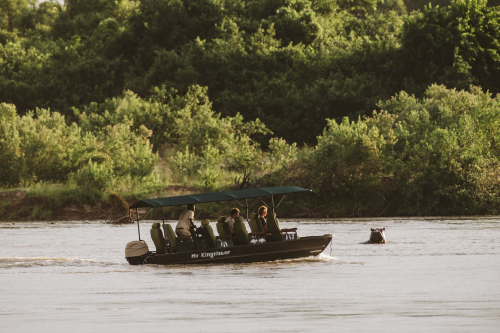
Neither. For a boat safari you go to Nyerere National Park, where you travel on the Rufiji, and those two parks combine well..

Is Mikumi National Park suitable with children?

Well suited. The park is reachable by road, the distances within the circuit are short, and there is almost always something to see, from hippo to baboon. Children under five pay no entry fee.

Mikumi in your Tanzania trip

Mikumi National Park is the gentle start to a trip through the south, with open plains, elephant and hippo a day's drive from Dar es Salaam. We usually plan it with a night, so that you take in the early morning, and as part of a route that carries on to Nyerere or Ruaha. Tell us when you want to go and what you are after, and we will think through the order and the number of nights with you.

Other parks in southern Tanzania

A safari through the south is almost always a tour past several parks. Mikumi National Park lies closest to Dar es Salaam and is the logical first stop, with Nyerere to the south and Ruaha to the west. Every park has its own character, and that variation is what makes the trip.

Nyerere National Park

The largest park in Tanzania, with boat safaris on the Rufiji river and a landscape of lakes and channels.

Ruaha National Park

Large elephant herds, baobabs and lions in strong prides, with a fraction of the visitors of the north.

Southern Tanzania

Our fifteen day itinerary through the south, with Mikumi, Nyerere and Ruaha, and Zanzibar to finish.