Nyerere National Park

The largest national park in Tanzania, formerly the Selous Game Reserve, around the Rufiji, the largest river in East Africa. Boat safaris among the hippo, walking with a ranger, and a wilderness where you hardly meet another vehicle.

Nyerere Park in short

Size

30,893 square kilometres (11,928 square miles), the largest national park in Tanzania

What Nyerere is known for

Boat safaris on the Rufiji, hippo, crocodile and wild dogs

Nyerere from Dar es Salaam

About forty-five minutes to an hour by air, or some six hours by road

Best time to visit Nyerere

June to October, with September and October the strongest period

We recommend

At least three nights, and combine it with Ruaha National Park
Why go to Nyerere National Park

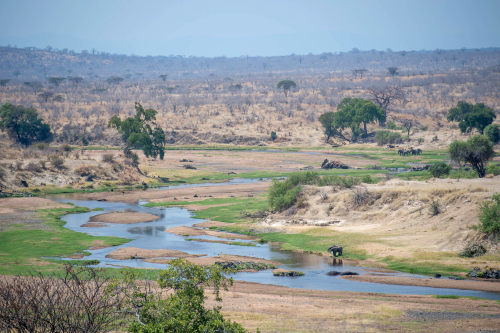
In the northern parks you look at the land. Here you look at the water, and that changes everything. The Rufiji is the largest river in Tanzania and in East Africa, and inside Nyerere National Park it fans out into a network of channels, oxbow lakes and seasonal swamps. Tagalala, Manze, Nzerakera and Siwandu lie like a chain through the landscape, and in the dry season, when the smaller water points dry up, everything gathers there.

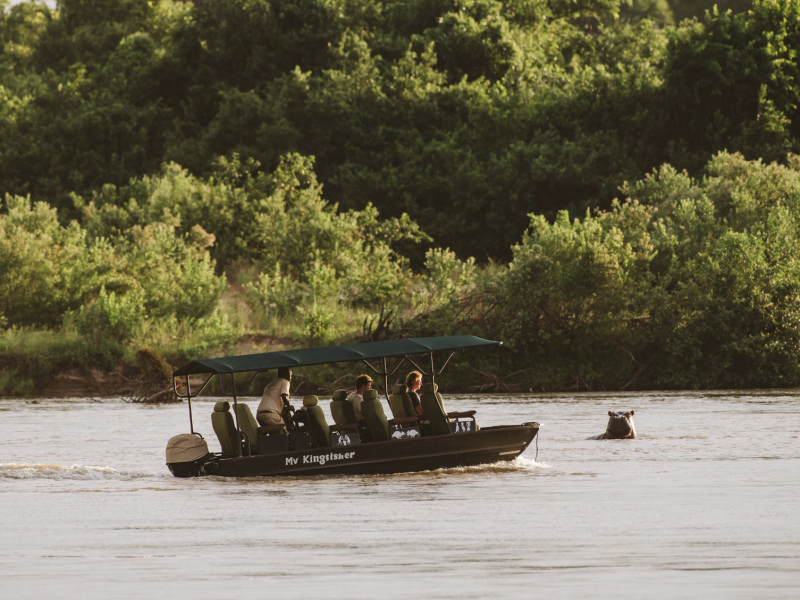
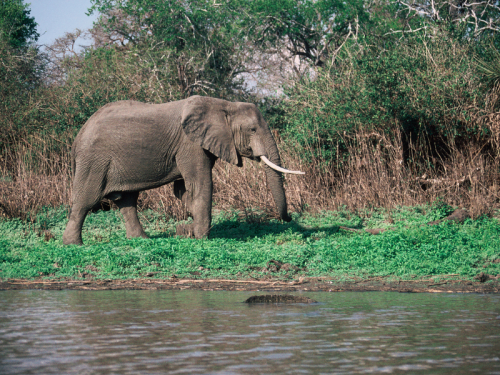
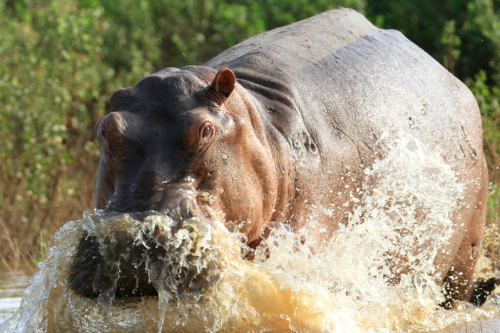
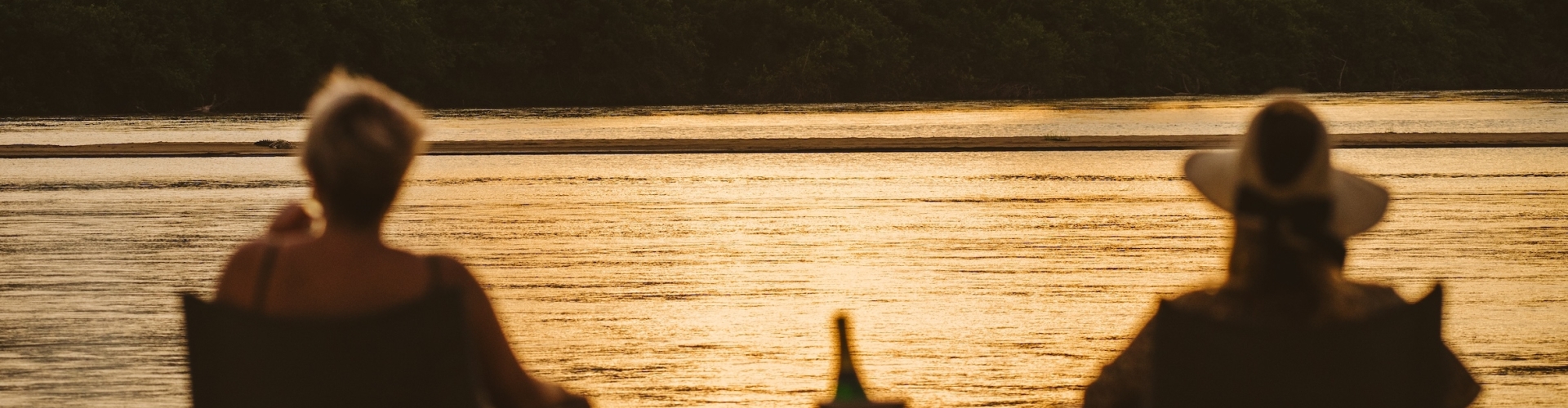
That makes something possible here that is not allowed anywhere in the north of Tanzania. You step into a boat and move between the hippo, past crocodiles on the sandbanks and elephants standing at the bank to drink. Above you fish eagles and skimmers. At the end of the afternoon, with the sun low over the water, that is one of the finest ways to see wildlife there is.

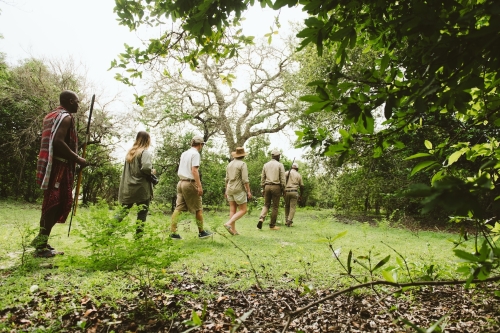
And it does not stop at the boat. You may walk here with an armed ranger, you may go out after sunset, and you may even canoe. What travellers mention most here is the emptiness.

Nyerere is enormous, and only a small part in the north is opened up for visitors. One guest put it briefly, they hardly saw another tourist.

Many travellers still know this area as Selous, and that was right, up to 2019. Then the northern part of the old Selous Game Reserve was split off and declared a national park, named after Julius Nyerere, the first president of Tanzania. That part, 30,893 square kilometres, is where you go on safari. The southern part is still called Selous Game Reserve and is managed differently. That distinction often gets confused, by tour operators too, and so areas and animal numbers circulate that belong to the old, much larger Selous. If you read somewhere that the area measures fifty thousand square kilometres, that is about the Selous of the past, not about the park you are going to.

What you see in Nyerere National Park

Nyerere is a miombo park, and that means woodland, cover and animals that sit spread out. You search longer here than in the Serengeti, and you find different things. At the water it is rich and predictable, and that is exactly where you spend most of your time.

What you will almost certainly see

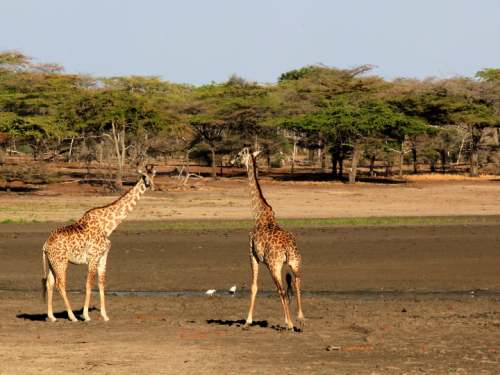
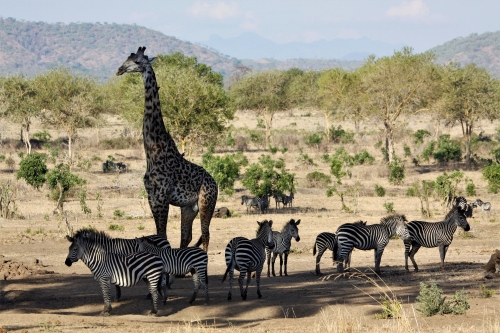
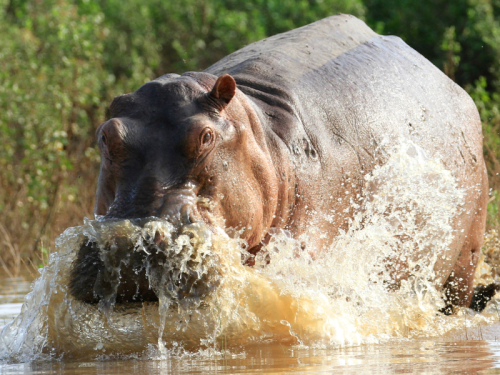
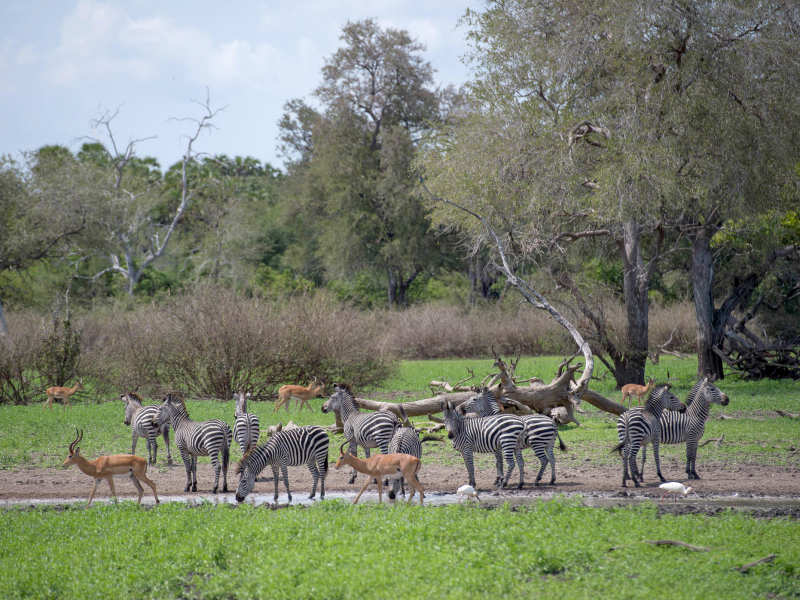
Hippo, and plenty of them. At the last count more than twenty-nine thousand were counted in the ecosystem, and at the lakes they sometimes lie dozens at a time. Then crocodile, of which the Rufiji holds one of the largest populations in Africa, elephant, giraffe, zebra, waterbuck, impala and spotted hyena. And along the water a wealth of birds. For birdwatchers there are more than four hundred and forty species.

What you see with luck

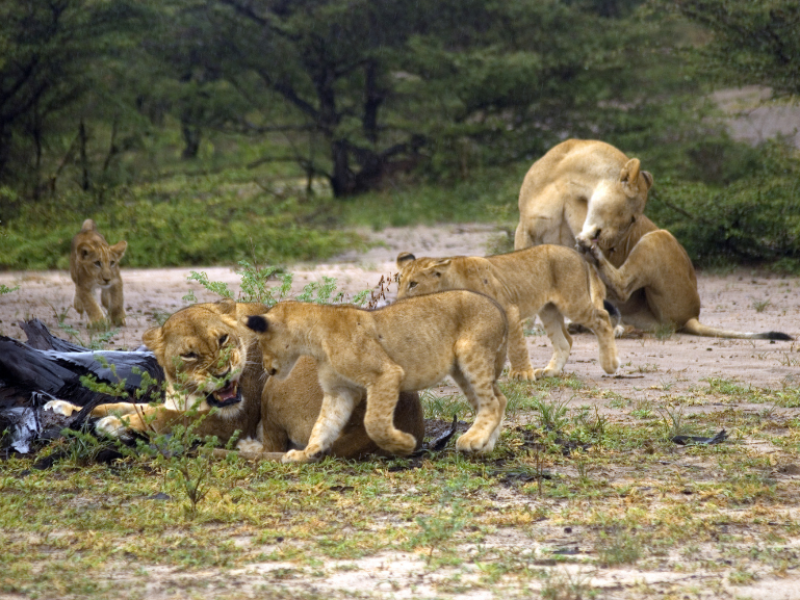
Lion are here in good numbers, but the woodland gives cover and the animals are spread out, so finding them takes time. Leopard are seldom seen. Then cheetah, sable antelope, greater kudu and Lichtenstein's hartebeest.

What you do not see here

Black rhino are formally still here, but for visitors they are effectively absent. Sightings are so rare that we promise nothing about them. Anyone who wants the Big Five complete should be in the Ngorongoro crater. Here it is more honest to speak of the Big Four.

The wild dogs of Nyerere

This is the animal the specialists come for. The African wild dog is one of the rarest predators on the continent, and Nyerere counts as one of the most important strongholds left. Estimates run to eight hundred or a thousand animals in the wider area, and camera trap research identified more than two hundred individuals in one sub-area between 2020 and 2022. Seeing them remains luck, because a pack covers enormous distances. But nowhere in Tanzania is your chance as good as here, and anyone who sees them hunting does not forget it.

Where to go on safari in Nyerere

Of the almost thirty-one thousand square kilometres, only a small part in the north is opened up for visitors, and there everything turns on the water. That northern area lies around the Rufiji and the lakes, between the Mtemere and Matambwe gates. Almost all the camps are here, often on the water with their own jetty, and this is where the boat safaris happen. The lakes Manze, Nzerakera and Siwandu are the focal point, because in the dry season everything comes there to drink. A little higher lies the area around Beho Beho, with cooler nights and good walking routes, and from there you go to Lake Tagalala.

The south and west of the park are largely undeveloped, with dense bush and hardly any facilities. Almost no visitors come there. The crowds, in so far as you can call them that, are around the northern lakes in high season. Outside that you meet almost nobody in this park.

Your guide makes the difference

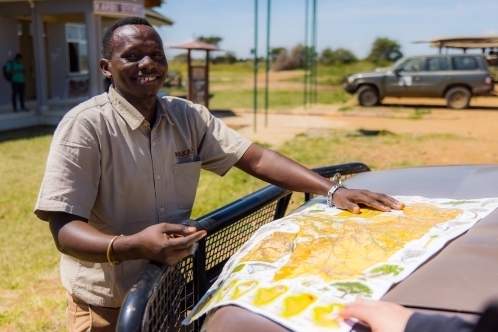
In a park where the game sits spread out through woodland, a good guide is the difference between an empty day and a day that stays with you. He knows which lakes hold water in this season and which have dried up, along which bank the elephants come to drink, and where the wild dogs have been seen these last few weeks. He reads the tracks in the sand of the river bed, hears from the alarm call of a monkey that a predator is moving, and recognises from the posture of a group of impala what they are looking at. In the north you need those signs less, here you do. And he knows how to build a boat safari. When to go out for the best light, where the hippo lie without you disturbing them, and how close you can come to an elephant at the bank without driving it away.

The best time to go to Nyerere National Park

Nyerere has two rainy periods, short rains around November and December and long rains from about March to May. The dry season in between is the strongest for game viewing, because everything moves to the water. It is warmer and more humid here than in the north, and that weighs in your choice.

June to October, the dry season

This is Nyerere at its best. The smaller water points dry up and the game concentrates along the Rufiji and the lakes, which makes the searching much easier. June is green and fresh after the rains, with full lakes and excellent boat conditions. From July to October it builds to the peak, with September and October the strongest months, when the game sits closest to the water. This is also the busiest and most expensive period, although busy here still means something very different from the north.

November and December

The short rains. The landscape comes into bloom, the migrant birds arrive and the game gets more spread out. This is the hottest period of the year, with peaks around thirty-three degrees Celsius (91 Fahrenheit), and the gravel roads in the northern area can turn muddy. December is green and photogenic, and is often combined with a few days on the coast.

January and February

A drier phase between the two rainy periods. The landscape is green, young animals are born, and for birdwatchers this is, together with November, the strongest time, because the migrants are all here. The game is more spread out, so searching takes time, and the boat safaris are excellent.

March to May

The long rains, with April the wettest month. Most camps close from mid March to the end of May, flights are partly suspended and the drive from Dar es Salaam can run to eight hours. Anyone who wants to travel in these months is better off choosing another park. At the end of May the rains usually stop and the park goes into the new season green and full.

How long to stay

At least three nights, and experienced sources agree on that. Then you have two full days, enough to combine a game drive, a boat safari and a walking safari, and to get to know the water system a little. Four or five nights adds something real. The game sits spread out, so more time means more chance of lion and wild dog. And it gives room to take it easier in the heat, which travels better here than being up early every day. The most used southern arrangement is three nights Nyerere and three nights Ruaha, with a flight in between.

Where it fits in your route

Nyerere National Park lies on the southern circuit, and in practice you fly there. From Dar es Salaam that takes forty-five minutes to an hour, from Zanzibar about an hour, and there are scheduled flights daily. You land at the airstrip closest to your camp. Driving is possible too, in about six hours from Dar es Salaam, of which the last seventy-five kilometres (47 miles) are on gravel road. In the rainy season that runs up to seven or eight hours. For most travellers that does not weigh up against a forty-five minute flight. Nyerere goes best together with Ruaha, and those two complement each other exactly. Three nights in each, with a flight in between, is the classic southern trip.

Where you sleep in Nyerere

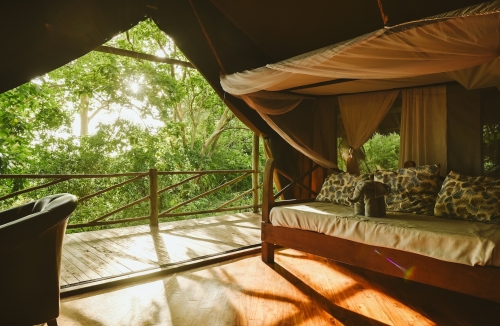
Almost all the camps lie in the northern area, along the Rufiji and around the lakes Manze, Nzerakera and Siwandu. Many of them stand on the water with their own jetty, so you leave for a boat safari straight from camp. The range runs from simple tented camps with open vehicles to luxury lodges with air conditioning and a private pool. The picture is small-scale. Many camps are closed during the long rains, from about mid March to the end of May or the beginning of June.

Frequently asked questions about Nyerere National Park

Is Nyerere National Park the same as Selous?

Partly. Up to 2019 the whole area was called Selous Game Reserve. Then the northern part was split off and declared a national park, named after the first president of Tanzania. That part, where you go on safari, is now called Nyerere National Park. The southern part is still called Selous Game Reserve and is not a tourist area.

Can you do a boat safari in Nyerere National Park?

Yes, and it is the signature activity of the park. You go out for two to three hours on the Rufiji or on the lakes, usually at sunrise or sunset, past hippo, crocodile, drinking elephants and a lot of birds. No park in the north of Tanzania offers this.

Can you do a walking safari or a night drive here?

Both. A walking safari takes two to four hours and always goes with an armed ranger. Night drives are allowed in Nyerere, although not every camp offers them, so we arrange that beforehand. Canoeing and fly camping are possible in some places too.

Do you see rhino here?

In practice, no. A few formally still live here, but sightings are so rare that you should not count on them. Operators who sell Nyerere as a Big Five park are promising something the park does not deliver. If you want to see rhino, the Ngorongoro crater is the place.

Is it crowded?

No. Only a small part of the park is opened up for visitors, and the camps are small and far apart. Travellers consistently report that they hardly meet another vehicle. Some concentration arises around the northern lakes in high season, and even then it is quiet compared with the north.

Is off-road driving allowed in Nyerere?

Yes, and that is exceptional. In the Serengeti it is not allowed, so an animal lying a hundred metres from the road stays a hundred metres away. Here your guide can go to it, and that makes a difference to what you see and to your photographs.

Are there tsetse flies?

Yes, above all in the miombo woodland, and they are a real nuisance here. The bite is unpleasant, but sleeping sickness in travellers is extremely rare. Wear neutral colours, because dark blue and black attract the fly..

How hot is it in Nyerere?

Warmer and more humid than in the north, and that is something to take into account. From June to August the temperatures are pleasant, with cool mornings. November is the hottest period, with peaks around thirty-three degrees.

Is Nyerere National Park suitable with children?

For older children it can be a lot of fun, certainly because of the boat safaris, which are closer and more varied than a day in the jeep. For young children it is less suitable, because of the heat, the distances and the fact that walking safaris are not meant for them.

Can you do a short trip to Nyerere from Zanzibar?

A lot of two and three day trips are sold from Zanzibar and Dar es Salaam, with a flight, a game drive and a boat safari. Those give a real taste of the park and of the Rufiji, and for someone sitting on the beach who is curious, that is a defensible way to see something of Tanzania. We build our trips differently, because we see a safari as a journey and not as an excursion. In one night you do not get to the quiet, to the walking safari, or to the chance of meeting wild dogs. That takes time, and that time is exactly what makes this park what it is.

Nyerere in your Tanzania trip

Nyerere National Park is the waterside of Tanzania, with boat safaris you cannot do anywhere in the north, and with a quiet you no longer find in the well known parks. It asks for time and patience, and it repays that with a completely different kind of safari. Tell us when you want to go and what you are after, and we will think through the combination with Ruaha or with the coast, and the number of nights.

Other parks in southern Tanzania

A safari through the south is almost always a tour past several parks. Nyerere National Park combines best with Ruaha, and Mikumi is a good first stop if you travel by road from Dar es Salaam. Every park has its own character, and that variation is what makes the trip.

Ruaha National Park

Large elephant herds, baobabs and lions in strong prides, with a fraction of the visitors of the north.

Mikumi National Park

Open plains with elephant and giraffe, a day's drive from Dar es Salaam and the easiest first stop in the south.

Southern Tanzania

Our fifteen day itinerary through the south, with Nyerere, Mikumi and Ruaha, and Zanzibar to finish.