
Walking the Great Rift Valley trek, Empakai Crater to Lake Natron
The Great Rift Valley had been on my list for years, and this year I finally walked it. We had been watching the mountain for two days before we reached the ground it made. Ol Doinyo Lengai, the Maasai Mountain of God, first showed itself through a gap in the trees on the second morning, and from then on it grew, closer with every step, until we were walking across black lava the volcano had thrown out long ago, heading straight for it.
This is the Great Rift Valley trek on foot, a walking safari from the rim of Empakai Crater down to the soda flats of Lake Natron. Some people call it the Empakai to Natron trek. Four days across country most travellers only ever see from a vehicle. I walked it with two friends and our guide Sammi, and I want to tell you what it is like on the ground, the route day by day, the facts worth knowing, and the parts a photograph never manages to hold.
What is the Great Rift Valley trek
The Great Rift Valley runs for around 6,000 kilometres, from the Middle East down through East Africa to Mozambique, the long scar where the continent is slowly pulling itself apart. In northern Tanzania it opens into a landscape of volcanoes, soda lakes and highland forest, and this walk takes you through one of its most dramatic stretches.
The Great Rift Valley trek is a point-to-point walk, four nights and five days. It starts high on the rim of Empakai Crater in the Ngorongoro Highlands, drops through Maasai country to a camp on the edge of the Gregory Rift, then descends the wall of the rift itself to Lake Natron, where two nights leave time to rest and explore. You will also see it written as the Gregorian Rift, both names point to the same eastern arm of the East African Rift, named after the geologist John Walter Gregory who mapped it in the 1890s.
It is a walking safari rather than a game drive, which makes it one of the more active ways to see this part of Tanzania. You cover the ground on foot, with Maasai guides, and the camp moves ahead of you, carried on donkeys where there is no road, the way goods have always travelled out here. What you trade in comfort you gain in closeness. You feel the altitude, the heat, the quiet, and the scale of the place in a way no vehicle allows.
Day one, Empakai Crater
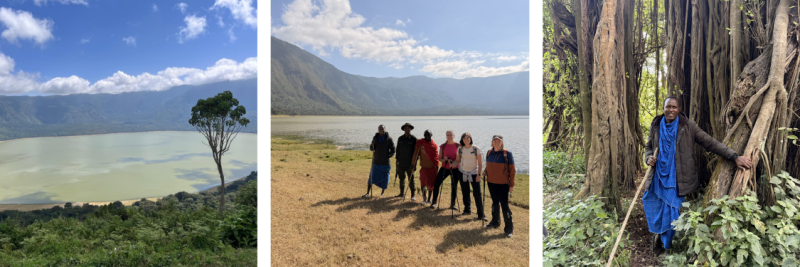
Your Makasa guide will drive you to the Empakai Crater this morning. You reach the rim of Empakai by mid-afternoon, and the first thing that lands is the quiet. This is a crater almost no one visits, a caldera in the Ngorongoro Highlands with a soda lake on its floor some 300 metres below the rim, flamingos strung across the water.
After lunch there is the option to walk down into it, around 40 minutes of steep descent through thick forest, the lake growing closer the whole way. At the bottom you stand right at the water, flamingos up close, Maasai herders bringing their cattle past, and not another traveller in sight. The climb back out is the harder half, the air thin enough that you stop to catch your breath. You are still inside the Ngorongoro Conservation Area, so an armed ranger walks with you here, because buffalo, hyena and leopard all move through this country. On the way down we found a hyena print pressed into fresh buffalo dung, a small reminder of whose home this is.
The night is spent at Empakai Camp, right on the rim at around 2,740 metres, cold, remote, and put together well. There is a fire, and a hot shower with steam rising off it into the cold air.
Day two, Empakai to Leonotis
The longest walking day, around 16 kilometres, and the one where the trek opens out. Dawn reaches the rim first, the crater filling with light while you take breakfast slowly and the crew break camp. From here you carry only a daypack.
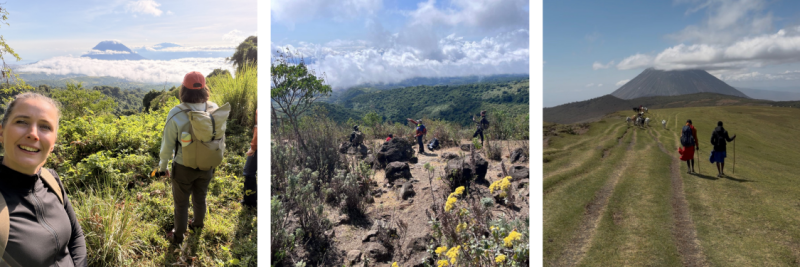
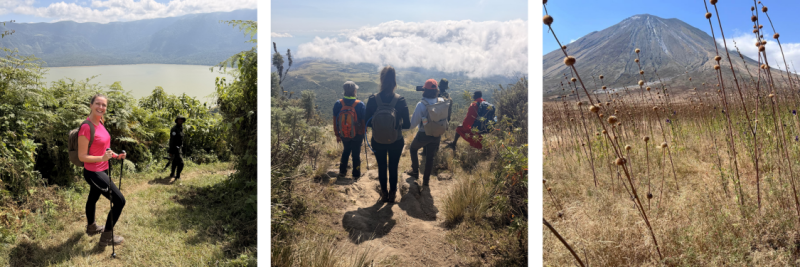
The first hours follow the Empakai crater rim through thick forest with your Maasai guides. Then, through a gap in the trees, the mountain appears for the first time. Ol Doinyo Lengai, standing over Lake Natron, exactly where this walk is heading, showing itself again and again as the forest opens. I know that mountain well from the other side, from the road, driving to our camps in the Serengeti. Seeing it from up here, on foot, knowing we would walk all the way to it, landed differently.
Higher up you walk into cloud, forest one moment and white all around the next. Then the trees end, the descent begins, and you feel it in your thighs and calves and the fronts of your feet. You come down into Naiyobi, a traditional Maasai village of scattered bomas out in open highland, and here the ranger leaves you as the route steps outside the Conservation Area. Lunch with the mountain back in view.
You reach Leonotis Camp in the early afternoon, set on the edge of the Gregory Rift among golden acacias at around 2,020 metres. A short climb to a nearby viewpoint makes the spot for sundowners, though we chose a slow afternoon at camp instead, not wanting to wreck our feet before the next day. What stays with me from that day is the scale of it. Hours on foot through country the guides read like home, the three of us small under a very big sky, and after dark a spread of stars with no other light for miles.
Day three, down the wall of the Rift Valley
This is the day people come back and talk about for years.
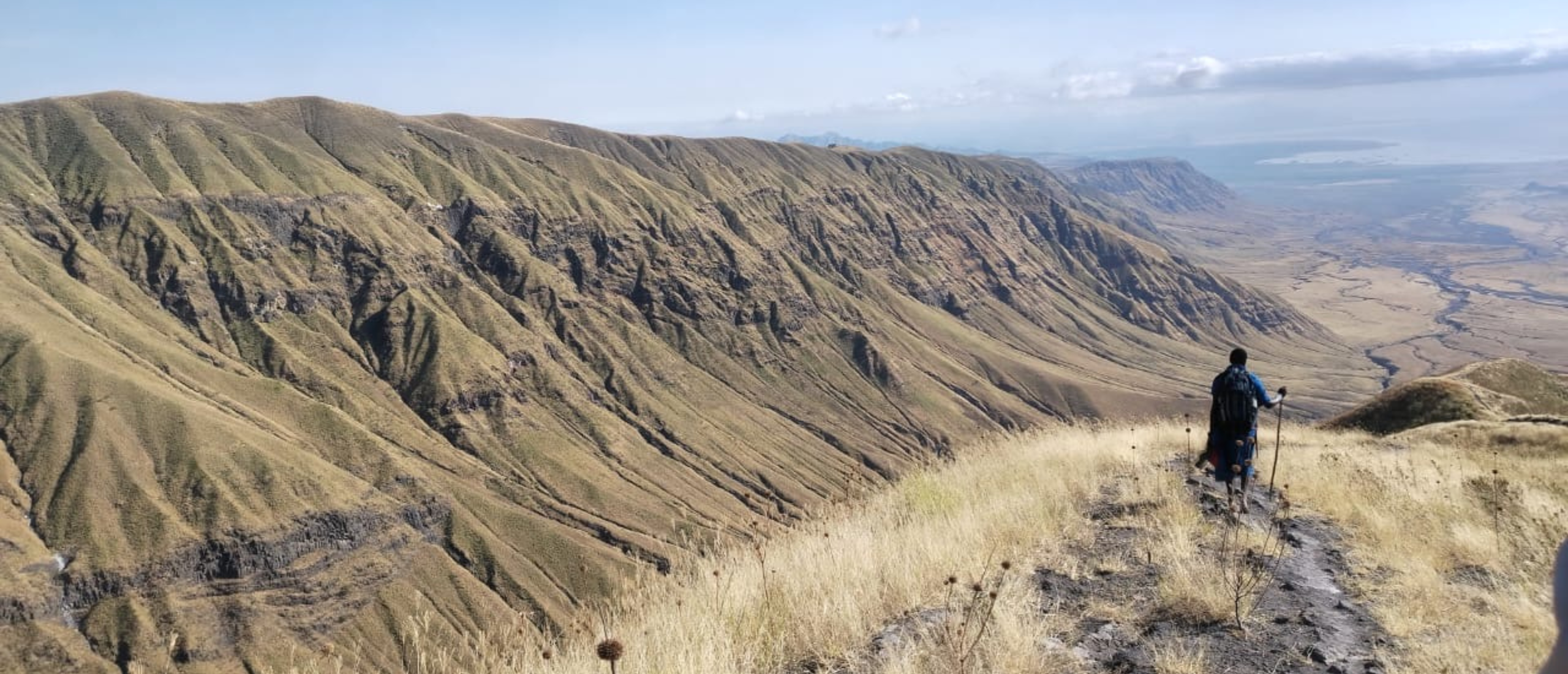
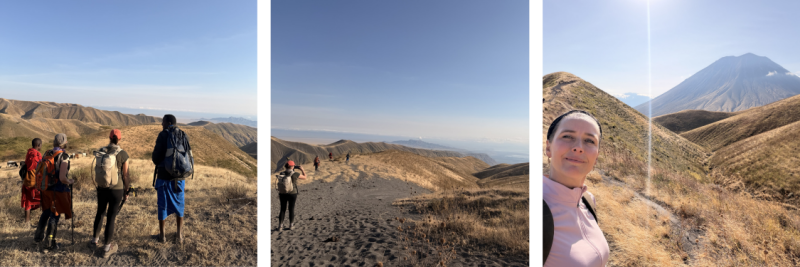
You leave Leonotis at the top of the escarpment. There is no road down from here, so the bags go ahead on donkeys, the way Maasai goods have always moved, and you walk with just a daypack. Then the land opens up all at once. The acacias fall behind, the forest ends, and the whole Rift Valley lies out in front of you. For hours you walk down and along the wall of the rift, ridges rising on every side with the morning sun laid across them, the valley floor dropping away far below. Turn a full circle and there is no edge to it, only more country running to the horizon.
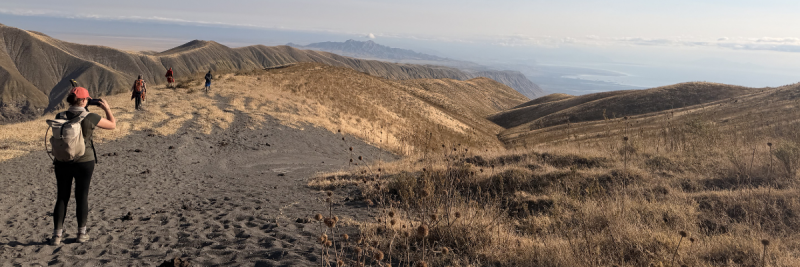
And straight ahead the whole way, Ol Doinyo Lengai, closer with every step. The ground changes as you go, green giving way to black, the earth turning to old lava and volcanic ash the mountain threw out long ago, set hard as rock in places and gone to loose sand in others. Ol Doinyo Lengai is the only volcano on Earth still erupting this kind of lava, and you are crossing the ground it made to reach the volcano itself.
There are two ways down, a shorter direct descent or a longer line that follows the rift wall the whole way. Sammi chose ours on the morning, reading the group and the heat. It is open and it is hot, no shade for long stretches, the heat building as you drop towards the valley floor at around 600 metres. At the base of the rift a vehicle collects you for the last stretch to Lake Natron Camp at Ngare Sero, where natural pools wait to cool off in. Nothing I write does this day justice, and the camera came no closer. You have to walk it.
Day four, Lake Natron and the Ngare Sero gorge
A softer day, and a needed one. You wake at Lake Natron with the trek behind you and everything it left you still settling. No alarm, a long lie-in if you want it, or the sunrise watched from the door of your tent, then a full breakfast before you head out.
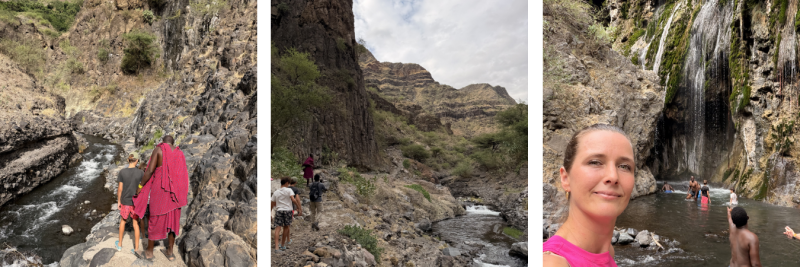
The signature outing is the Ngare Sero gorge walk. A short drive brings you to the mouth of the gorge, and the world changes at the entrance. The sun-struck rock of the plain gives way to a narrow canyon with walls rising high on either side, wild palms and green tracing the water, shade at last after days in the open. The way in is half the fun, wading through the river ankle to knee deep and climbing over rock as the walls close around you. At the end, a waterfall drops into a clear pool you can stand under and swim in, cold and loud after the heat, and a little further on a second fall, wider and stronger still. This deep in, you often have the whole place to yourselves. It runs about 5 kilometres there and back, a couple of hours, easy going with a bit of scrambling, so wear shoes that can get wet.
Then there is the lake itself. Lake Natron is one of the strangest bodies of water in Africa, a shallow soda lake so alkaline that little survives in it, turning red and pink from the microbial life it does hold. It is the most important breeding site in the world for lesser flamingos, over a million birds gathering here. You can walk out towards them at dawn, visit the ancient human footprints preserved in the mud nearby, dated to somewhere between 5,000 and 19,000 years old, or simply rest by the pool. Sundowners to close.
Day five, leaving Lake Natron
Today you will leave Lake Natron and continue your trip. Possibly to Serengeti, Arusha, Kilimanjaro or Zanzibar.
Where you sleep
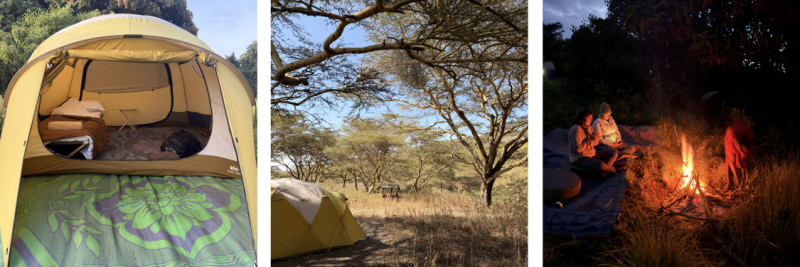
Two nights under canvas. Basic, and well looked after. The camp is standing when you arrive, put up by the crew who went ahead. A toilet tent, a seat over a hole in the ground, and a shower tent with warm running water that feels like luxury after a day on your feet. At Empakai, at 2,740 metres, it is cold, and there is a fire. The steam came off the shower into the cold air. Out on the trek there are no toilets. Then it is the bush, behind a tree or a rock. Your guides are used to this, they point you to the best spot and leave you your privacy.
The last two nights you sleep at Lake Natron Camp, which is very comfortable.
How hard is the Great Rift Valley trek
Moderate. This is not Kilimanjaro. The ground rolls, steady ups and downs, and anyone reasonably fit can walk it. The real test is the downhill. Long descents, the fronts of your feet and your toes taking the load, day after day. That, more than any single climb, is what your legs will remember.
How fit do you need to be?
Reasonably fit is enough. You do not need to be a mountaineer or a marathon runner. If you walk regularly at home and can manage a long day on your feet, you can walk this. Come used to several days in a row, and the trek will meet you where you are.
Altitude, heat, and cold
Altitude is not a concern. The trek descends throughout, and Empakai sits below the level where altitude sickness usually starts. The bigger swing is temperature. It gets cold at night on the high rims, while the valley floor at Natron runs hot, often past 40 degrees, so you pack for both. There is little shade on the open stretches.
What you carry
Not much. Camp is moved for you, so you walk with a daypack, a few litres of water, a layer, sun protection, and little else. Everything else goes ahead, on donkeys where there is no road.
Boots
The single most useful thing you can do before you come is break your boots in properly. New boots on day one is the fastest way to spend four days thinking about your feet instead of the country.
When is the best time to walk the Great Rift Valley
You can walk it across a long stretch of the year, roughly June to February. The drier months give the firmest ground and the clearest air underfoot. Flamingo numbers at Lake Natron tend to be strongest from around June to October. The walk itself stays quiet and off the beaten track whenever you come. It is the rest of the trip, the safari either side, where the season makes the bigger difference, so it is worth a conversation about timing before you fix your dates.
How to include the Great Rift Valley trek in your safari
The Great Rift Valley trek sits well in the middle of a northern Tanzania safari, not at the start, not at the end. You spend the first days in a vehicle, reading the country from the seat. Tarangire and its elephants, then Lake Manyara, then down into the Ngorongoro Crater. Then you leave the vehicle behind and walk, from the rim of Empakai to the soda flats of Natron, four days on foot. And when the walking is done, from Lake Natron you carry on into the Serengeti, and fly out from there at the end.
That is one way to build it. There are others. You can walk the trek early and let the Serengeti be your reward, or finish on the coast, trading tired legs for the warm water off Zanzibar. Some people come for the walk alone and keep the rest short.
We do not sell a fixed package. We build the trek around your trip, your dates, your pace, and where you want to be when the walking is done. Tell us what you have in mind and we will shape the route to fit it.
Frequently asked questions
How hard is the Great Rift Valley trek?
Moderate. It is not a technical climb and it is not Kilimanjaro. Anyone reasonably fit can walk it. The real test is the downhill, the long descents you feel in your toes, day after day, more than any single stretch.
Do you need hiking experience?
No. You need to be comfortable on your feet for a full day, and happy to do that several days running. If you walk regularly at home, you are ready for it.
Is the Great Rift Valley trek safe?
Yes. You walk with Maasai guides who read this country as home, and inside the Ngorongoro Conservation Area an armed ranger walks with you, because buffalo, hyena and leopard move through the highlands.
How long is the trek?
Four nights and five days, point to point, from the rim of Empakai Crater to Lake Natron. The walking builds through the middle days, with a softer final day at Natron for the Ngare Sero gorge and the flamingos.
What are the toilets and showers like?
Basic but good. At camp there is a toilet tent, a seat over a hole in the ground, and a shower tent with warm running water that feels like luxury after a day on your feet. Out on the trek there are no toilets, so you use the bush, behind a tree or a rock. Your guides are used to this, they will point you to the best spot and leave you your privacy.
Can you do the trek with children?
From about age ten, as long as the child is active and, more importantly, motivated. The days ask for real effort, back to back, so it is not a trek to talk a reluctant child into. If you are travelling as a family and the children are coming too, tell us their ages and how they are on their feet, and we will build the days to fit.
When is the best time to walk it?
Roughly June to February, when the ground is firmest and the air is clearest. Flamingo numbers at Lake Natron are strongest from around June to October. The season matters more for the safari on either side than for the walk itself, so it is worth talking through your dates with us.
Can you combine the trek with a safari?
Yes, and most people do. The trek fits neatly in the middle of a northern Tanzania route, between the crater and the Serengeti, or before a few days on the coast. We build it around your itinerary rather than the other way round.
Walking it with Makasa
We are a family, and we walk our own country. This trek is not a line on a brochure for us, it is a route we know on foot, in the heat and the cold and the quiet, with guides we trust to read the land and hold your hand over the tricky ground. I walked it this year with two friends, and Sammi guided us the whole way, and it is one of the finest things I have done in Tanzania.
If you want to walk the Great Rift Valley trek, write to us and we will start with your dates and build the rest around them, the arrival, the days on foot, and where you go afterwards, whether that is the Serengeti, Zanzibar, or straight home with your legs tired and your head full. Karibu, and safari njema.