Arusha National Park

The park where you get out of the car. Walking with a ranger among the giraffes, canoeing on the Momella lakes, and the second mountain of Tanzania above you. Forty minutes from Arusha, and the best first day of your trip.

Arusha National Park in short

Size

About 320 square kilometres (124 square miles), around the eastern flank of Mount Meru

What Arusha National Park is known for

Walking safaris, canoeing, giraffes close up and colobus monkeys

Arusha Park from Arusha

About 25 kilometres (16 miles), forty minutes by road

Best time to visit Arusha National Park

All year, with June to October the clearest

We recommend

Half a day to a full day, at the start of your trip

Why go to Arusha National Park

In almost every park in Tanzania you stay in the car. Not here. Arusha National Park is one of the few places on the northern circuit where you may go out into the field on foot, with an armed ranger beside you. That is possible because no lions live here, and that is the trade this park offers, you exchange big predators for something you get nowhere else further on.

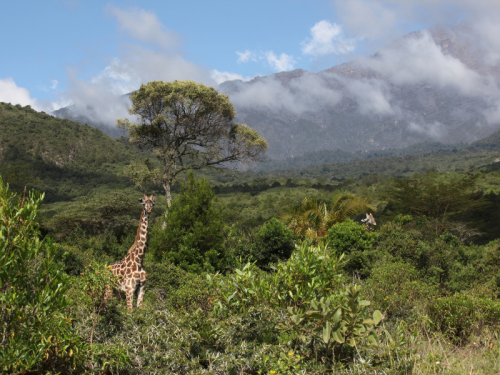
Walking changes everything. You hear the trees, you smell the ground, and a giraffe you are used to seeing from a jeep is suddenly standing at thirty metres looking down at you. Your ranger shows you tracks, plants the Meru people use, and the difference between the calls of the birds above you.

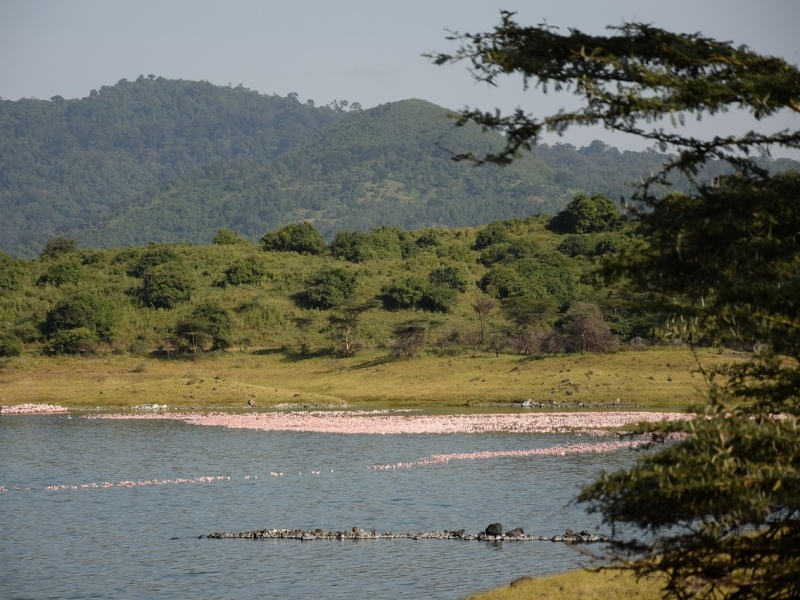
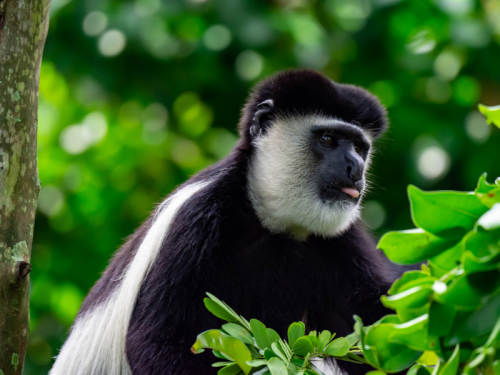
And then the landscape. In a small area three worlds lie side by side. Montane rainforest on the slopes of Mount Meru, where black and white colobus monkeys move through the canopy and where this is the easiest place on the whole northern circuit to see them. The Ngurdoto crater in the southeast, a wooded bowl more than three kilometres (2 miles) across, which you look at from the rim. And in the northeast the Momella lakes, seven shallow alkaline lakes that each have a different colour from their minerals and algae.

Above all of it stands Mount Meru, at over 4,500 metres (14,800 feet) the second mountain of Tanzania, with a caldera broken open on the eastern side. On a clear day you see Kilimanjaro from here, sixty kilometres (37 miles) away.

What you see in Arusha National Park

Arusha is not a park for big predators, and it does not try to be. What you get here is quiet, landscape and animals you see close up because you are on foot. Travellers who know that come back enthusiastic. Those expecting the Big Five do not.

What you will almost certainly see

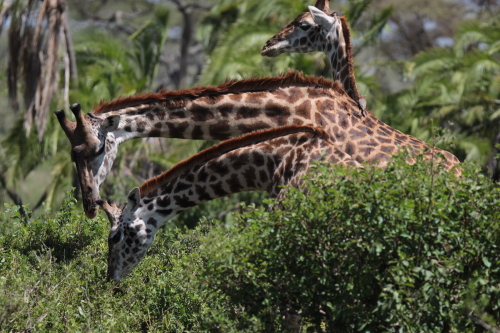
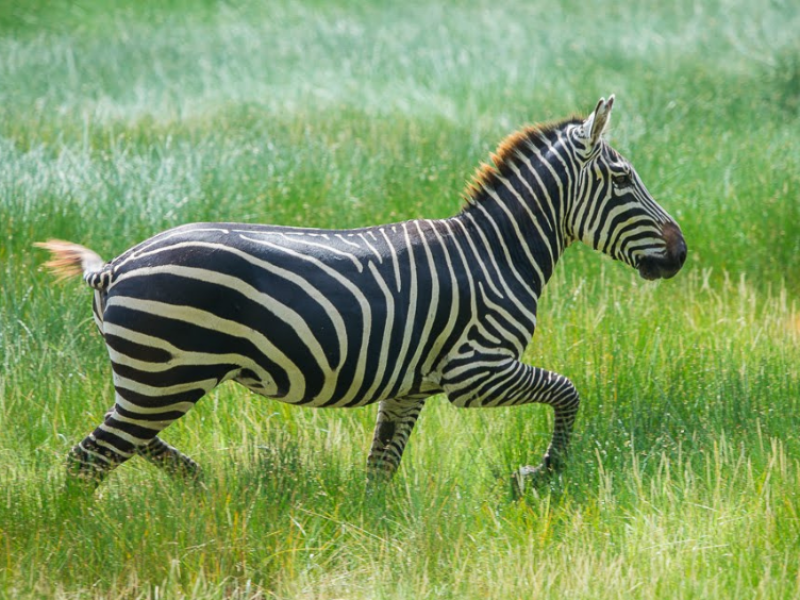
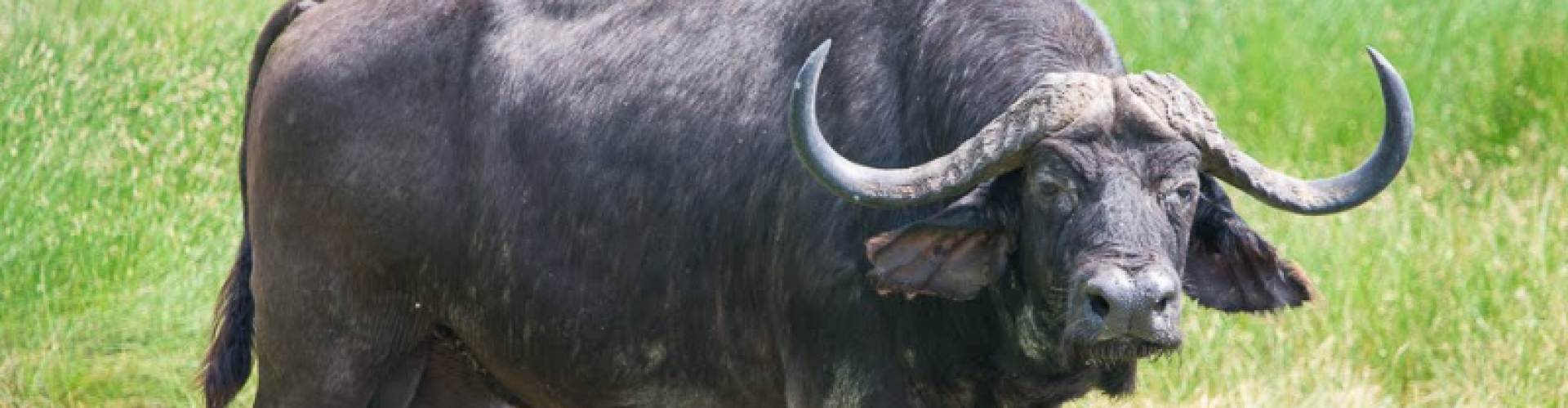
Giraffe, and plenty of them. They are the trademark of the park and the high point travellers mention most, certainly during a walk. Then buffalo, zebra, warthog, waterbuck, bushbuck, dik-dik, olive baboon and blue monkey. Hippo in the Momella lakes. And black and white colobus in the forest, which you hardly meet in the other northern parks. For birdwatchers this is a rich area, with at least four hundred and eleven recorded species according to BirdLife International. On the lakes you see pelican, heron, grebe and duck, in the forest Hartlaub's turaco and the silvery-cheeked hornbill.

An honest figure about the giraffes

The giraffes of Arusha are famous, and you see plenty of them. But the population fell by almost half between the counts of 1979 and 2021, according to research published in the African Journal of Ecology. So the picture of endless numbers that some sites paint holds less true than it used to. You still see them, and closer than anywhere else.

What you see with luck

Elephant, which are shy and keep mostly to the forest. Leopard live here but are seldom seen, usually at dusk. Then spotted hyena, serval and small antelope.

What not to count on

Lions do not live here, and that is not a temporary situation. Nor do rhino or cheetah. Of the Big Five you see only the buffalo regularly. Arusha is sold on some sites as a Big Five park, and that is not true. Flamingos on the Momella lakes are sometimes there in large numbers and sometimes hardly at all. That varies by season and by year, and it is hard to predict in advance. And you practically never see wildebeest here, despite some texts mentioning them.

On safari in Arusha Park

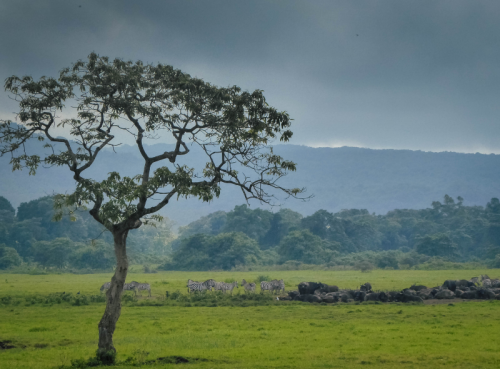
The park falls into four parts. In the southwest lies the main gate, with groundwater forest and behind it Serengeti Ndogo, the little Serengeti. That is the only open plain in the park, and the only place where you see larger groups of zebra and buffalo grazing. Early in the morning it is at its best.

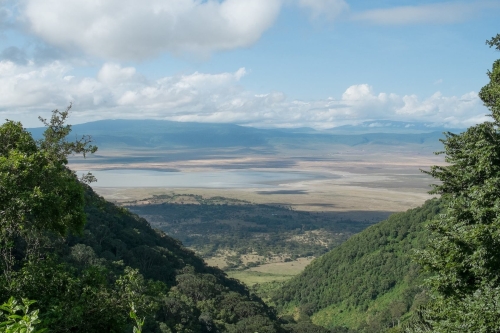
In the southeast lies the Ngurdoto crater, a wooded bowl more than three kilometres across and about a hundred metres deep. The floor has been closed to visitors, vehicles and walkers since 1967. That makes it an undisturbed reserve inside the park. You look at it from the viewpoints on the rim, where buffalo and sometimes elephant stand below.

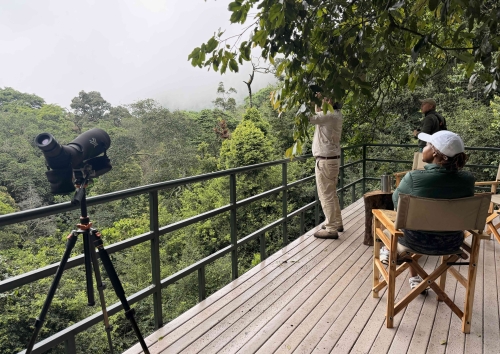
In the northeast lie the Momella lakes. Here you paddle the canoe, giraffe and zebra stand along the shores, and the waterbirds are. The animals do not drink from the lakes, because the water is alkaline, but they do graze on the banks. And in the west lies the Meru massif, with forest, waterfalls and the route to the summit.

Arusha counts as the quietest park on the northern circuit. Where in the Ngorongoro crater you can sit in a line of jeeps, here you are often alone. That is one of the reasons travellers value the park, even though they see less big game.

Your guide makes the difference

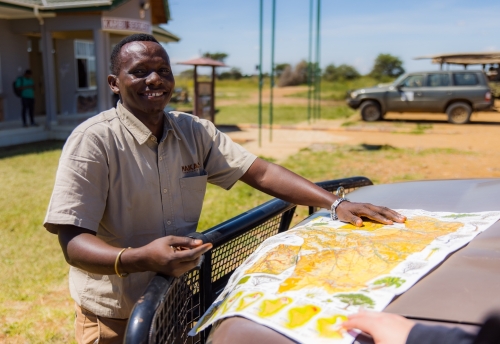
This park is not about spotting from the car, and so not about who finds a lion fastest. It is about what you learn to see. Our guides know where the colobus are that morning, which viewpoint on the crater rim gives the best view at that moment, and whether it is worth driving to the lakes for the birds. And on the walk they tell you about the small things, the tracks, the trees and the birds, that you look straight past from a moving car.

The best time to go to Arusha National Park

Arusha can be visited all year, and there is no month in which the park closes. What differs is the view of the mountains, how passable the roads are, and the price.

Juny to October

The dry season, and the best period for seeing game. The vegetation is thinner, the animals sit closer to the water, and there are fewer mosquitoes. This is also the best time for the Meru climb. The mornings are cool, so bring warm clothes.

November and December

The short rains, usually as an afternoon shower. The landscape turns green and the migrant birds arrive. Quiet, and the mountains are often clearly visible between the showers.

January and February

A drier break between the two rainy periods, and one of the best times to be here. Clear views of Meru and Kilimanjaro, green landscape, few visitors, and a good period for the climb.

March to May

The long rains, with April the wettest month. The landscape is at its greenest then and it is the quietest and cheapest time, because from mid March to mid May the low season rate applies. Game viewing is harder because of the denser vegetation, the unpaved lake circuits and mountain roads turn muddy, and the view of the mountains is less reliable. The canoe trip runs as normal in principle.

How long to stay

Half a day to a full day is enough, and experienced travellers say you see the whole park in a day. The point is not how long you stay, but what you do. Anyone who only drives through sees the lake circuit and leaves again, and misses exactly what this park exists for. So set aside time for a walk, or for the canoe, or both. With a full day you can combine them and still stand quietly at the Ngurdoto viewpoints afterwards.

Where it fits in your route

Begin your trip here, do not end it. Arusha lies forty minutes from the town and about half an hour from Kilimanjaro Airport, so it is the logical first day of your safari in Tanzania. You have just landed, you do not have to drive for hours yet, and within an hour you are among the giraffes. Come here at the end of your trip, after the Serengeti and the crater, and it falls flat. Not because the park is worse, but because your eye has been set to large numbers and open plains. That is exactly what Arusha National Park is not about.

Where you sleep at Arusha Park

Inside the park the choice is small, with a few lodges and the two mountain huts on Mount Meru for climbers. Sleep inside the gates and you are first into the field in the early morning and late afternoon. Just outside the gates lies a row of lodges in the middle to upper range, within ten to twenty kilometres (6 to 12 miles) of the entrance. But most travellers do not sleep near the park at all. The full range, from simple to high luxury, is in and around Arusha and at Usa River, and from there you are at the gate in forty minutes. That is practical if you combine Arusha with the rest of your route, and it is the way we usually plan it.

What you can do in Arusha National Park

This is the park with the most choice outside the jeep, and that makes it different from every other park in the north.

The walking safari in Arusha Park

The walking safari is what the park is known for. You walk with an armed ranger, usually a few hours, from Momella or over the lower slopes of Meru, past the Tululusia waterfall. You get closer to giraffe and zebra than you would think possible from a car, and you learn to look at what you normally drive past.

Canoeing in Arusha National Park

The canoe trip on Small Momella Lake takes about two hours. You paddle across a shallow lake, with hippo at a distance, waterbirds around you and giraffe on the bank. Swimming is not allowed, because of the hippo and the alkaline water. Children can usually come from about eight.

Horse riding and cycling in Arusha

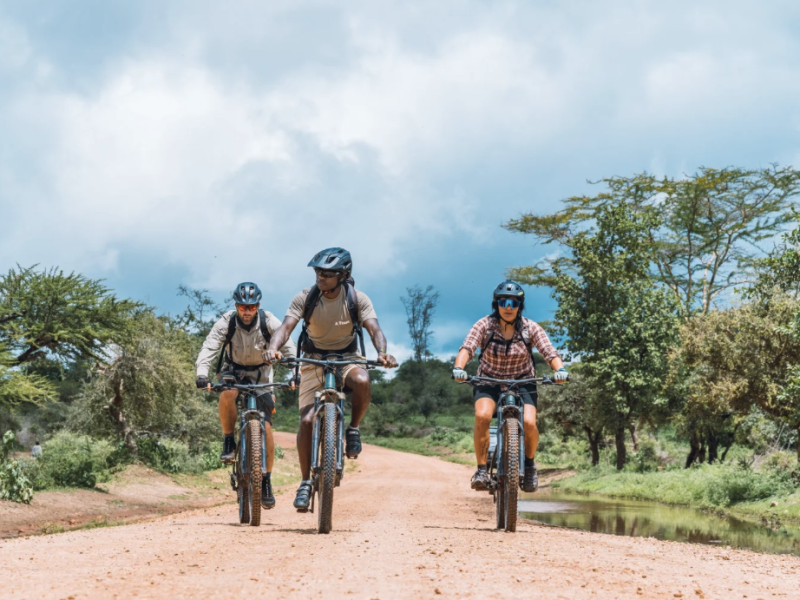
Horse riding and cycling are possible here too, for a separate fee. Both are not allowed in most national parks in Tanzania.

The climb of Mount Meru

And the climb of Mount Meru, in three or four days, with nights in the Miriakamba and Saddle huts.

Frequently asked questions about Arusha National Park

Are there lions in Arusha National Park?

No. There are no lions, rhino or cheetah. Of the Big Five you see only the buffalo regularly, and elephant and leopard with a lot of luck. It is precisely because the big predators are absent that you may go out on foot here.

Can you do a walking safari here?

Yes, and that is what sets this park apart. A walking safari always goes with an armed ranger, usually takes a few hours, and costs about twenty-four dollars per person on top of the entry fee. It is one of the few parks on the northern circuit where this is possible.

Can you canoe in Arusha National Park?

Yes, on Small Momella Lake, about two hours, for around twenty-four dollars per person. Children can usually come from about eight. This activity exists almost nowhere else in northern Tanzania.

Can you go into the Ngurdoto crater?

No. The crater floor has been closed to all visitors since 1967, both vehicles and walkers, and it is therefore an undisturbed reserve inside the park. You look at it from the viewpoints on the rim. Some operators write that you can descend into it, and that is not true.

Will I see flamingos in Arusha National Park?

Sometimes yes and sometimes no. On the Momella lakes there are thousands of flamingos in some periods, and in other years hardly any. That is hard to predict in advance, so we do not promise it.

Is Arusha National Park suitable with children?

Well suited, and one of the better first parks. The drive is short, you are quickly among the giraffes, and the canoe trip and the walk make it more active than a day in the car. For the canoe a minimum age of around eight usually applies.

How high is Mount Meru?

Over 4,500 metres (14,800 feet), making it the second mountain of Tanzania after Kilimanjaro. Sources differ slightly on the exact height, and on whether it is the fifth or the eighth highest in Africa, because that depends on what you count as a separate mountain.

Arusha National Park in your Tanzania trip

Arusha National Park is the gentle start to a safari, with wildlife on the first day instead of a long drive, and with the option of getting out of the car. Whether it suits you depends on what you are after and how much time you have. Tell us when you are coming, and we will think through the order with you and what you are best off doing here.

Other parks in northern Tanzania

A safari is almost always a tour past several parks, with two or three nights per place. Tarangire lies at the start of the northern route, so from here you drive on to Lake Manyara, the Ngorongoro crater and the Serengeti. Every park has its own character, and that variation is what makes the trip.

Serengeti National Park

Endless plains, the largest predator population in Africa, and the stage for the migration of the herds. The park where you want to stay longest.

Ngorongoro Crater

A collapsed volcano with thousands of animals on the floor, close together. One of the few places in Tanzania with black rhino.

Tarangire National Park

Elephants in families of dozens at a time, among baobabs centuries old. The park where most travellers begin their safari and ideal on the way to Serengeti.