
Dangerous animals in Tanzania and on Zanzibar
We have lived in Moshi since 2009, with three children, and the animal that has given us the most trouble in all those years is a mosquito.
That is not a line to make you feel better. It is the order of things here, and almost nobody writes it down, because a lion sells better than a mosquito.
The most dangerous animals are not the ones you fear
People arrive worried about lions. In a vehicle, a lion is the least of it. The animals that cause real trouble are small, or they are the ones nobody thinks to name.
Ngomi is a zoologist and he has guided here for more than twenty years. Ask him which animal guests fear most and which animal causes the most problems, and you get two different answers. That gap is what this page is about.
Spiders in Tanzania
This is the question we get most, so it goes first.
The one that frightens people is the baboon spider. It is large, it is hairy, it sits still, and it looks like the worst thing you have ever seen. It is also, for a person, close to harmless. A bite hurts and it swells, in the way a wasp sting does, and that is the end of it.
In a lodge room or a tent you are far more likely to meet something small and unremarkable in a corner of the ceiling. Tents are zipped at night because of that, and because of everything else that would rather be inside than outside. Shake out your shoes in the morning. That is the whole of the advice.
What Tanzania does not have is a spider that kills healthy adults. No funnel web, no Brazilian wandering spider. If a spider worries you, the honest answer is that you will probably see one, and that it will do nothing.
Snakes in Tanzania
Black mamba, puff adder and boomslang all live here, and all three can do serious harm. You will almost certainly not see one.
Snakes feel you coming and leave. The ones that end up near people are usually the ones that got cornered, which is why the advice is dull and works: watch where you put your feet in long grass, use a torch at night between the tent and the main area, and do not reach into anything you cannot see into.
If a snake does turn up near a camp, nobody deals with it themselves. The camps have people who move them, and the guides know who to call. That procedure matters more than knowing which species it was.
Mosquitoes, the only animal that counts
Malaria is carried by the Anopheles mosquito, which bites between dusk and dawn. That is the real risk on a safari in Tanzania, and it is also the one that is easiest to manage.
Long sleeves and long trousers in the evening, repellent on what is still bare, and the net down over the bed. The nets are there, in every camp and lodge we use. Whether you take tablets is a conversation with your doctor or a travel clinic, not with us, and it is worth having early because some of it needs preparation time.
The tsetse fly
Tsetse flies live in the wooded parts of some parks, and where they are, they are a nuisance. The bite stings more than a mosquito and it keeps stinging for a while afterwards.
They are drawn to dark blue and black, which is why we tell guests to leave both at home and wear neutral colours instead, with long sleeves in the areas where tsetse are about. Sleeping sickness in travellers is extremely rare. The flies are an irritation, not a danger.
Hippo and buffalo, the animals you do not expect
A buffalo weighs up to nine hundred kilos and has no reverse gear. An old bull on his own, pushed out of the herd, is the one the guides watch.
Hippo spend the day in water and come out at night to graze, and the trouble happens when somebody gets between a hippo and the water. In a camp on a river that is the reason you are walked back to your tent after dark rather than left to find your own way.
Neither of these animals is on the list people arrive worrying about, and both of them are why the rules in camp exist.
Baboons and vervet monkeys
No danger, considerable cheek. They will open a bag, take food off a table and go through an unzipped tent in the time it takes you to walk to breakfast.
Close your tent. That is it.
What about the Big Five
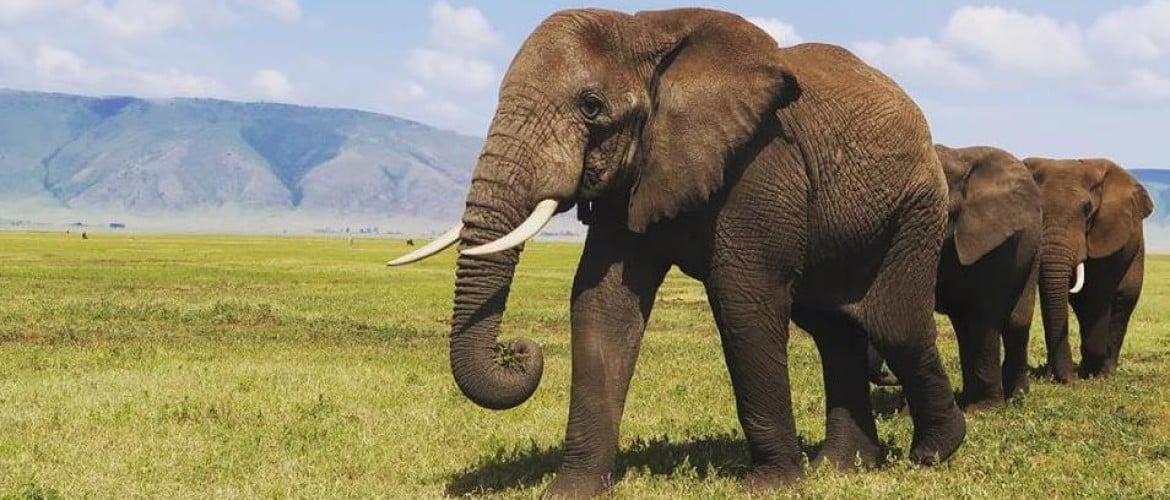
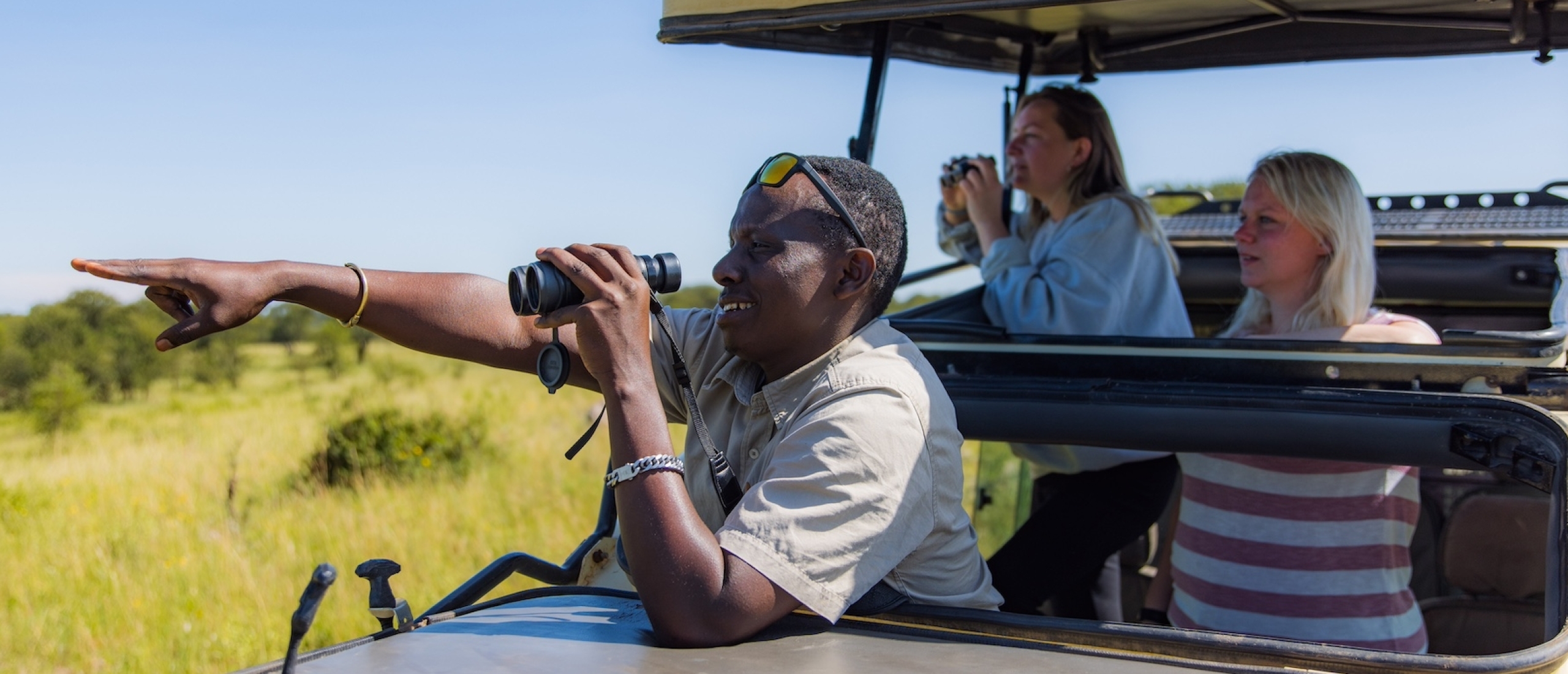
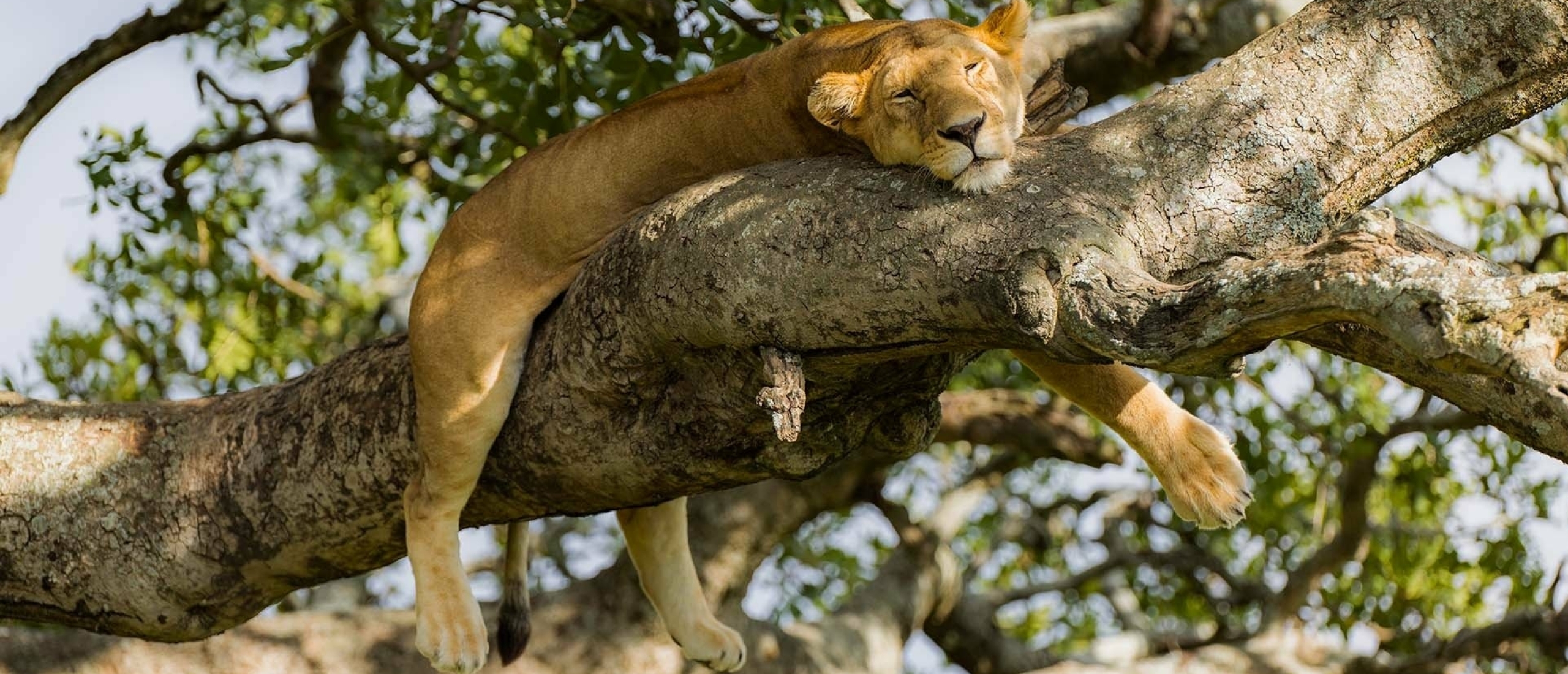
Lion, leopard, elephant, buffalo and rhino. In a vehicle, with a guide who knows what he is doing, the first three are the least of your worries, because the animals read a Land Cruiser as one large shape rather than as people.
That is also why you stay seated and inside, why you keep your voice down, and why your guide decides when to switch the engine off and when to move. The rules are not there because something usually goes wrong. They are there because the whole thing works only as long as the animals do not learn to read us as separate.
Dangerous animals on Zanzibar
Zanzibar is a different question with a different answer, and most of what you have just read does not apply there.
There are no lions on Zanzibar, no buffalo and no hippo. There is no Big Five. The island has no large predators at all.
Spiders you will see, in a room or on a wall, and the same thing holds as on the mainland. They look worse than they are, and the island has nothing that threatens a healthy adult.
Sea urchins are the one that catches people out. They sit on the reef and in the shallows at low tide, and standing on one is a bad afternoon. Reef shoes solve it, and so does going in where your guide or the hotel tells you to, because the tide here moves a long way out and brings the reef within reach.
Sharks are in the water, as they are everywhere, and attacks on Zanzibar are not a thing that happens. The reef sharks you may see while snorkelling or diving are small and want nothing to do with you.
Mosquitoes matter on Zanzibar for the same reason they matter on the mainland, so the same evening routine applies.
And in Jozani forest there are red colobus monkeys, which live nowhere else on earth, sit above the path and look back at you. They are the reason to go.
What we do ourselves
We live here, in a house in Moshi, with three children who have grown up in it. We close doors, we shake out shoes, we use a torch in the garden at night, and we sleep under nets in the wet months.
Beyond that we do not think about it, and that is the part that is hard to put into a brochure. The animals are here, we are here, and it works because everybody knows the rules. Our guides spend more days a year in the bush than any guest will spend in a lifetime, and the reason they are calm is not courage. It is that they know what each animal is going to do before it does it.
If you are reading this because somebody in your party is frightened, that is a reasonable thing to be before a first safari. Ask us the specific question. We would rather answer it now than have you worry about it for six months.