
Moshi, our home town, and what you do with your days here
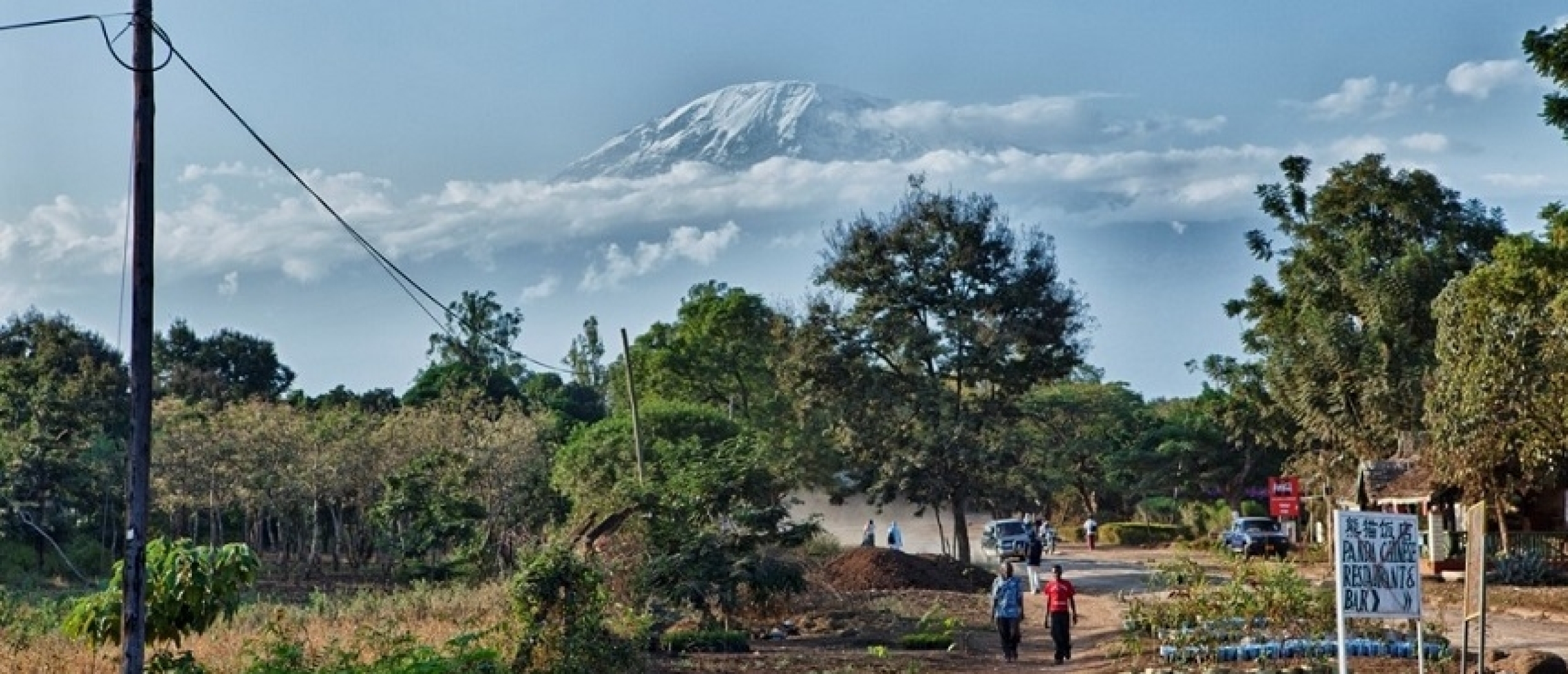
There are days when Kilimanjaro is not there. You know it is standing there, you live under it, and all you can see is cloud. And then one morning at six you walk into the garden with your tea and there it is, from the foot to the snow, standing over the roofs of the town.
We live in Moshi. Ngomi is from here, we have worked here since 2009, and this is the town our trips start from. So this is not a list of sights copied from somebody else. This is what we recommend to our guests, and what we do not.
Is Moshi worth it if you are not climbing
Yes, for two to three days. Not for a week.
Moshi is a town of around 222,000 people at eight hundred to nine hundred metres, on the southern foot of Kilimanjaro, and by area the smallest municipality in Tanzania. You can drive across it in half an hour. There is no large museum, no beach, and no wildlife park inside the town limits.
What there is, is a town that works. The market, the coffee that has been in this ground for generations, and the slopes behind it where the Chagga grow their coffee, maize and bananas. That is the reason to stay, and it is not in the town itself.
We do not sell Kilimanjaro climbs. We do get a lot of guests who want to see the mountain without standing on it, and for them Moshi is where that works.
Moshi as the start of your trip, not a stopover
This is a position of ours, and we explain it so you can disagree with it.
You land at Kilimanjaro Airport. Most trips then drive straight through to Arusha or even to the first lodge, so the safari can start the next morning. We do it differently. We collect you, bring you to Moshi, and you sleep here one or two nights before you go into the parks.
There are two reasons. The first is simple, you have come off a flight of eight hours or more and your body is behind. The second is that in Moshi you see something you do not see in the parks. An ordinary Tanzanian town, the coffee on the slopes, and people who are not working for tourists. Go on safari after that and you look differently.
Transfers are included in a trip with us and arranged in advance. At the airport there is nothing for you to find.
Moshi or Arusha, which suits you
We get asked this often, and nobody writes the answer down plainly. Both are good starting points, they are simply not the same.
Moshi is smaller and quieter, and in clear weather the mountain is in your view. The slopes begin just outside town, so the waterfalls, the coffee and the Chagga villages are a short drive away. If you want to land, recover and get out into the country around you, this is the place.
Arusha is bigger and livelier, with more restaurants and shops, and it is better placed for anyone building a trip around Arusha National Park or Mount Meru. If you want a day of shopping at the end, choose Arusha.
We start our trips in Moshi, because we live here and because we think you begin better here. That does not make Arusha worse, it just makes our choice clear.
Three days in Moshi, how we divide them
This is the programme we run, and it stands on four things. Seeing the mountain, the Materuni waterfall, the town, and a morning on a mountain bike.
Day one. You land and we collect you. The first afternoon you do nothing heavy. Into town, the market, coffee, and if the sky cooperates, Kilimanjaro standing behind it.
Day two. Materuni. The waterfall and the coffee tour with a Chagga family, and you are back by late afternoon.
Day three. A morning on a mountain bike, through the maize fields and along the coffee on the slope. The afternoon is yours, and the next morning we head into the parks.
With two days, you drop day three. With one day, it is Materuni. More than three days comes out of your time in the parks, and we would not advise it. Moshi is the run up, not the trip.
The Materuni waterfall and Chagga coffee
If you have one day, this is the day.
Materuni lies thirteen kilometres from Moshi, high on the slope, and the drive up is half the story. The road climbs, the bananas and the coffee come right up to the edge of it, and it cools as you rise. We park in the village and from there you walk. Around forty minutes down a path to the foot of the falls, past gardens and through a stretch of forest.
Wear shoes that can get wet. In the rainy season that path is slippery and there are stretches where you use your hands. If you are unsteady on your feet, say so before we go and we will choose a different day.
The waterfall stands in a narrow bowl with a pool under it. The water is cold. Some guests get in, most sit and watch.
Then the coffee, and that is what this day is about. You sit in the yard with a Chagga family and you see the whole way from bean to cup. The ripe cherry off the bush, the beans out, husked, dried, roasted in a pan over the fire and pounded in a wooden mortar. There is singing with it, and that is not a performance for you, that is how the work goes here. At the end you drink the coffee you ground yourself.
The entrance and the village contribution are paid in cash on the spot, in Tanzanian shillings. Ask us for the current rate before you go, it changes.
We drive this day in our own vehicle with our own guide. So no stranger at the door who drops you at a ticket desk.
A morning on a mountain bike through the maize fields
This is the day guests talk about most afterwards, and almost nobody had thought of it beforehand.
You ride out of town and within a quarter of an hour you are on dirt tracks between the maize. After that it climbs, past the coffee and through the villages on the slope, with the mountain behind you. It is not an athletic achievement, it is the way to move through daily life here at eye level. You stop where you want, children fall in alongside you, and you hear what you cannot hear from a vehicle.
We go in the morning, because it is cool then. A guide rides with you and knows the paths. If you cycle occasionally at home, you can do this.
Moshi town, the market and the coffee
The town is walkable, and in a few hours you have seen it.
Start at the market. That is the part of Moshi where the hardest work happens, with the mountains of tomatoes and the trays of beans, the spices, and the men manoeuvring carts through the alleys. It is busy and it is not arranged for you, and that is exactly why it is worth your time.
Then have coffee at Union Cafe, on the corner of Old Arusha Road and Selous Road. The building dates from 1939 and belongs to the KNCU, the coffee farmers’ own cooperative. The beans come from the farms on the slopes above and are roasted on the premises. You can smell it from across the street.
One thing that is wrong everywhere. The Kilimanjaro Coffee Lounge is closed for good. Guidebooks and blogs still list it as the best coffee in Moshi, and anyone following that advice arrives at a locked door. Ask us or your guide where we are going today, because that changes faster than a guidebook gets reprinted.
Beyond that there is a golf course with the mountain at your back, and Makoa Farm within driving distance for anyone who wants something with animals and farming. Not days we would build a trip around, but if you have a spare morning we will arrange it.
Marangu, if you want something other than Materuni
Marangu and Materuni get confused constantly, including by operators selling the trips. They are two different places. Materuni is thirteen kilometres from Moshi, Marangu forty to forty-four. That is a different side of the mountain and a different day.
Marangu is the village where the Marangu route to the summit begins, and it is greener and wetter than Moshi itself. Several waterfalls run through the area, smaller than Materuni and in a softer landscape, with banana gardens and coffee right up to the path.
And there are the Chagga caves, tunnels dug into the slope so people could hide with their cattle in times of danger. You crawl some way in, and it is narrower and lower than you expect. How old they are we leave to the guide on the spot, because the accounts differ and we do not put a date on our site that we cannot support.
What we add is that Marangu will not be a high point of your trip. It is a good, quiet day between the coffee and the water. If you are doing one waterfall, do Materuni.
Chemka hot springs, and why we do not go
This is the most asked question about Moshi, so we give a clear answer to it.
Chemka, also known as Kikuletwa, is a spring between Moshi and Arusha where warm clear water comes out of the ground and gathers in a pool under the fig trees. The water is blue green and you can swim in it. You understand immediately why people want to go, and it appears in nearly every Tanzania programme sold out of Moshi.
Two things are worth knowing first.
It is no longer a quiet place. The recent reviews say the same thing again and again, busy at weekends, stalls around the pool, and men pushing an inner tube into your hands and expecting money for it afterwards. Anyone expecting a deserted oasis on a Sunday afternoon is in for a surprise.
And then the second, which is our own reason. We do not take our guests to Chemka. Crocodiles have been seen in that water, and we know that first hand from people who live and work here. You do not see them, the water is clear and it feels safe, and it is still a natural spring that sits open to the landscape around it. We do not take that risk with somebody who has booked with us. That is a choice of ours, not a warning from an authority, and we think you should know we make it.
Go anyway, and that is your right, but you arrange it yourself and not through us.
What we do instead on a day like that is Materuni or the bike. At Materuni you have the water, the waterfall and the coffee. On the bike you have the maize fields and the slopes. Those are not consolation prizes, they are the two days our guests hand back at the end of a trip as the surprise of Moshi.
When can you see Kilimanjaro from Moshi
Honest answer, not every day.
The best months are June to September, the dry season, when the sky above the town is open most often. February is the cloudiest month of the year. In April and November the summit can sit in cloud for days at a time, and then you know it is there without seeing it.
What you also need to know is that the mountain is rarely visible all day. It comes and goes. One moment you are looking at cloud and twenty minutes later the snow is sharp against the sky. So keep your camera to hand and do not wait for the right moment, because sometimes that is five minutes away and sometimes two days.
Our guides know where to stop for the best view, including on the drive to and from the airport. Say you want a photograph and we will go round.
When to come to Moshi
The pattern holds, the amounts differ by year, so here is the pattern.
June to September is the most comfortable. Dry, clear, and the mountain in view most often. This is also high season for the parks, so plan early.
January and February are the second good period. Warmer, and between the two rainy seasons.
March to May are the long rains. Green and quiet, and the paths to the waterfalls are slippery.
November and December are the short rains. Often a shower in the afternoon and dry the rest of the day, so workable.
Can you go on safari from Moshi
To one park, yes. To the rest, not in a day.
Arusha National Park works as a day trip from Moshi. Buffalo, giraffe, flamingo on the Momella lakes and Meru above you, and you are back before dark.
Tarangire is possible, but you spend most of the day in the vehicle and see the park at its worst hours. We sell that day only with that warning attached, and preferably not at all.
The Serengeti and the Ngorongoro Crater are not a day trip from Moshi. Anyone offering you that is selling you a day of driving. For those parks we build a trip with overnight stops, and it starts here in Moshi with one or two nights and then heads north.
Chagga, not Maasai
One misunderstanding we like to clear up. The slopes around Moshi are Chagga country. Farmers, coffee, maize, bananas, and a language and history of their own. The Maasai live on the plains further west and south.
That distinction gets muddled in travel programmes, and anyone expecting a Maasai village here ends up on a coffee farm. We do not sell village visits to the Maasai. We do work with accommodation the community set up themselves, where you pay for a stay and not for a visit.
Visits to orphanages and schools are also offered as excursions in Moshi. We do not do that. A child is not a sight. If you want to contribute something, ask us and we will put you in touch with a project that can use it.
What we are building in Moshi
We are building a lodge of our own here, at the foot of the mountain. As soon as we can name a date, it will be on this page.
Frequently asked questions about Moshi
Is Moshi worth it if you are not climbing
Yes, for two to three days. The town itself is small, the reason to stay is on the slopes around it, at Materuni, the coffee and the Chagga villages.
How many days do you need in Moshi
Two to three nights. Day one the town and the market, day two Materuni, day three a morning on a mountain bike. More than three comes out of your time in the parks.
Moshi or Arusha, where do you start your trip
Moshi if you want to start quietly and get out into the slopes, Arusha if you want a larger town or are building around Arusha National Park and Mount Meru. Our trips start in Moshi.
Can you see Kilimanjaro from Moshi
Yes, but not every day. June to September gives you the best chance, February is the cloudiest month, and in April and November the summit sometimes sits in cloud for days.
Do you go to the Chemka hot springs
No. Crocodiles have been seen in that water and we do not take that risk with our guests. Go anyway and you arrange it yourself, not through us. Instead we drive to Materuni or take the mountain bikes out.
Do you go to Lake Chala
Not as standard. The crater lake is there, and it is a long drive with no facilities when you arrive. We think Materuni and the bike are a better use of your day.
What is the difference between Materuni and Marangu
Two different places that get confused constantly. Materuni is thirteen kilometres from Moshi and combines a high waterfall with a coffee tour. Marangu is forty to forty-four kilometres away and has smaller waterfalls and the Chagga caves.
Can you mountain bike in Moshi
Yes, and it is one of our best mornings here. Through the maize fields and along the coffee on the slope, with a guide, and suitable for anyone who cycles occasionally at home.
Do you need malaria tablets in Moshi
Talk to your doctor or a travel clinic. You often read that Moshi is too high for malaria, and that is not true. The risk applies below 1,800 metres and Moshi sits at eight hundred to nine hundred. Low it is, zero it is not.
When is the best time to come to Moshi
June to September is the most comfortable and the busiest. January and February are the second good period. The long rains fall from March to May, the short rains in November and December.
We live under this mountain and we see it hidden more often than we see it. That is Moshi. You do not come here for a list, you come for two or three days in which the coffee comes off the slope where you watched it growing, and for a guide who knows which path is slippery and which spring he skips. After that we head into the parks.
Karibu Moshi.