
Swahili in Tanzania, the words you use on your first day
A greeting here takes longer than you are used to. Where you come from you probably say hello and keep walking. Here you step out of the car, and someone asks how you are, and how your journey was, and how your family is, and how the work is going, and only then do you get to what you came for. The first time, it feels long. After a week you miss it when it does not happen.
Ten words of Swahili take you a long way into that.
What they speak in Tanzania
Swahili is the official language of Tanzania. English is the second language of record, and you hear it at school, in offices and on formal occasions, so you will manage here without a word of Swahili. But you do miss something.
Tanzania has more than a hundred ethnic groups, each with its own language. Swahili is what connects them, and that is exactly why it is carried so widely here. It is not the mother tongue of most Tanzanians, it is the language in which they meet each other.
Swahili grew up along the east coast, where trade from Arabia, India and the interior ran into each other, and you still hear that in it. For a long time it was written in Arabic script. German and British missionaries later moved it to the Latin alphabet, and that is how it stands on every road sign today.
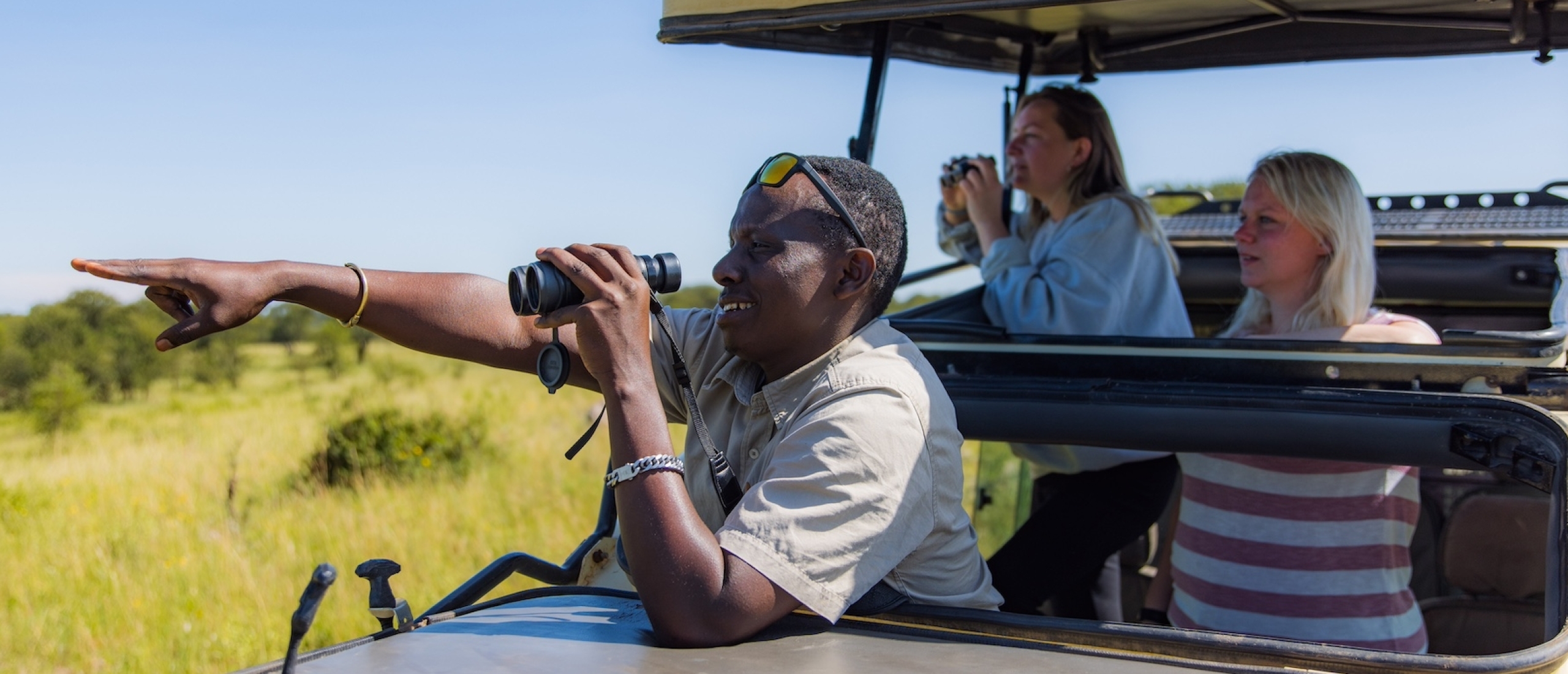
And that word you use for your trip out here, safari, is simply Swahili for journey. Nothing exotic about it. We go on safari too when we drive to Arusha for the shopping.
The greeting ritual
This is the part guests trip over most often, and the part they most often end up smiling about.
A greeting here is not a two second formality. It is a run of questions and answers, and the answer is almost always good, even when it is not. This is how it sounds between two women who know each other.
Amina: Hujambo?
Tatu: Sijambo. Habari gani?
Amina: Nzuri. Habari za watoto?
Tatu: Nzuri sana. Na wewe?
How are you, I am fine, what is the news, good, and how are the children. You ask after the children, the house, the work, the journey. And you answer nzuri, good, because that is part of the form.
Knowing that, you will not be thrown when a conversation about a flat tyre opens with four questions about your family.
The first words
These get you through the first day.
Swahili | What it means |
Jambo | hello, the greeting every visitor learns first |
Hujambo | how are you |
Sijambo | I am fine |
Habari gani | what is the news, and also simply how are you |
Nzuri | good |
Nzuri sana | very good |
Asante | thank you |
Asante sana | thank you very much |
Arriving and saying goodbye
Swahili | What it means |
Hodi | I am coming in, you say it before you enter a space |
Karibu | welcome |
Karibuni | welcome, to more than one person |
Karibu kiti | come and sit |
Kwa heri | goodbye |
Tutaonana | we will see each other again |
Lala salama | sleep well |
Hodi is one of the best of them. There is no door between you, you say hodi and the other person says karibu, and then you are in.
The words you hear on safari
Swahili | What it means |
Safari | journey |
Safari njema | have a good journey |
Pole pole | slowly, take it easy |
Hamna shida | no problem |
Hakuna matata | no worries |
Pole pole is the one you hear most, and not only on the road. It is also how the work gets done here, and it is the best advice you can be given on safari. Anyone in a hurry sees less.
Growing up with three languages in Moshi
Our children grow up with three languages. Dutch with me, Swahili outside the house and with Ngomi's family, English at school. I worried about that at the start, whether they would mix them up.
They did not. They switch in the middle of a sentence and they do not notice themselves doing it. What they do notice is correcting me, and they do that with visible pleasure.
How far ten words take you
Further than you think. Not because you make yourself understood, English does that too. But because something changes in the conversation the moment you try.
A guest who says asante sana on arrival to the man carrying his case gets a different answer from a guest who says thank you. Not better meant, but different. It shows you took the trouble, and that is seen here.
You do not have to learn the language. Ten words is enough.
By the end of a trip almost everyone says asante sana without thinking about it. That is the moment it stops being a word list.
Before you leave
Our practical information about Tanzania covers what you want to know before you go, from visas to the best time to travel.
Planning a trip? Request a call.